
Last updated October 15, 2026
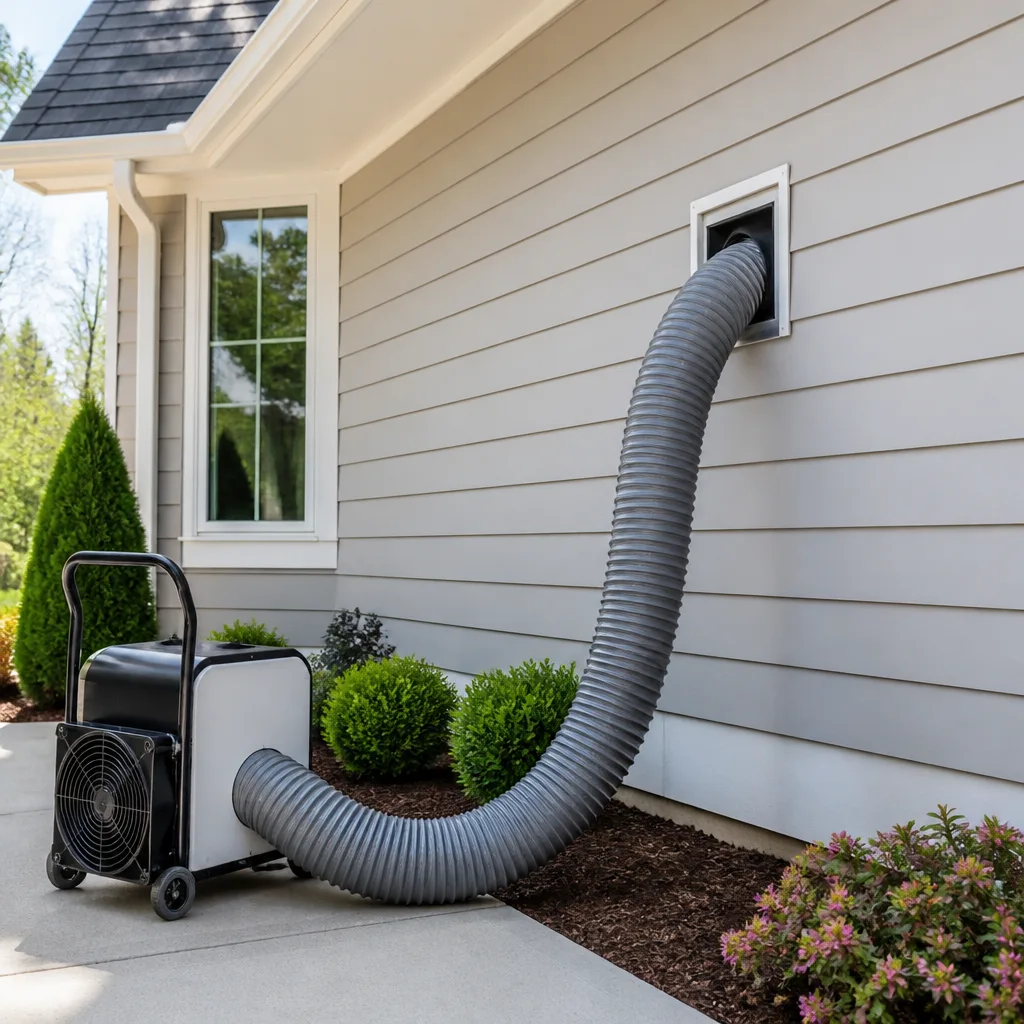 Whole-home duct cleaning
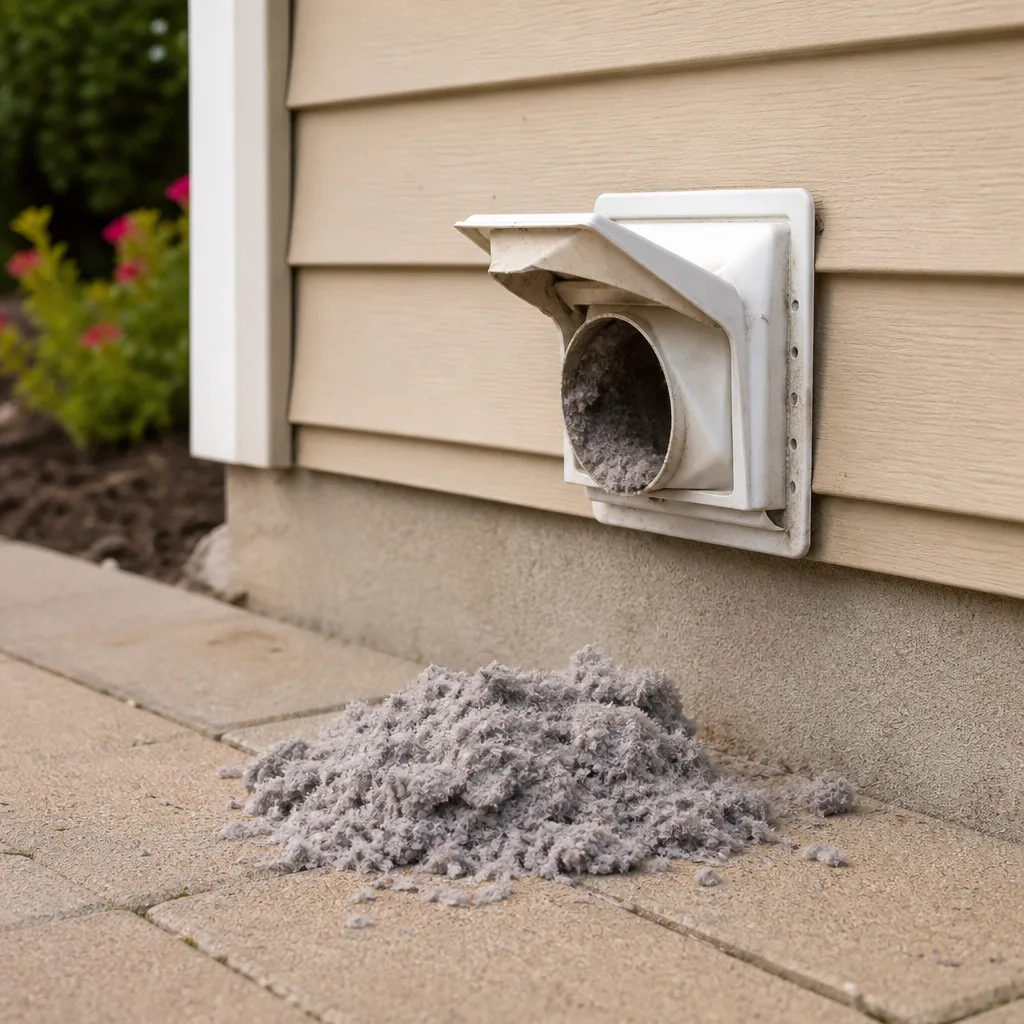 Dryer vent cleaning
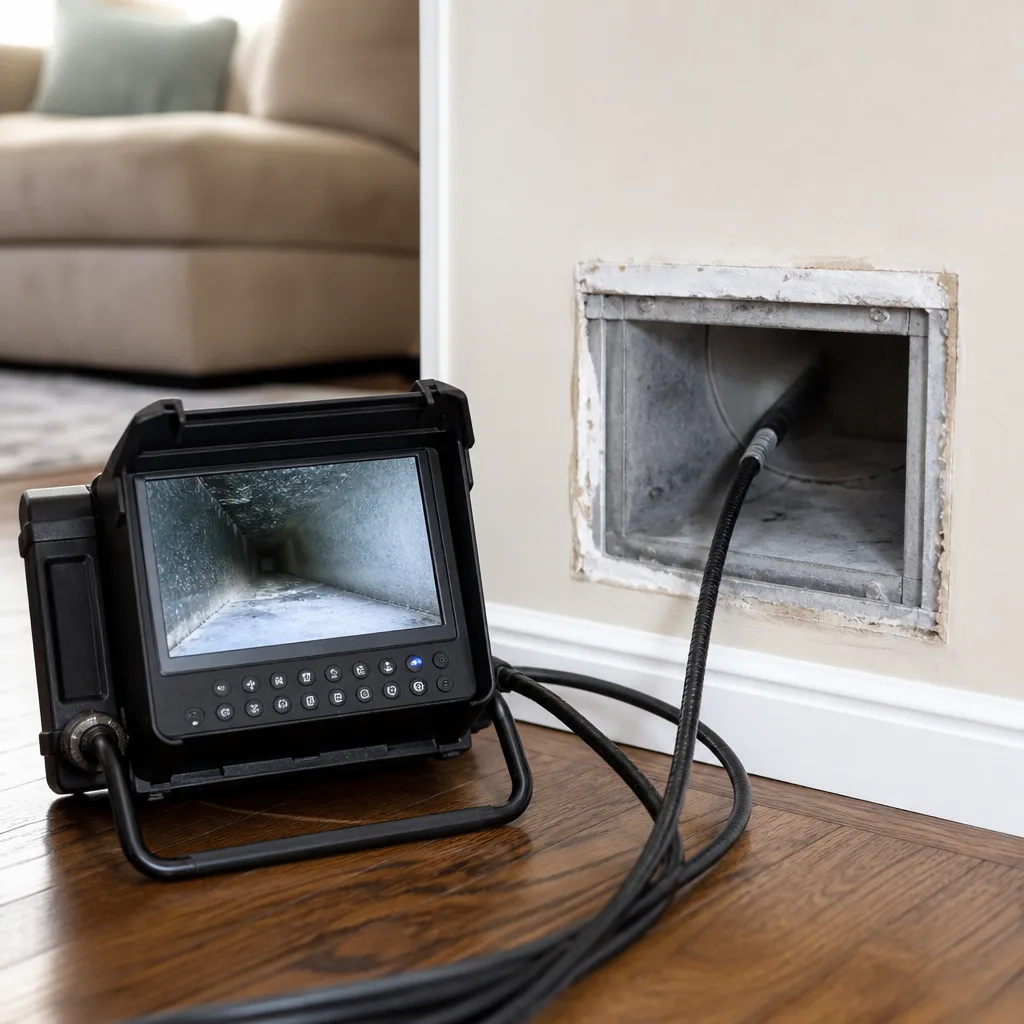 Camera inspection
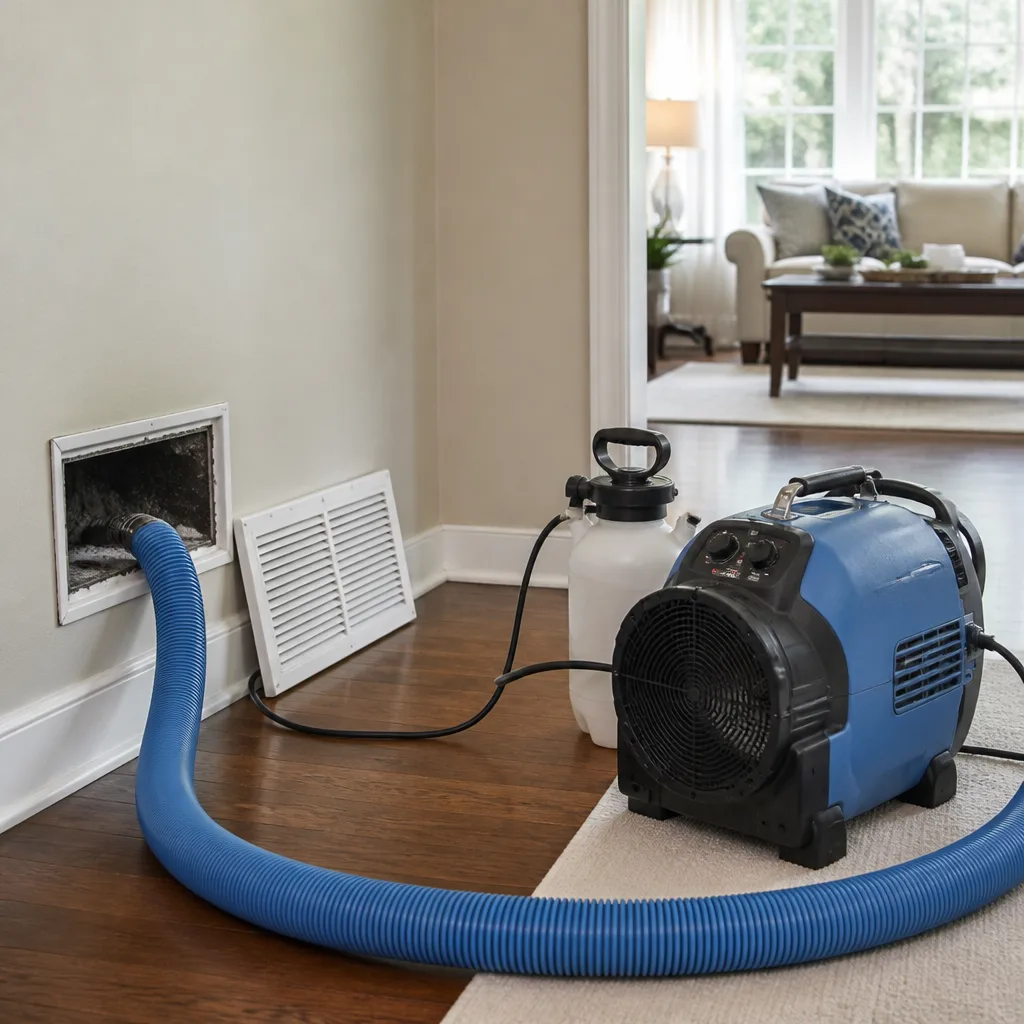 Sanitizing & deodorizing
Whole-system duct and dryer vent check with before-and-after photos - you see exactly what came out of your vents
That "$99 whole-house special" is a bait ad - the real number appears once they are in your hallway, or the "clean" is a shop-vac at the register. We photograph the inside of your ducts before and after instead.
Air Duct Cleaning Cost Breakdown: The Fort Worth Homeowner’s Reference for 2026
The $99 whole-house duct cleaning ad you see on Nextdoor isn’t a deal. It’s a loss-leader price designed to get a technician into your home, at which point the “findings” during inspection generate $400 to $900 in add-ons. Meanwhile, the legitimate Fort Worth company quoting you $600 might actually be the fair price. This guide deconstructs every variable that drives duct cleaning costs so you can benchmark any quote you receive with confidence, whether you live in TCU-Westcliff, Arlington Heights, or up in Saginaw.
Styles & brands we work with
Quick Answer
Air duct cleaning in Fort Worth typically costs between $325 and $650 for a standard single-system home under 2,500 square feet, with larger homes, dual-zone systems, and legitimate add-ons like dryer vent cleaning pushing the total to $700 to $950. The single biggest factor is home size and system count, not the per-vent price games you’ll see advertised. Any quote below $300 for a full-system cleaning is almost certainly a bait-and-switch lead generator.
Table of Contents
- Cardinal’s Published 2026 Price Ranges by Home Size
- What Actually Drives the Cost: 9 Variables Explained
- Legitimate Add-Ons Worth Considering in Fort Worth
- Add-Ons to Refuse: The Bait-and-Switch Playbook
- Why a Written Price Before Work Starts Matters Legally
- Total Cost of Ownership: Skipping Cleaning for 5+ Years vs. Paying for It
- How Often Does Air Duct Cleaning Actually Need to Happen?
- What Happens During a Professional Cleaning: Step by Step
- Common Mistakes to Avoid
- When to Call a Professional
- Frequently Asked Questions
- The Bottom Line
Cardinal’s Published 2026 Price Ranges by Home Size
Nobody else in Fort Worth publishes their price ranges this way. That’s the point. Omar Haddad, who runs Cardinal Air Duct Fort Worth, decided the industry’s “call for price” habit is exactly what lets the bait-and-switchers operate. So here are our actual 2026 ranges for a full air duct cleaning, including all supply and return ducts, the main trunk lines, the blower compartment, and a post-job inspection with before-and-after photos. These ranges assume standard accessibility. If your furnace is in a tight attic space or your return is drywalled with no access panel, that adds labor and time, which is reflected in the price.
- Under 1,500 sq ft: $295 to $395. Typical single-story homes in Wedgwood, East Fort Worth, and the older bungalows near Magnolia Avenue. One system, 8 to 12 vents, access to the air handler is straightforward.
- 1,500 to 2,500 sq ft: $395 to $550. The bulk of Fort Worth housing stock, from Ryan Place to North Richland Hills. One system, 12 to 18 vents, possibly a second return.
- 2,500 to 3,500 sq ft: $550 to $725. Larger homes in Tanglewood, Mira Vista, and the new builds in Walsh. Often two systems, which changes the math considerably (more on that below).
- 3,500+ sq ft: $725 to $950. Estate-size homes, commonly dual-zone or triple-zone with multiple air handlers. Each additional system is a separate cleaning, and duct runs are longer, which means more time with the Rotobrush rotary brush system in the lines.
These are whole-system prices. We don’t do per-vent quotes, we don’t do “inspection first, price later” games. The price Omar or one of his techs quotes you on the phone is the price on the written estimate, and that’s the price you pay. If we find something during the job that legitimately changes the scope (like a return duct that was sealed over and needs an access panel cut), we stop, show you, and get your written approval for the change before touching it.
This is the standard that comes with being part of the Relay Home Co. family, which was founded in 2005 and holds every independently owned location to The Relay Visibility Guarantee. You get a live trackable arrival time, before-and-after photo documentation of the work, and a digital invoice you can pay from your phone. No surprises, no rewrites.
What Actually Drives the Cost: 9 Variables Explained
Every serious quote you get in Fort Worth will be influenced by these variables. Understanding them means you can tell the difference between a company being thorough and a company inflating a quote.
1. Home Size and Duct Run Length
This is the obvious one. More square footage means more ductwork, and more ductwork means more linear feet of trunk line and branch runs that a technician has to physically access and agitate. In fact, the length of the duct runs matters more than the number of vents. A 2,200 sq ft ranch with long horizontal runs from a central hallway utility closet can take longer to clean than a 2,800 sq ft two-story where the air handler is centrally located and runs are short.
2. Number of Systems
A “system” in HVAC terms is one complete setup: air handler or furnace, evaporator coil, blower motor, and the attached duct network. Many Fort Worth homes over 2,500 sq ft have two systems, often one for upstairs and one for downstairs. That’s not a 10% price increase. It’s a second full cleaning, because it’s a second furnace, a second blower compartment, a second set of coils, and a second duct network. When you call for a quote, tell the company up front how many thermostats you have. That answer alone will dramatically narrow the price range for you.
3. Access to the Air Handler
This is a big one in Fort Worth specifically. A large share of our housing stock, especially the older mid-century neighborhoods like Ridglea Hills and White Settlement, put furnaces in attics or crawl spaces. An attic air handler in August is a different job than a basement furnace in Chicago would be. Techs are working in 120-degree attic heat, which slows everything down and requires more breaks, more hydration, and more care. If your air handler is in an attic with blown insulation and limited decking, expect the quote to reflect the extra labor. If a company quotes you sight unseen without asking where your furnace is, that’s a red flag.
4. Age of the System
Ductwork that has been in place since the 1990s has different needs than ductwork from 2019. Older systems, especially those with fiberboard or internally lined ducts, accumulate debris differently. Fiberglass-lined ducts from the 1980s and 1990s are notorious in our experience for holding dust because the lining gives particles something to grab onto. Cleaning them properly takes more passes with the brush and more negative-pressure extraction time (that means the loosened debris goes straight into the vacuum, not back into your living room).
5. Condition of the Ductwork
If your ducts have tears, disconnected joints, or evidence of rodent activity, cleaning alone won’t fix the problem and a good company will tell you that before taking your money. We regularly find ducts in Fort Worth attics that have been crushed by stored boxes or chewed through by squirrels. That’s a repair conversation, not a cleaning conversation, and a company that quotes you a cheap cleaning and then “discovers” the damage on-site is exactly the kind of company to avoid. A legitimate firm will inspect first, quote honest work, and let you decide.
6. Presence of Renovation Debris
If you’ve recently remodeled in Fort Worth, especially any drywall work, your ducts are loaded with fine gypsum dust. That’s not a failure of the old system; it’s simple physics. Drywall dust is extremely fine and extremely pervasive. Post-renovation cleanings are slower because the fine particles require more passes and more HEPA filtration cycles on the Nikro vacuum units before the air is really clear. If you got a “deal” on a post-construction cleaning, the tech likely did one pass and called it done.
7. Mold or Microbial Growth
Fort Worth’s humidity, especially the spring shoulder season from April to June and the late summer monsoon pattern, creates real conditions for microbial growth in ducts. If a technician finds visible mold during inspection, we recommend an EPA-registered antimicrobial application, which changes the scope and the price. This is not an “opportunity sale.” It’s a health matter for your household. That said, any company that mentions mold should be prepared to show you photos. If they can’t show you the mold, they didn’t find mold.
8. Dryer Vent Inclusion
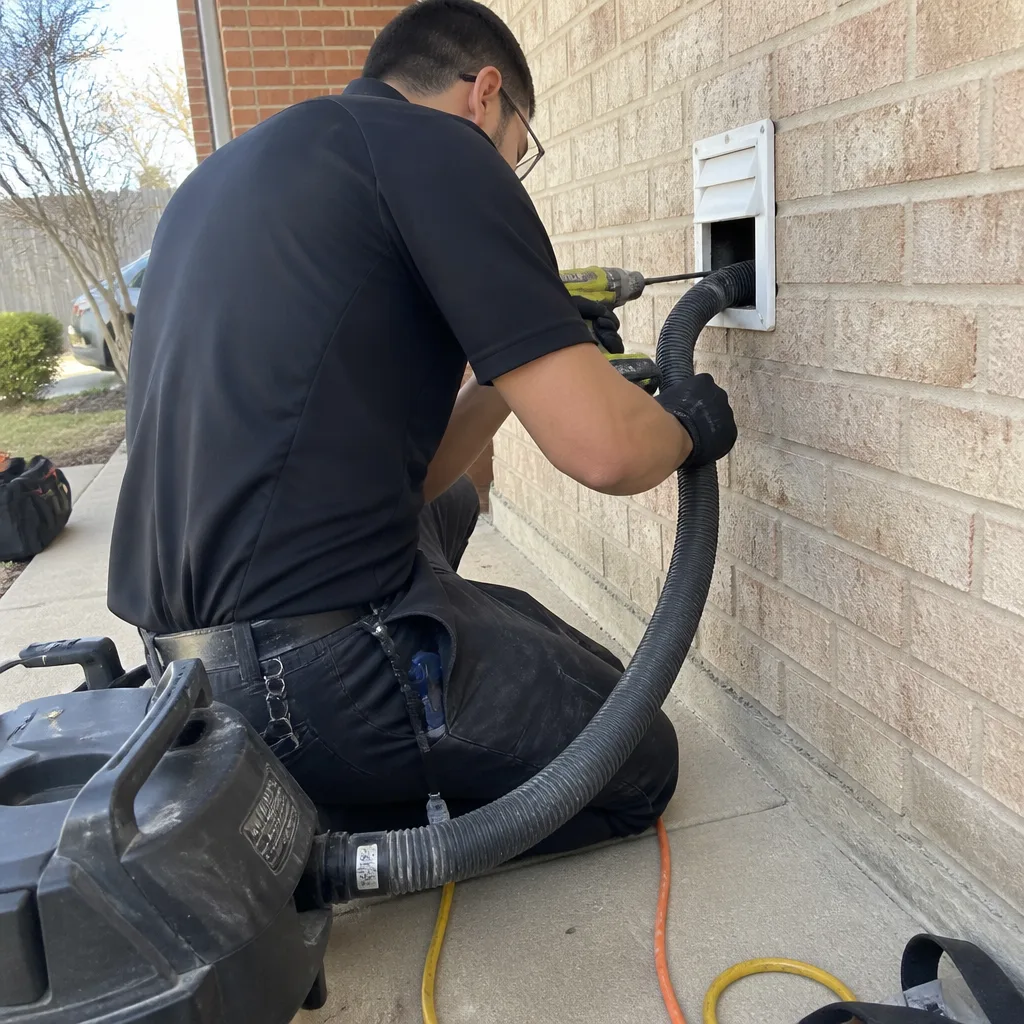
Your clothes dryer vent is not part of your HVAC system, but many Fort Worth homeowners bundle dryer vent cleaning with air duct cleaning because both involve the same kind of debris accumulation and both benefit from the same professional equipment. Adding dryer vent cleaning to an air duct job typically costs $75 to $125 extra, depending on vent run length and access. It’s a genuine add-on with a genuine benefit: dryer vents are a leading cause of house fires, and Fort Worth’s tornado-prone storm patterns mean wind-driven debris gets into exterior vent hoods regularly.
9. Access Panel Creation
Many Fort Worth homes built in the 1960s through 1980s have returns that were drywalled over during renovations or finished with no access. You can’t clean what you can’t reach. If your return is sealed behind drywall and there’s no service panel, the company has to cut one, which is an extra line item. We charge between $150 and $250 for access panel creation, and we’ll install a proper removable panel so future cleanings don’t require cutting. Another company might skip this entirely and claim they cleaned a return they never even opened. If you have drywalled returns and a company quotes you a standard price without asking about access, ask them how they plan to physically reach the return duct.
Legitimate Add-Ons Worth Considering in Fort Worth
There’s a difference between necessary scope adjustments and manufactured upsells. Here’s what actually adds value in a Fort Worth home:
- Dryer vent cleaning ($75 to $125): Reduces fire risk and improves dryer efficiency. Fort Worth’s clay soil and dusty summers mean dryer vents fill faster here than in coastal climates.
- Antimicrobial fogging with EPA-registered products ($95 to $175): Only worth it if there’s evidence of microbial growth. We use EPA-registered products, not “sanitizers” with undisclosed chemistry. If a company can’t name the product they’re fogging with, decline the service.
- Access panel creation ($150 to $250): Necessary for drywalled returns. A one-time cost that makes future cleanings cheaper and more honest.
- Blower motor and coil cleaning ($85 to $150): The blower moves air across the coil and into your living space. If your ducts are filthy but the blower and coil are also caked, cleaning the ducts alone is incomplete work. This is part of our standard HVAC cleaning in Fort Worth scope.
- Filter upgrades ($25 to $85): We install Honeywell and Aprilaire filtration products. A better filter after a cleaning helps keep the system cleaner longer, especially through Fort Worth’s allergy-heavy oak and cedar seasons.
For the full scope of what a professional cleaning includes, see our guide on air duct cleaning in Fort Worth.
Add-Ons to Refuse: The Bait-and-Switch Playbook
The $99 whole-house ad is the door opener. Here’s what happens after the door closes.
- “Duct sealing” quoted on-site without duct blaster testing: Legitimate duct sealing involves a duct blaster test that measures actual leakage before and after sealing. If a tech waves a flashlight at a joint and says, “Yep, you need sealing, that’ll be $800,” he’s improvising. Real duct leakage measurement requires a calibrated fan and pressure gauge. Companies offering this test exist in Fort Worth, but they’re the exception, not the rule, and they don’t advertise $99 cleanings.
- “Sanitizer fogger treatments” with no product disclosure: If you ask what product they’re fogging with and the tech can’t name it, or the name is something generic like “our special sanitizing blend,” walk away. EPA-registered products have registration numbers and safety data sheets. Legitimate companies will tell you exactly what they’re using. We use EPA-registered antimicrobial products and will show you the product label on request.
- “Heavy contamination fees” with no before-photo documentation: The angle here is simple: the tech starts the job, “discovers” that your ducts are “worse than expected,” and tacks on an extra $200 to $400 for “heavy contamination.” Our response: show us the before photos. If a company claims your ducts were severely contaminated but can’t produce a single photo, they’re running a script. At Cardinal Air Duct Fort Worth, every job includes before-and-after photo documentation as part of The Relay Standard. If a company can’t or won’t provide photos, that tells you something.
- “Mold remediation” based on visual inspection alone: Mold testing requires laboratory analysis. A visual inspection can identify what looks like mold, but confirmation requires sampling. Legitimate remediation is a specialized job, often involving containment with Abatement Technologies units and HEPA air scrubbing. Any company that says “that’s mold, we can fog it for $400” during a routine cleaning is not doing mold remediation. They’re doing a fear sale.
- “Half-price today only” pricing pressure: The most expensive duct cleaning is the one that starts with a false discount and ends with an inflated invoice. We give our written price up front and it doesn’t change at the door, period. If a company’s “deal” depends on you deciding before the tech arrives, the deal isn’t real.
Why a Written Price Before Work Starts Matters Legally
In Texas, verbal contracts are technically enforceable, but good luck proving the terms of a verbal agreement in small claims court when the invoice says something different. A written price is the difference between a quote and a guess. When Omar Haddad quotes a job for Cardinal Air Duct Fort Worth, the written estimate spells out the scope of work, the total price, and any expected add-ons. For related guidance, see Air Duct Cleaning Permits, Codes & Inspections in TX: What You Need to Know. That document is legally binding. If the company tries to change the price at the door, the written estimate is your protection.
Every Cardinal Air Duct Fort Worth booking includes a written price before any work starts. That’s non-negotiable and it’s a foundational part of our membership in the Relay Home Co. family, which has held independent locations to this standard since 2005.
Here’s the language to insist on in any duct cleaning contract, whether it’s ours or someone else’s:
- Total price in writing before work begins. Not “approximate,” not “estimate pending inspection.” A number.
- Scope of work explicitly listed. What’s included: which ducts, which systems, what’s cleaned and what’s not.
- Add-on approval process stated. If the tech finds something that changes the scope, the contract should say how that’s handled: a written change order, approved by you, before the extra work happens.
- Warranty terms in writing. What’s covered, for how long, and what happens if the work fails. We back every job with our 365-Day Done Right Promise: if the work isn’t right within 365 days, we return and correct it at no charge. That’s a year-long guarantee, written into the agreement, not a verbal assurance.
Total Cost of Ownership: Skipping Cleaning for 5+ Years vs. Paying for It
The question isn’t really “what does duct cleaning cost?” The question is “what does not cleaning my ducts cost?” That’s the comparison that matters on a 10-year horizon.
Dirty ducts and a dirty evaporator coil don’t destroy your system overnight. What they do is quietly degrade efficiency. The blower motor works harder against restricted airflow. The coil loses heat transfer capacity as it cakes with dirt and dust. The system cycles longer to hit the same setpoint. In Fort Worth’s climate, where the AC runs from April through October, that inefficiency compounds.
What does a 10% efficiency loss cost in real money? For a typical 2,000 sq ft Fort Worth home, summer electric bills of $250 a month become $275. That’s $25 a month, $150 a cooling season, $1,500 over a decade. For a 2,500 sq ft home with two systems, the math doubles: $300 a season, $3,000 over a decade. And that’s before you factor in the shortened lifespan of a blower motor running against restricted airflow, or the cost of an emergency coil cleaning when the system ices over in July.
Now compare that to a $395 to $550 cleaning every 3 to 4 years. Over a decade, that’s roughly $1,000 to $1,400 in cleaning costs. The cleaning pays for itself in energy efficiency alone, and that’s before you consider indoor air quality, which is harder to put a price on but which anyone with allergies in Fort Worth’s oak and cedar seasons understands viscerally. Browse our more guides & resources for additional homeowner tips.
We’re not arguing that cleaning magically transforms your electric bill overnight. What we are saying, based on 15 years of seeing blower cages and coils in Fort Worth homes, is that a system with clean ducts and a clean blower runs measurably more efficiently than one that has never been cleaned. In our experience across Fort Worth, homes that have had regular duct cleaning have systems that last longer and break down less often.
How Often Does Air Duct Cleaning Actually Need to Happen?
The National Air Duct Cleaners Association recommends every 3 to 5 years. That’s a sensible baseline for most homes. But in Fort Worth, several local factors push toward the shorter end of that range:
- Clay soil and dust: Fort Worth sits in the Blackland Prairie ecoregion with heavy clay soils. When it dries in summer, the dust gets airborne and enters return vents at ground level.
- Allergy season intensity: Mountain cedar in winter, oak in spring, and grass pollen in late spring mean filters load up fast. Anything that gets past the filter ends up in the ducts.
- Pets: Homes with multiple dogs or cats, especially indoor dogs that shed year-round, should lean toward every 3 years.
- Renovation history: If you’ve done any drywall work in the last 2 years, one thorough cleaning is warranted regardless of schedule.
- Recent move-in: You don’t know what the previous owners did. We clean a lot of newly purchased homes in Fort Worth where the prior occupants had pets, smokers, or simply neglected maintenance for a decade.
If you’re not sure whether your ducts need cleaning, a visual inspection tells you a lot. Unscrew a register in a hallway or living room, reach in with your phone camera set to flash, and take a picture. If you see thick dust, debris, or what looks like a fur coat on the duct walls, that’s a system that needs attention. Our Cardinal Air Duct Fort Worth home page walks through what to look for.
What Happens During a Professional Cleaning: Step by Step
You should know what you’re paying for. Here’s what a professional cleaning looks like at Cardinal Air Duct Fort Worth, and what any legitimate company in Fort Worth should be doing:
- Inspection. Tech walks the system, checks the air handler, opens a return to inspect the return side, and confirms scope. This is when access issues are identified. Your written price already covers the scope we discussed on the phone; if the inspection reveals something that changes the job, we stop and walk you through it with photos.
- Containment and prep. We use Abatement Technologies containment units where needed to prevent debris from circulating into your living space during cleaning. We lay down protection around the work area. This isn’t a sealed-off negative-pressure environment like asbestos abatement, but it’s more than a drop cloth and a shop vac.
- Register removal and cleaning. All supply registers and return grilles come off. They’re cleaned separately, and the register boots are cleaned where they meet the floor or wall.
- Rotary brush agitation. We run a Rotobrush rotary brush system through each supply branch line, loosening debris that is adhered to the duct walls. The brush is sized to the duct; it’s not a one-size-fits-all pipe brush.
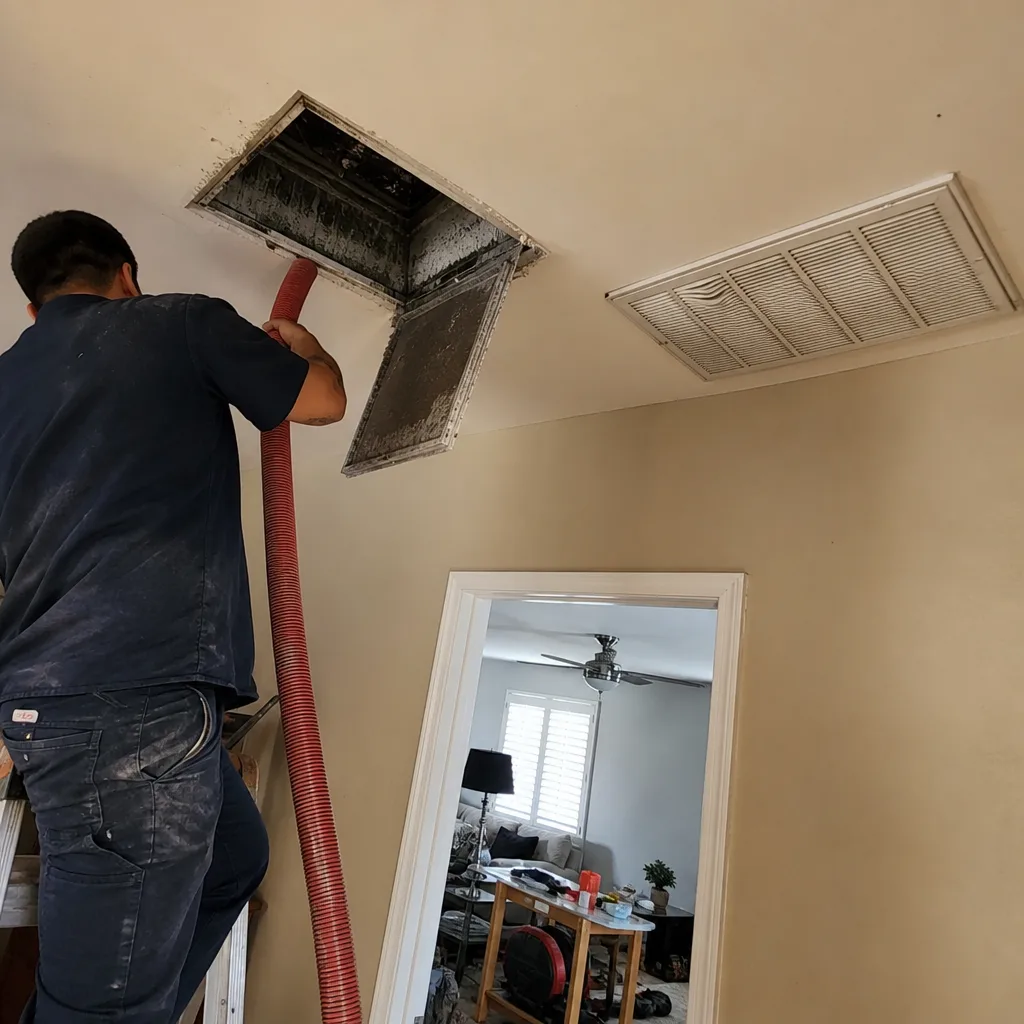
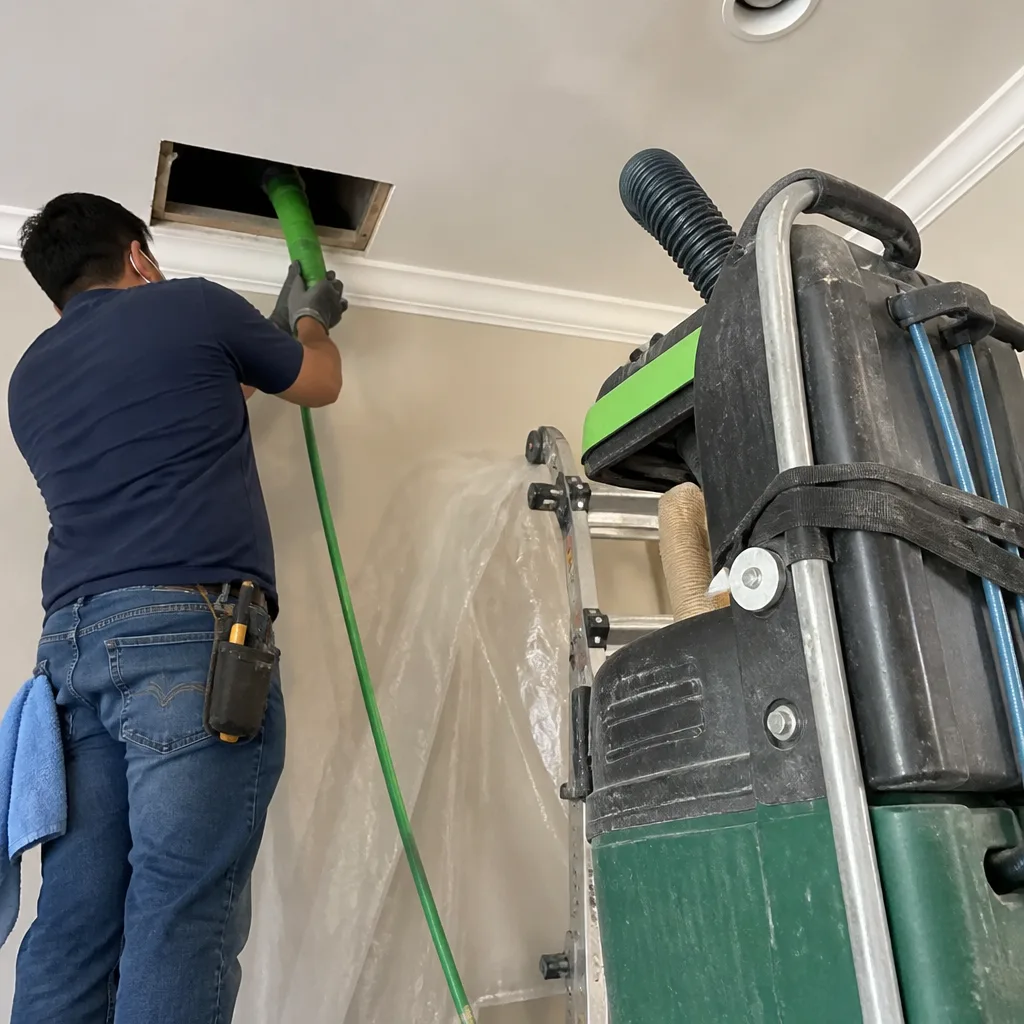
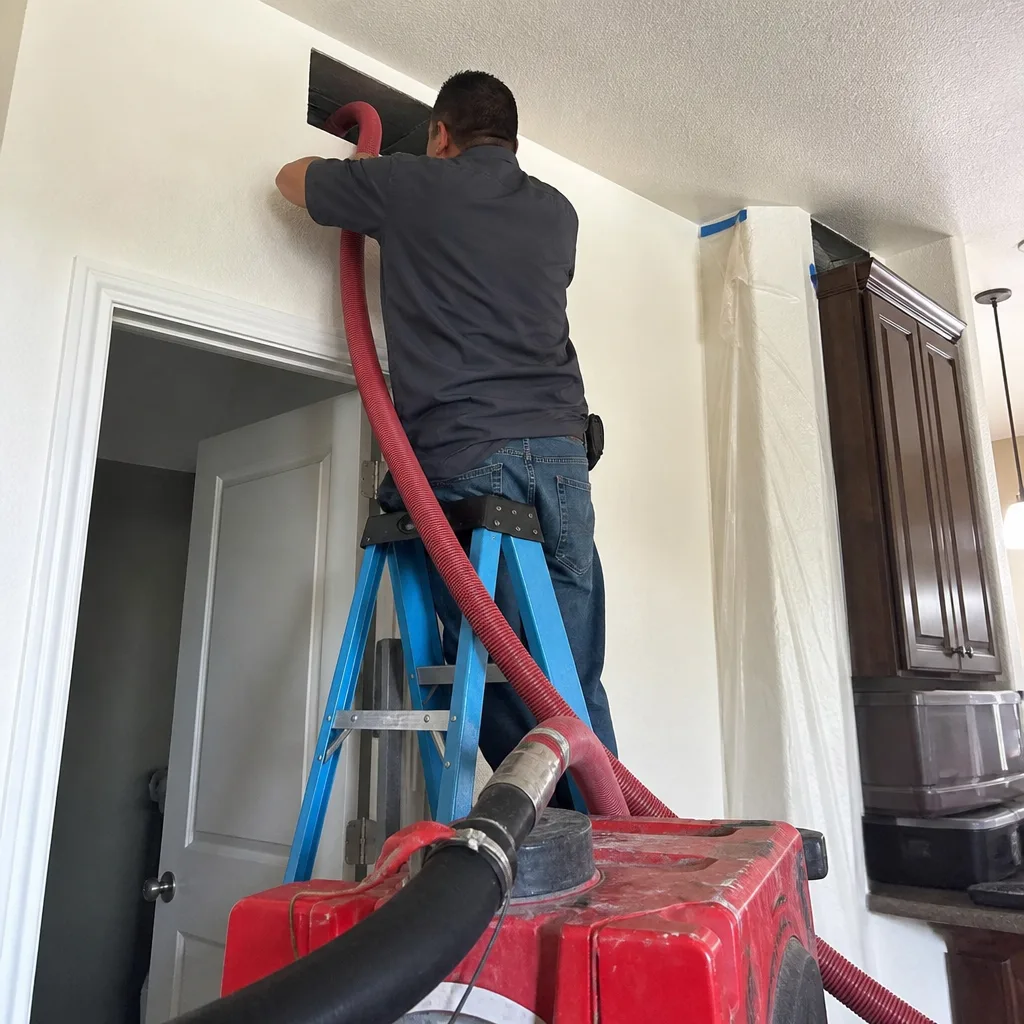
- Negative-pressure extraction. The system’s return side is connected to a Nikro HEPA-rated vacuum that creates negative pressure in the duct system. That means the loosened debris gets pulled into the vacuum and trapped in HEPA filtration, not blown back into your house. This is the step that separates professional cleaning from “we stuck a shop vac in the register” cleaning.
- Trunk line cleaning. Main trunk lines get the same brush-and-extract treatment. In some systems this requires access from the air handler side or through a trunk line access point.
- Blower compartment and coil. The blower motor, blower cage, and evaporator coil (where accessible) are cleaned. This is part of our standard scope, and it’s the difference between a duct cleaning and a full system cleaning.
- Final walkthrough and documentation. We show you before-and-after photos of the major ductwork, the blower, and the coil. You see what we did. The digital invoice arrives on your phone with those photos attached.
Common Mistakes to Avoid
- Choosing the cheapest quote without checking the scope. A $99 whole-house cleaning is a marketing expense for the company, not a service cost. They intend to recover it through add-ons. If the price doesn’t make sense for the work involved, the work isn’t happening.
- Not asking about access to the air handler. If your furnace is in a Fort Worth attic and the company never asked, they either don’t know what they’re doing or they intend to inflate the price on-site. Either way, that’s not a company to trust.
- Accepting “mold discovered during cleaning” without photos. If a tech says mold and can’t show you a photo, that’s not mold. That’s a sales script. Legitimate companies document their findings.
- Paying for duct sealing without a duct blaster test. Real sealing is measurable. If there’s no before-and-after measurement, there’s no way to know if any sealing happened. Skip it.
- Expecting a one-time cleaning to permanently solve allergy problems. Duct cleaning removes accumulated contaminants, but new debris enters the system daily. Filtration quality matters. We install Honeywell and Aprilaire filtration products that hold up to Fort Worth’s pollen load better than the basic 1-inch fiberglass filters most homes run.
- Skipping the dryer vent because it’s not “part of the HVAC.” The dryer vent is the highest-fire-risk air pathway in your home. In Fort Worth, where spring storm winds drive debris into exterior vents, the risk is higher than average. It’s a $75 to $125 add-on that meaningfully reduces house fire risk.
- Trusting a “whole-house cleaning” that takes 45 minutes. A legitimate cleaning of a 2,000 sq ft single-system home takes 2.5 to 4 hours with two techs. If the crew is in and out in under an hour, you didn’t get a cleaning; you got a vacuum demo.
When to Call a Professional
If you can see dust accumulating on registers or walls near vents within days of cleaning, that’s a problem. If you smell a musty odor when the air kicks on, that’s a problem. If your allergies flare in your own living room, that’s a problem. If you moved into a Fort Worth home and have no idea what the ducts look like, that’s a reason to find out. See our Air Duct Cleaning Warning Signs: A Fort Worth Homeowner’s Reference Guide for more details. And if you’ve just finished a renovation with drywall work, your ducts need attention before you run the system heavily. Cardinal Air Duct Fort Worth offers free estimates in Fort Worth and the surrounding area. Call (817) 730-6759 and we’ll give you a written price before any work begins.
Frequently Asked Questions
Most standard single-system homes in Fort Worth pay between $325 and $650 for a full air duct cleaning in 2026, with larger homes and dual-zone systems ranging from $550 to $950. Anything under $300 advertised as a whole-house cleaning is a loss-leader designed to generate add-on sales during the visit. Call (817) 730-6759 for a written quote specific to your home’s size and system count.
Cheap quotes are door openers. The company loses money on the $99 cleaning and recovers it through on-site “findings” that generate $400 to $900 in add-ons like unverified duct sealing, undocumented sanitizer fogging, or vague heavy-contamination fees. The honest price is the honest price, and if one quote is dramatically lower than the others, the difference is usually in what’s not included, not in what’s cheaper.
Ask for before-and-after photos of the major ducts, blower, and coil. Every Cardinal Air Duct Fort Worth job includes before-and-after photo documentation as part of The Relay Standard; that’s standard practice, not an upsell. If a company can’t show you photos of the work, assume the work didn’t happen the way you paid for.
A legitimate cleaning of a typical 2,000 sq ft single-system Fort Worth home takes 2.5 to 4 hours with two technicians. Jobs with attic access, multiple systems, or renovation debris take longer. If a crew is in and out in under an hour, they did not clean your ducts.
Yes. Dryer vents are a leading cause of house fires, and Fort Worth’s clay soil and storm winds fill exterior vents with debris quickly. Adding dryer vent cleaning in Fort Worth to an air duct job typically costs $75 to $125 and reduces fire risk while improving dryer efficiency. The two jobs share the same equipment and the same trip fee.
A dirty blower cage and evaporator coil reduce airflow and heat transfer, which makes your system run longer to hit the setpoint. Over a decade, that inefficiency costs more in electricity than the price of a cleaning every 3 to 4 years. The efficiency gain is real but gradual; don’t expect your bill to drop overnight. Expect the system to run closer to its rated efficiency for longer.
The Bottom Line
Air duct cleaning in Fort Worth costs $325 to $650 for most homes, and the price should be in writing before any work starts. The variables that matter are home size, system count, access difficulty, and honest add-ons like dryer vent inclusion or access panel creation. The variables that don’t matter are the advertised teaser rates, which are engineered to be replaced by inflated on-site invoices. Compare quotes by scope, not just price, and insist on before-and-after photos. That’s the standard Omar Haddad and the team at Cardinal Air Duct Fort Worth operate by, and it’s the standard every Fort Worth homeowner should demand.
Written by Omar Haddad, Owner at Cardinal Air Duct Fort Worth, serving Fort Worth since 2005.
See the difference
 Before
 After
After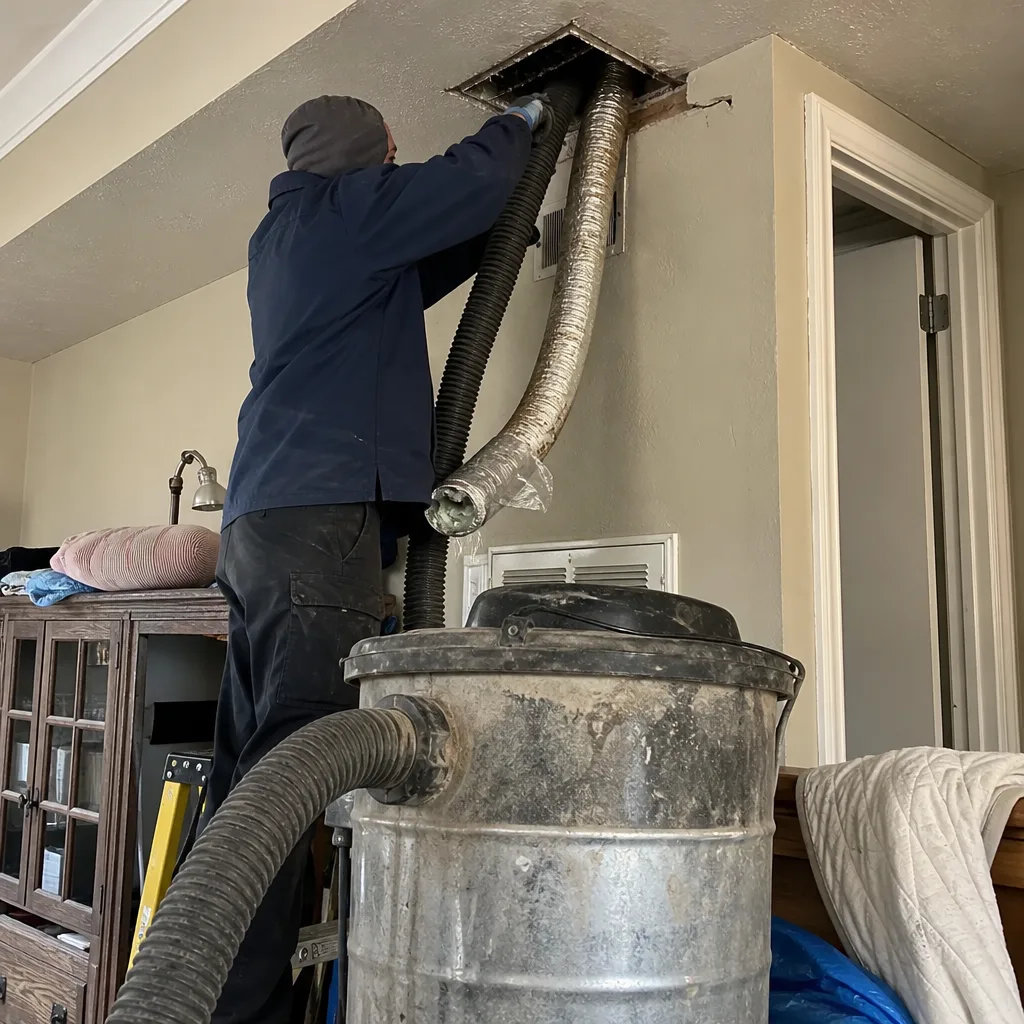 Before
 After
After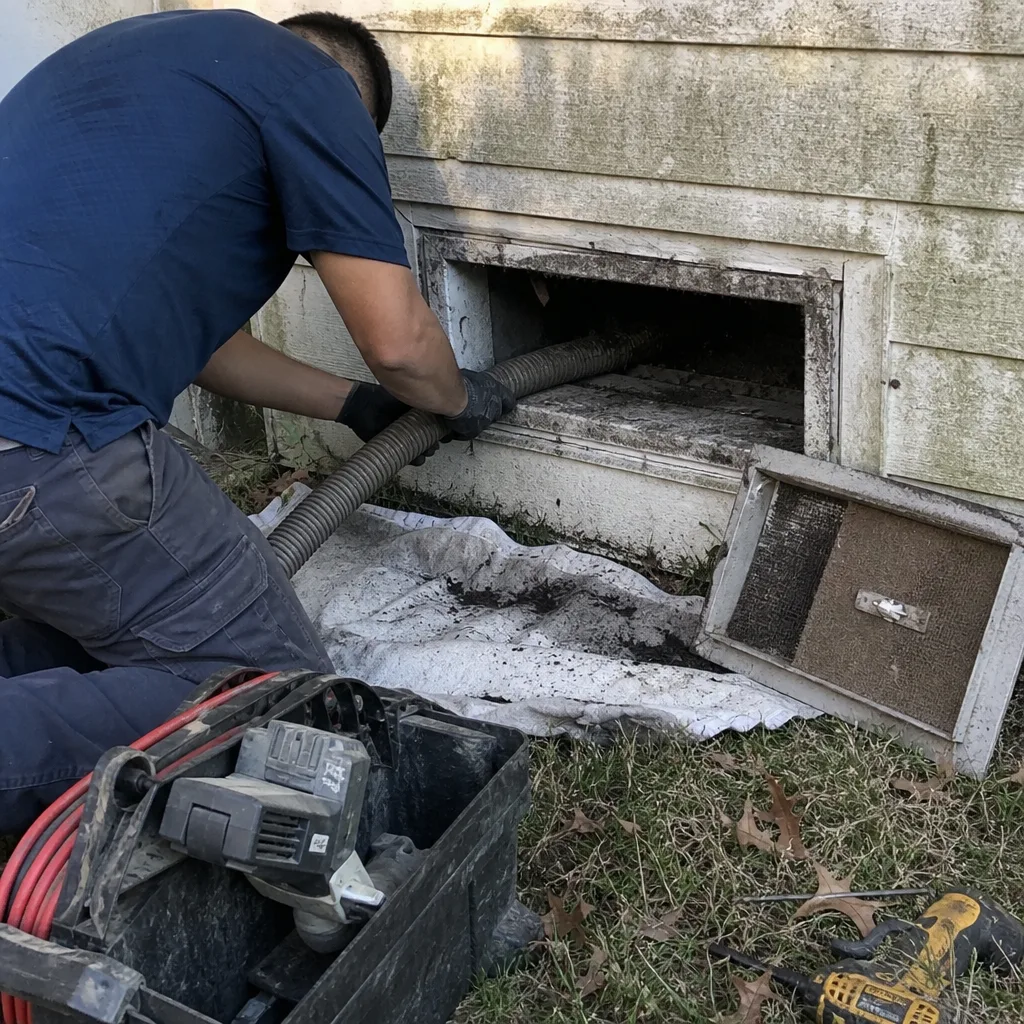 Before
 After
After