
Last updated October 15, 2026
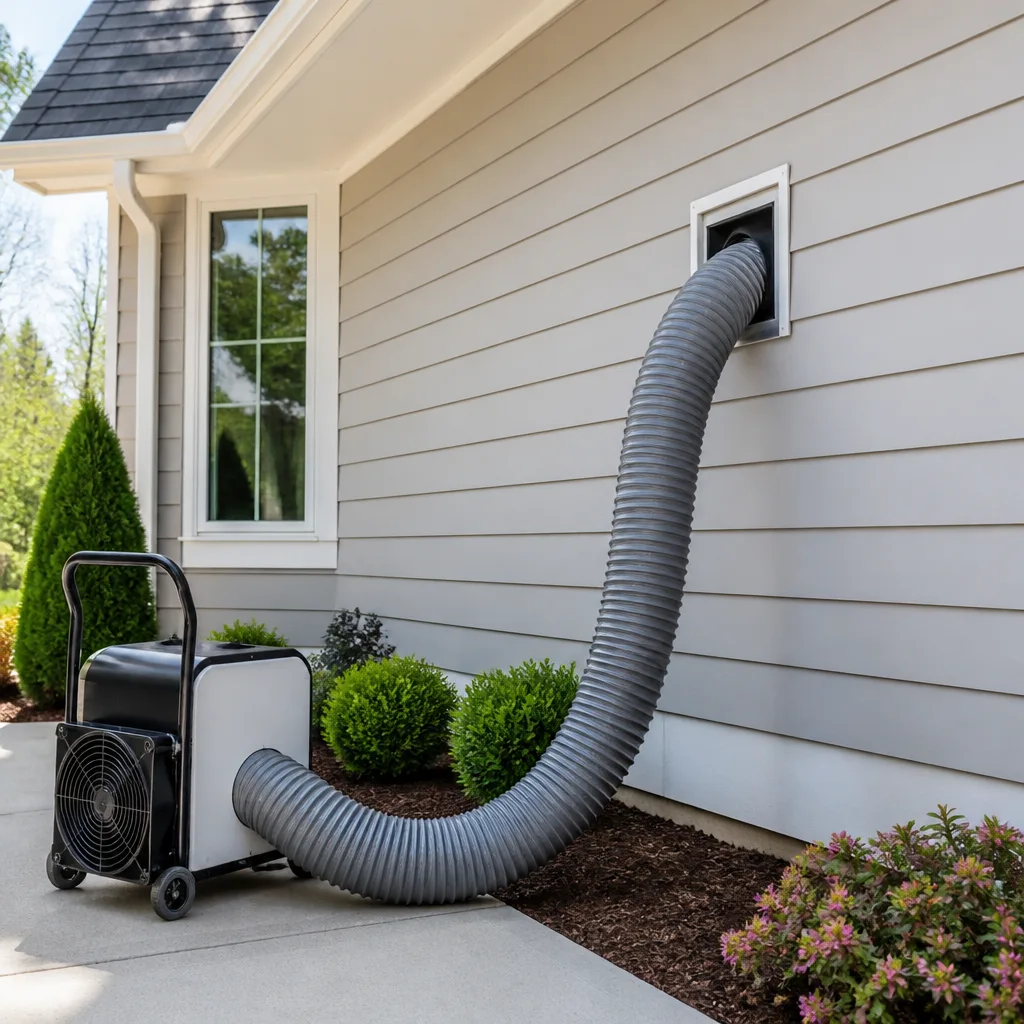 Whole-home duct cleaning
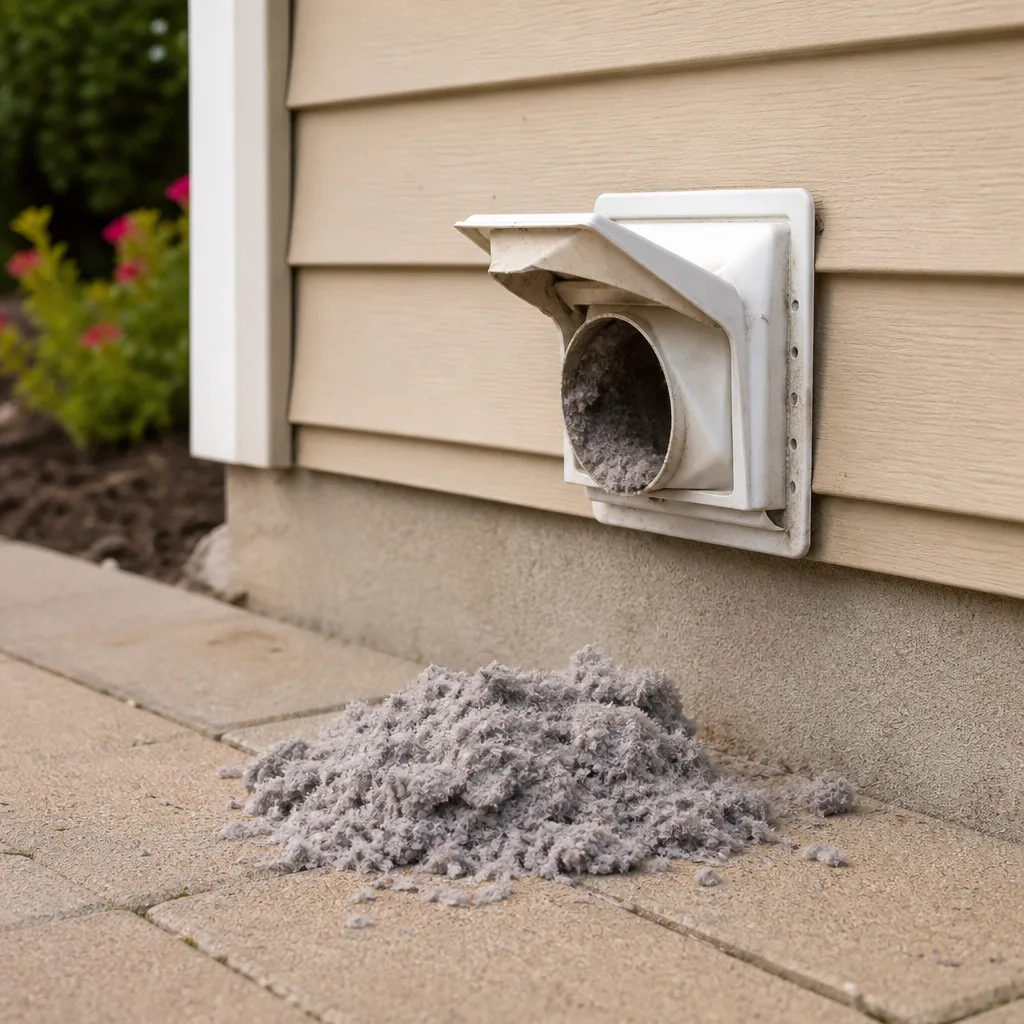 Dryer vent cleaning
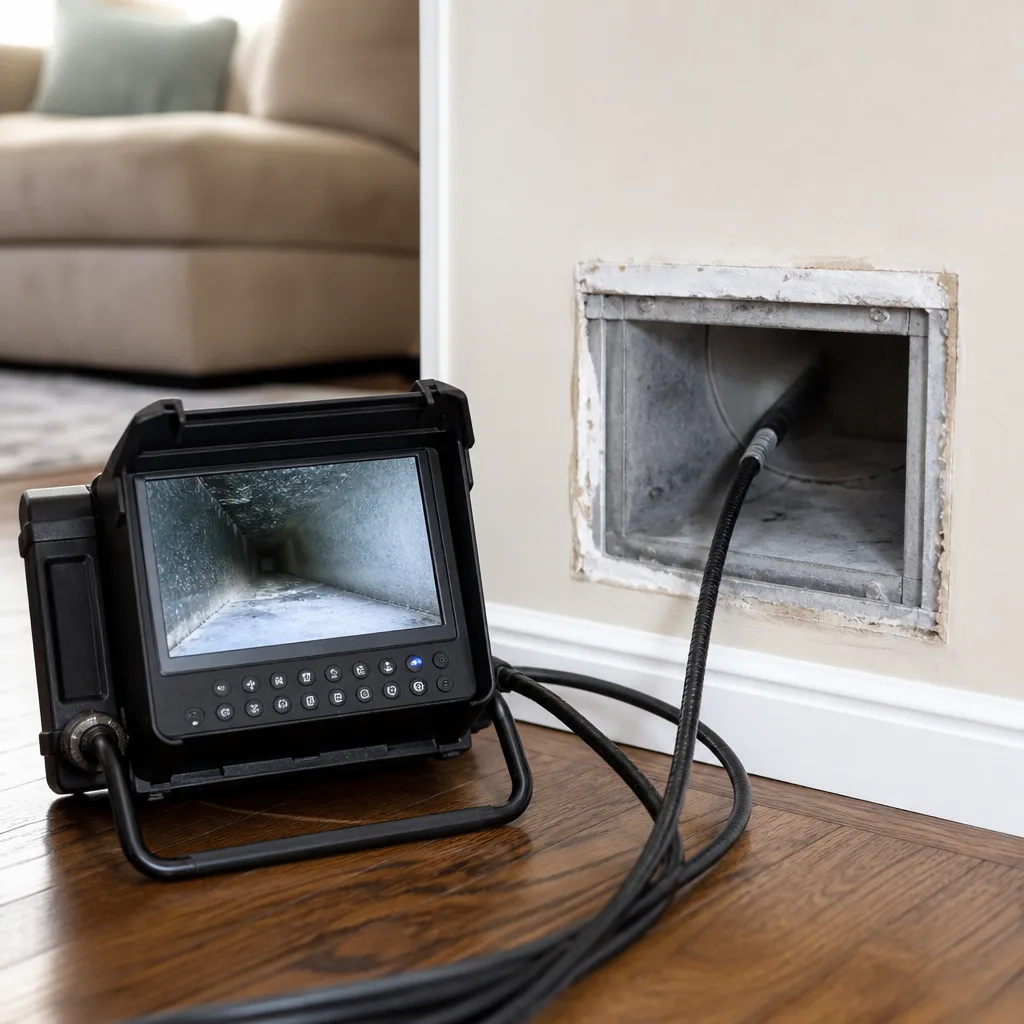 Camera inspection
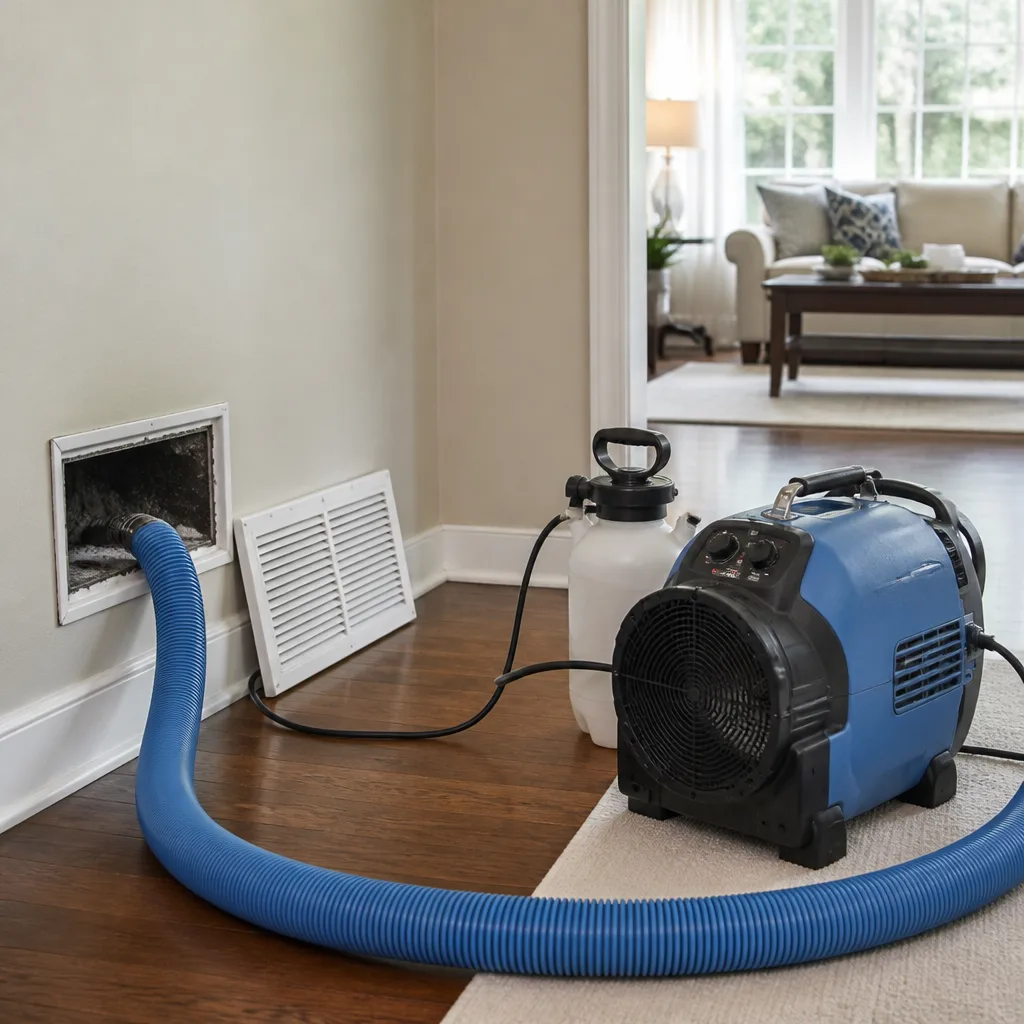 Sanitizing & deodorizing
Whole-system duct and dryer vent check with before-and-after photos - you see exactly what came out of your vents
That "$99 whole-house special" is a bait ad - the real number appears once they are in your hallway, or the "clean" is a shop-vac at the register. We photograph the inside of your ducts before and after instead.
The Complete Guide to Air Duct Cleaning in Fort Worth
Fort Worth HVAC systems run an average of 2,800+ hours per year – nearly 800 more than homes in northern climates. That means your ducts accumulate dust, pollen, pet dander, and construction debris at a pace most cleaning-frequency charts simply aren’t calibrated for. This guide is written for Fort Worth specifically: the Blackland Prairie soil, the cedar fever seasons, the new-build subdivisions throwing drywall dust into brand-new ductwork. Here’s what actually collects in your ducts here, when it matters, what our Air Duct Cleaning services cost in this market, and how to spot a company that’s about to waste your money.
Quick Answer
Air duct cleaning in Fort Worth typically costs $350 – $650 for a whole-home source-removal cleaning of a standard 2,000 – 2,500 sq ft house, and most homes can go 3 – 5 years between cleanings unless you’re in a high-construction area, have pets that shed heavily, or deal with cedar allergies. The key is hiring a company that uses negative-pressure extraction equipment, not a contact-only vacuum job that stirs up debris without actually removing it. Cardinal Air Duct Fort Worth provides written, flat-rate per-system pricing before any work starts – air duct cleaning in Fort Worth with no per-vent surprise charges.
Styles & brands we work with
Table of Contents
- Why Fort Worth Ducts Get Dirtier Faster
- How Professional Duct Cleaning Actually Works
- Contact Vacuuming vs. Source-Removal: Why It Matters Here
- What Air Duct Cleaning Costs in Fort Worth (Real Numbers)
- What Clean Ducts Actually Look Like: A Before-and-After Photo Walkthrough
- How to Read an HVAC Inspection Report Without Getting Upsold
- Red Flags: What Should Never Appear on a Legitimate Invoice
- Common Mistakes to Avoid
- When to Call a Professional
- Frequently Asked Questions
Why Fort Worth Ducts Get Dirtier Faster
Let’s talk about what’s actually floating through the air in Fort Worth. The Blackland Prairie isn’t just a name on a soil map – it’s a clay-heavy, fine-particle soil that dries out in summer and turns to powder. When the wind kicks up, that powder finds its way into return-air ducts through window seals, door gaps, and the negative pressure your HVAC creates every time it cycles on. Homes in Keller, Alliance, and far north Fort Worth near new construction get an extra dose: drywall dust, blown insulation fibers, and sawdust from active build sites migrate into ductwork and settle in the return plenum.
Then there’s cedar fever. From December through March, mountain cedar pollen blows in from the Hill Country and turns Fort Worth into one of the worst allergy cities in the country. Your HVAC filter catches some of it, but the return ducts upstream of the filter are where a lot of it lands and accumulates. In our experience cleaning ducts across Tarrant County, homes with allergy sufferers in places like Arlington Heights or Fairmount need attention far sooner than the national “every 5 – 7 years” advice suggests.
The math works out like this:
- 2,800+ annual runtime hours means your blower motor is pushing air through the ducts roughly 32% of every day. More runtime, more particulate movement, faster accumulation.
- Cedar season (December – March) adds a 4-month pollen load that northern climates don’t experience at this intensity.
- Clay soil fine-particulate dust in summer months is so fine it passes through standard 1-inch fiberglass filters entirely.
- New construction density in Alliance, Walsh, Chisholm Trail, and north Fort Worth means years of ambient construction dust, even if you’re not renovating your own house.
If you want the full scope of what we clean here, start with the Cardinal Air Duct Fort Worth home page for more on our local service area.
How Professional Duct Cleaning Actually Works
You deserve to know exactly what a technician does when they show up to clean your ducts. Here’s the step-by-step process we follow at Cardinal Air Duct Fort Worth, and what you should expect from any legitimate contractor in this market.
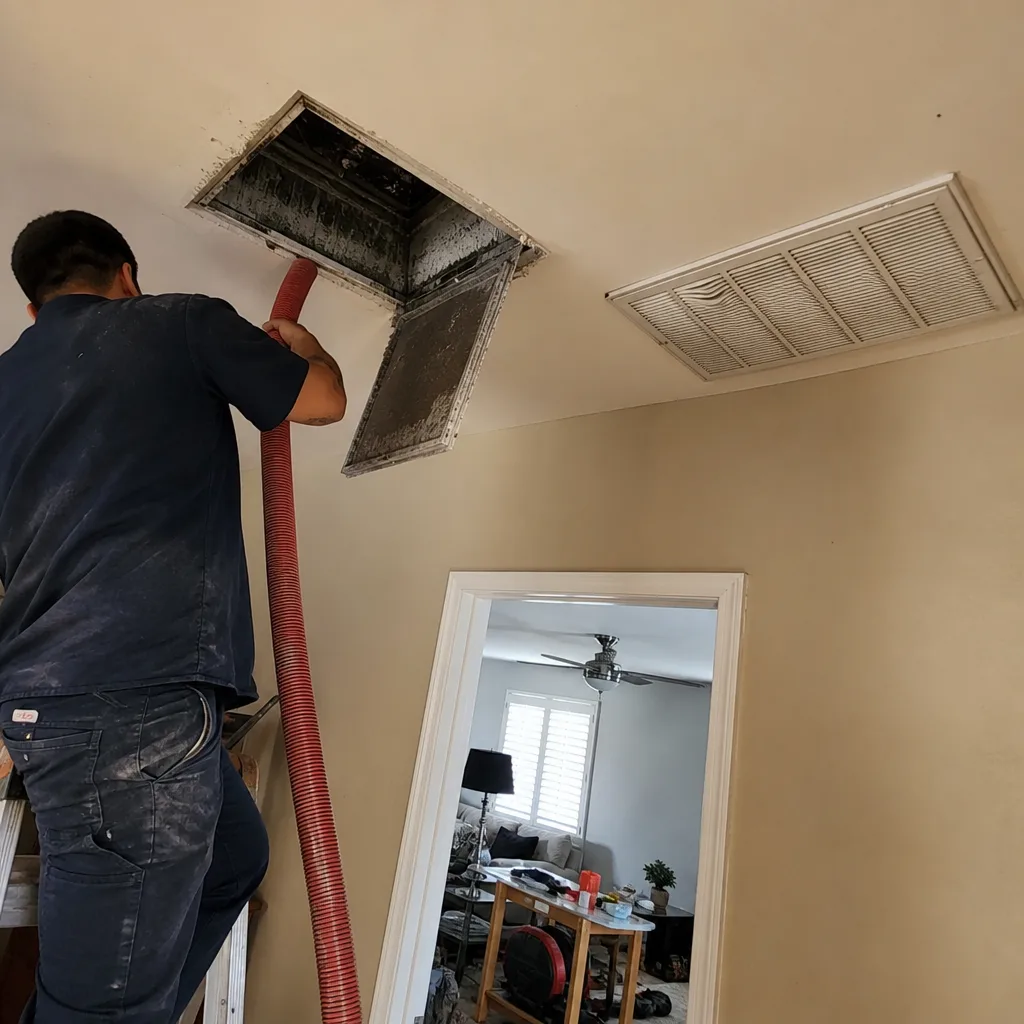
- System inspection first. Before any cleaning starts, the tech opens the supply and return plenums, checks the blower compartment, inspects the evaporator coil if accessible, and documents current conditions with photos. You should get to see those photos.
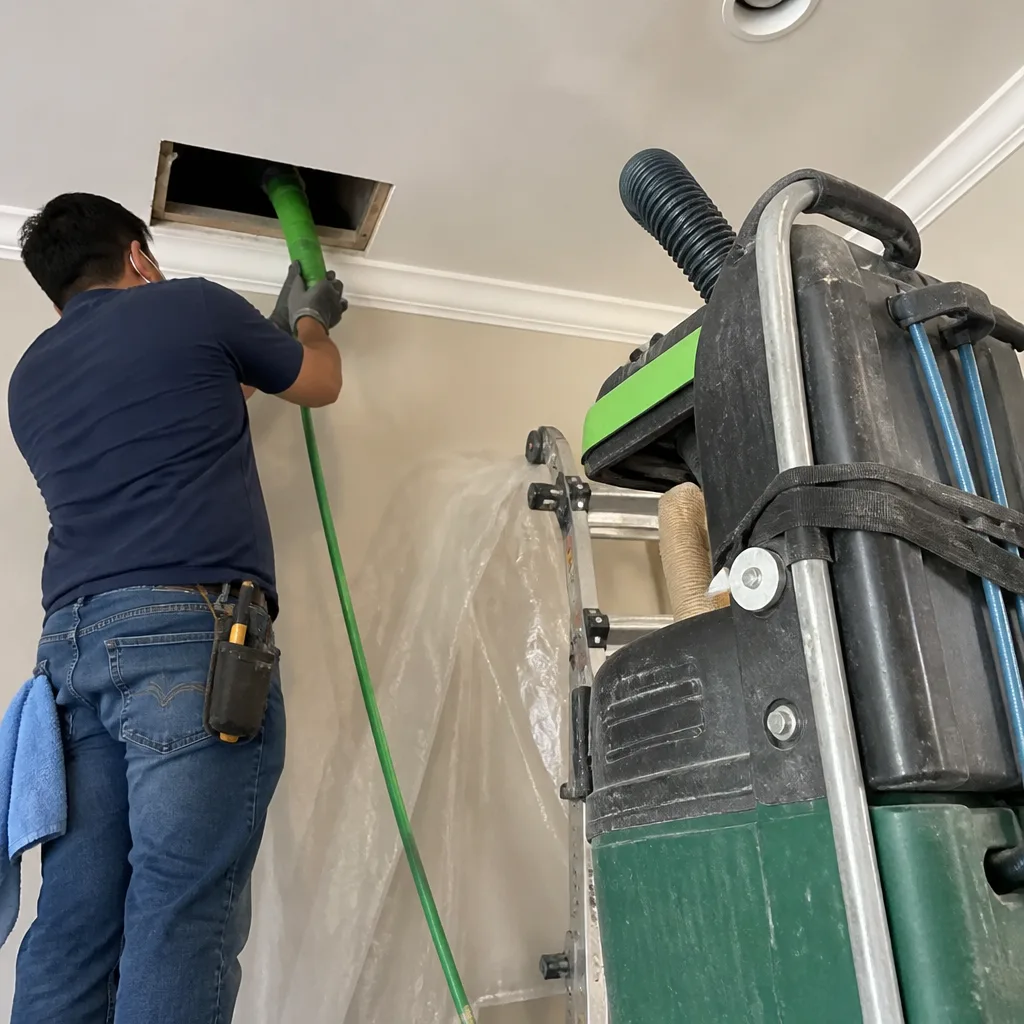
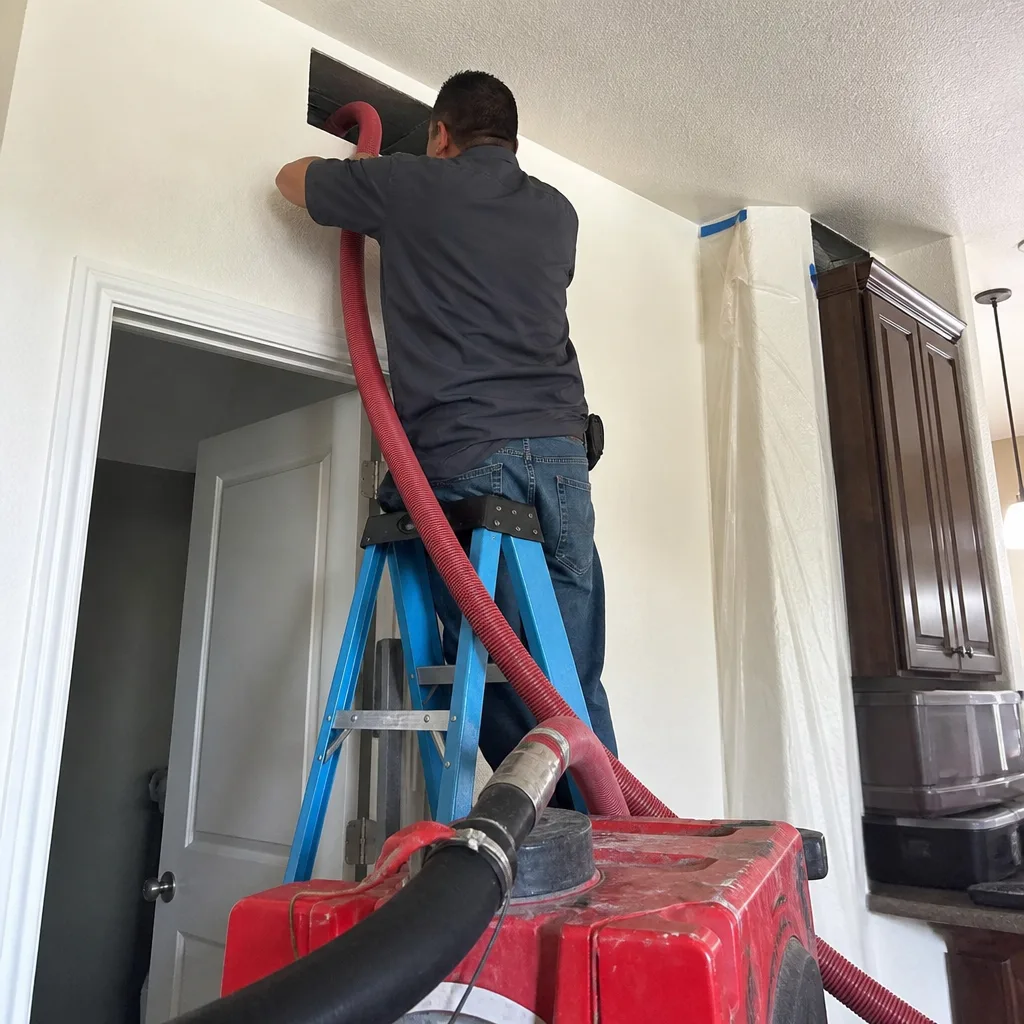
- Containment and setup. A HEPA-filtered negative-pressure vacuum (we run Nikro units) is connected to the duct system, typically at the return side. This creates suction that pulls loosened debris out of the ductwork and into the vacuum’s HEPA filtration, not into your living room. Abatement Technologies containment barriers go over doorways and vents to keep the work area clean.
- Agitation of duct walls. A rotary brush system (Rotobrush) or air-whip is fed through each branch line to physically dislodge the dust, hair, pollen, and debris caked onto duct walls. Without this agitation step, you’re just vacuuming the moving air, not the surface buildup.
- HEPA extraction and capture. The negative-pressure vacuum draws the agitated debris out through the collection system. The HEPA filter traps particles down to 0.3 microns, which matters when you’re dealing with fine cedar pollen and construction dust.
- Register and grille cleaning. Every supply register and return grille is removed, washed or wiped down, and replaced. This is a small step that changes how the whole system looks and performs.
- Final documentation. You get before-and-after photos of the inside of your ducts. This is the Relay Standard: you see the work, not just an invoice that says “cleaned.”
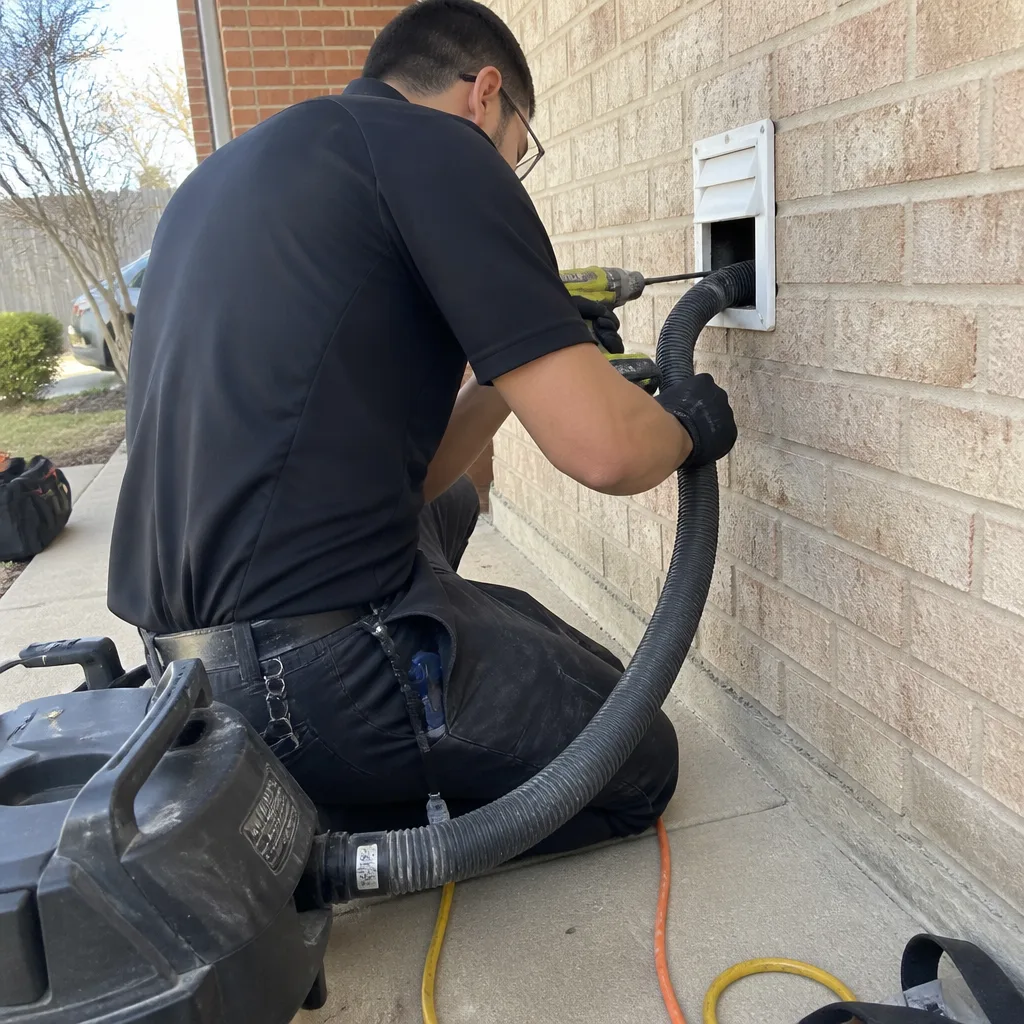
This entire process for a typical 2,000 – 2,500 sq ft Fort Worth home takes 3 – 5 hours and should be performed by at least one technician running professional equipment, not a single operator with a shop vac and a drill attachment.
Contact Vacuuming vs. Source-Removal: Why It Matters Here
Here’s a distinction most homeowners never learn until after they’ve paid for the wrong thing. There are two fundamental approaches to duct cleaning, and only one of them is worth your money in Fort Worth’s particulate-heavy environment-something we explore in depth in our DIY vs Professional Air Duct Cleaning: The Fort Worth Homeowner’s Decision Guide.
Contact vacuuming is what you get with most cheap $99 – $199 whole-house specials. A technician runs a vacuum hose through the register openings, sometimes with a small brush attachment. The vacuum is collecting loose debris that’s directly accessible from the register opening, but it’s not creating negative pressure in the whole system, and it’s not really agitating the walls of the duct. The result: debris beyond the first few feet of the branch line stays put, and the dust that was caked on the duct walls comes back into the air stream within weeks. You’re paying for a partial job.
Source-removal cleaning uses negative-pressure extraction – that means the loosened debris goes straight into the vacuum, not back into your living room. The system is sealed, the HEPA vacuum is creating suction at the source, and the agitation tools are physically dislodging the accumulated layer. This is the only method that removes the actual source of the contamination rather than just skimming the top layer. In Fort Worth, where cedar pollen and clay dust build up that caked-on layer quickly, source-removal is not a premium option – it’s the only option that makes sense. Cardinal runs Nikro HEPA-rated negative pressure units and Rotobrush agitation systems on every job for exactly this reason.
If a company can’t or won’t tell you which method they use, or says “it doesn’t matter,” walk away. It matters.
What Air Duct Cleaning Costs in Fort Worth (Real Numbers)
Let’s stop tap-dancing around the pricing question, because the vagueness is the problem in this industry. Here’s what we quote in this market, and what you should expect from any legitimate provider.
| Service | Typical Fort Worth Price Range | What’s Included |
|---|---|---|
| Whole-home duct cleaning (up to 10 vents, 2,000 sq ft) | $350 – $450 | Source-removal cleaning, register/grille cleaning, before-and-after photos |
| Whole-home duct cleaning (11 – 16 vents, 2,500 – 3,200 sq ft) | $450 – $650 | Source-removal cleaning, register/grille cleaning, before-and-after photos |
| Whole-home duct cleaning (17+ vents, 3,500+ sq ft) | $650 – $900 | Source-removal cleaning, register/grille cleaning, before-and-after photos |
| HVAC coil cleaning (evaporator) | $200 – $350 | Coil access, cleaning, and reassembly; often added to duct package |
| Dryer vent cleaning | $100 – $175 | Full lint removal from behind dryer to exterior termination |
These are whole-system, flat-rate numbers. Cardinal quotes per system, not per vent. The reason: per-vent pricing is the oldest bait-and-switch trick in this industry. A “$39 per vent” quote becomes $390 for 10 vents, then suddenly there are “extra” fees for the return line, the plenum, the coil, the “sanitizing fog,” and on it goes. With flat-rate per-system pricing, the number you’re quoted is the number you pay.
What should appear on a legitimate invoice:
- One line item for the duct system cleaning, one price
- Line item for coil cleaning if you requested it
- Line item for dryer vent cleaning if you requested it
- Any filter products you agreed to purchase (we carry Honeywell, Aprilaire, and Guardsman filtration)
What should never appear:
- A separate charge for “each vent” after a flat-rate quote was given
- Mystery “sanitizing” or “deodorizing” fees that weren’t in the original quote
- Charges for “mold remediation” without lab testing documentation
- Any fee described as “required by code” – duct cleaning is not a code requirement in Fort Worth or anywhere in Texas
What Clean Ducts Actually Look Like: A Before-and-After Photo Walkthrough
The single best protection against paying for work that didn’t happen is understanding what you’re looking at in the photos. Here’s what different duct conditions look like, and what a legitimate after-photo should show.
Condition 1: Normal household dust buildup (1 – 3 years since last cleaning)
Before: a thin gray film on duct surfaces, slightly heavier at the bottom of horizontal runs. You might see light pet hair accumulation near return grilles. This is normal and generally doesn’t require immediate action unless you have allergy concerns.
Condition 2: Post-construction debris (new build or renovation)
Before: visible chunks of drywall dust, sawdust, paint overspray flakes, and sometimes actual pieces of construction debris like wire ties or small drywall scraps. This is common in new Fort Worth homes in Walsh, Alliance, and Chisholm Trail where builders don’t always clean the ducts before handoff. After: the duct interior should be bare metal or bare flex-liner with no visible debris.
Condition 3: Heavy pet / long-term accumulation (3 – 7 years)
Before: matted hair and dander mixed with dust, sometimes visible along the full length of branch runs. You may see dust “stalactites” hanging from the top of return ducts. After: all surfaces visibly clean, no hanging debris, no dark buildup in corners.
Condition 4: Mold-adjacent growth (requires professional assessment)
Before: dark green, black, or brown staining, usually in areas of condensation (near the coil box or in insulated flex duct that’s been exposed to moisture). If you see this, the duct cleaner should stop and recommend lab testing. A legitimate company will not “just clean over it” and call it resolved. After cleaning and remediation: the affected materials are removed or the system is fully cleaned with documented post-remediation photos.
Here’s the key: a legitimate “after” photo shows the inside of the duct, not just the register cover. If a company hands you photos of shiny vent covers and calls that proof of duct cleaning, they didn’t show you anything. Cardinal’s Relay Standard includes before-and-after photos of the duct interior themselves, because that’s the only photo that matters.
How to Read an HVAC Inspection Report Without Getting Upsold
HVAC companies love to write inspection reports that sound terrifying if you don’t know the vocabulary. Here’s how to parse what actually matters.
- “Evidence of dust accumulation in supply ducts.” This is a reasonable indication for cleaning if the accumulation is visible and measurable. Ask for the photo. If there’s no photo, treat the recommendation as unverified.
- “Biological growth observed.” This should stop the process. Real biological growth requires lab testing to confirm, and cleaning alone doesn’t fix the moisture problem that caused it. A company that says “we’ll just clean that off” without addressing moisture is selling you a temporary job.
- “Evaporator coil dirty / airflow reduced.” This is legitimate and common in Texas heat. We see Fort Worth coils that haven’t been cleaned in years, and the airflow loss is real. Coil cleaning is a legitimate add-on – just get it priced as its own line item, not buried in the duct quote.
- “Duct leakage.” This is an HVAC efficiency issue, not a cleaning issue. Some companies will recommend “sealing” that duplicates what a good HVAC technician does with mastic and metal tape. Get a second opinion if this is presented as urgent during a cleaning visit.
- “Filter replacement recommended.” This is almost always true. Most Fort Worth homes run 1-inch fiberglass filters that were never designed for our particulate load. We recommend upgrading to a MERV 8 – 11 pleated filter or a media cabinet with a 4-inch filter (Honeywell and Aprilaire make good ones). This reduces the rate at which your ducts re-accumulate.
The rule of thumb: a cleaning recommendation with photographic evidence is legitimate. A cleaning recommendation without evidence, or with an unpriced “additional work required” note, is a sales tactic.
Red Flags: What Should Never Appear on a Legitimate Invoice
We’ve cleaned ductwork behind some interesting companies. Here’s what separates a legitimate line item from a garbage fee.
- “Per-vent” pricing. The flat-rate model is standard for honest companies. Per-vent pricing is a lever to inflate the total once the van is in your driveway.
- “Anti-microbial fogging” or “sanitizing spray.” These products have limited utility and are rarely needed. If it’s a surprise on the invoice, it’s a markup line.
- “Filter replacement” at triple retail. You can buy a quality pleated filter at any hardware store for $12 – $25. If the invoice says $75 for a “special HEPA filter” that’s a standard MERV 8, that’s a markup.
- “Removing and resetting registers.” Register cleaning is included in any legitimate duct cleaning. It’s not an add-on.
- “Access door fabrication.” Occasionally a legitimate charge if access is genuinely difficult, but it should be disclosed in the quote, not discovered later.
Every Cardinal invoice is itemized and priced before any work starts. No line item appears that wasn’t in the written quote you approved. That’s the only way to do it.
Common Mistakes to Avoid
- Assuming the national average applies to Fort Worth. The “every 5 – 7 years” rule comes from average U.S. climate data. Fort Worth’s runtime, clay dust, and cedar pollen load mean many homes need attention at 3 – 4 years.
- Choosing the lowest bid without asking about the method. If it’s contact vacuuming, you’re paying for a partial result that won’t last. Ask directly: “Do you use negative-pressure extraction and mechanical agitation?”
- Treating duct cleaning as a mold solution. Duct cleaning removes particulate. It does not remediate mold. If the diagnosis is actual biological growth, the moisture source needs to be addressed. A proper cleaning is part of the response, not the entire response.
- Skipping the coil while cleaning the ducts. A dirty coil re-contaminates clean ducts within months. If the coil hasn’t been cleaned, ask whether the contractor includes it or charges separately. Running clean air through a dirty coil defeats the purpose. (HVAC cleaning in Fort Worth covers the full scope.)
- Not getting before-and-after photos. If you don’t have proof of the work, you don’t have work you can verify. Insist on interior duct photos.
- Forgetting the dryer vent. While the duct system is being cleaned is the perfect time to address the dryer vent. A clogged dryer vent is a fire hazard, and it’s a separate service. Read more on dryer vent cleaning in Fort Worth.
- Paying for the “whole-house special” without knowing the scope. Does the quote include the return side? The plenums? The main trunk line? If the answer is vague, the job will be vague. Get specifics in writing.
When to Call a Professional
Call a duct cleaning professional if you’re seeing visible dust accumulating on registers within days of cleaning the house, if allergy symptoms are worse inside than outside during cedar season, if you’ve just completed a renovation or moved into a new build in Fort Worth, or if it’s been more than 4 years since the last cleaning and you can’t remember when it was. If you’re noticing musty odors when the system cycles on, or if a recent HVAC inspection flagged dust or coil buildup, those are also legitimate triggers. Cardinal Air Duct Fort Worth offers free estimates in Fort Worth – call (817) 730-6759 and Omar Haddad or one of our team members will give you a straight answer on what needs doing and what doesn’t.
Frequently Asked Questions
Most standard whole-home air duct cleanings in Fort Worth run $350 – $650 depending on home size, number of vents, and system complexity. That’s the flat-rate range for a proper source-removal job with negative-pressure equipment, not a contact vacuum. Call (817) 730-6759 for an exact written quote on your system – estimates are free, and the price you’re quoted is the price you pay.
Most Fort Worth homes need duct cleaning every 3 – 5 years, which is more frequent than the national 5 – 7 year average. The reason is our 2,800+ annual HVAC runtime hours, cedar pollen load from December through March, and fine clay dust from the Blackland Prairie that enters return ducts faster than in most U.S. climates. Homes with shedding pets or recent renovation work may need attention at the shorter end of that range.
Cheap quotes almost always mean contact vacuuming – a fast pass through the registers without negative-pressure extraction or proper duct-wall agitation. The work might look fine on the surface, but the caked-on layer of dust and pollen stays put and re-enters your airflow within weeks. In Fort Worth’s particulate-heavy air, this method leaves most of the problem untouched. A legitimate source-removal job requires professional equipment and trained techs, and it costs what it costs.
You should receive before-and-after photos of the inside of your ducts, not just clean register covers. Those interior photos are the entire point: you should see visible bare metal or bare flex-liner in the after-photos, with no hanging debris or dusty film. If a company won’t or can’t provide interior duct photos, you have no way to verify the work, and that’s not acceptable. Every Cardinal job includes interior duct photo documentation as part of the Relay Standard.
You can do a surface-level job: vacuuming the register openings and changing filters. But without negative-pressure equipment and mechanical agitation tools, you can’t reach the debris in the branch lines and trunk runs. The dust you can’t see in the middle of your system is exactly what comes back into your air after a DIY pass. For a true source-removal clean, professional equipment is required. Call (817) 730-6759 if you want a realistic assessment of what your system needs.
Duct cleaning addresses the ductwork itself: the supply and return runs, branch lines, plenums, and registers. HVAC cleaning goes further and includes the mechanical components – the blower assembly, evaporator coil, condensate pan, and heat exchanger. Most Fort Worth homes benefit from having both done together, since a clean coil is the only way clean ducts stay clean for long. We cover the full HVAC scope on our separate HVAC cleaning in Fort Worth page.
The Bottom Line
Your Fort Worth ducts work harder than the national guides assume, and the stuff inside them is specific to this city: clay dust from the prairie, cedar pollen from December through March, drywall dust from every new subdivision going up. A legitimate cleaning is a source-removal job with negative-pressure extraction, real agitation, before-and-after photos, and a flat-rate price quoted before the van arrives. Anything less is a shortcut that leaves the actual problem in place. For more guides & resources on HVAC maintenance, visit our blog, or if you want a straight answer on whether your ducts need attention, call Cardinal Air Duct Fort Worth at (817) 730-6759. A live person answers, Omar Haddad or a member of our team will walk you through what we’d do, and the estimate is free.
Written by Omar Haddad, Owner at Cardinal Air Duct Fort Worth, serving Fort Worth since 2005.
See the difference
 Before
 After
After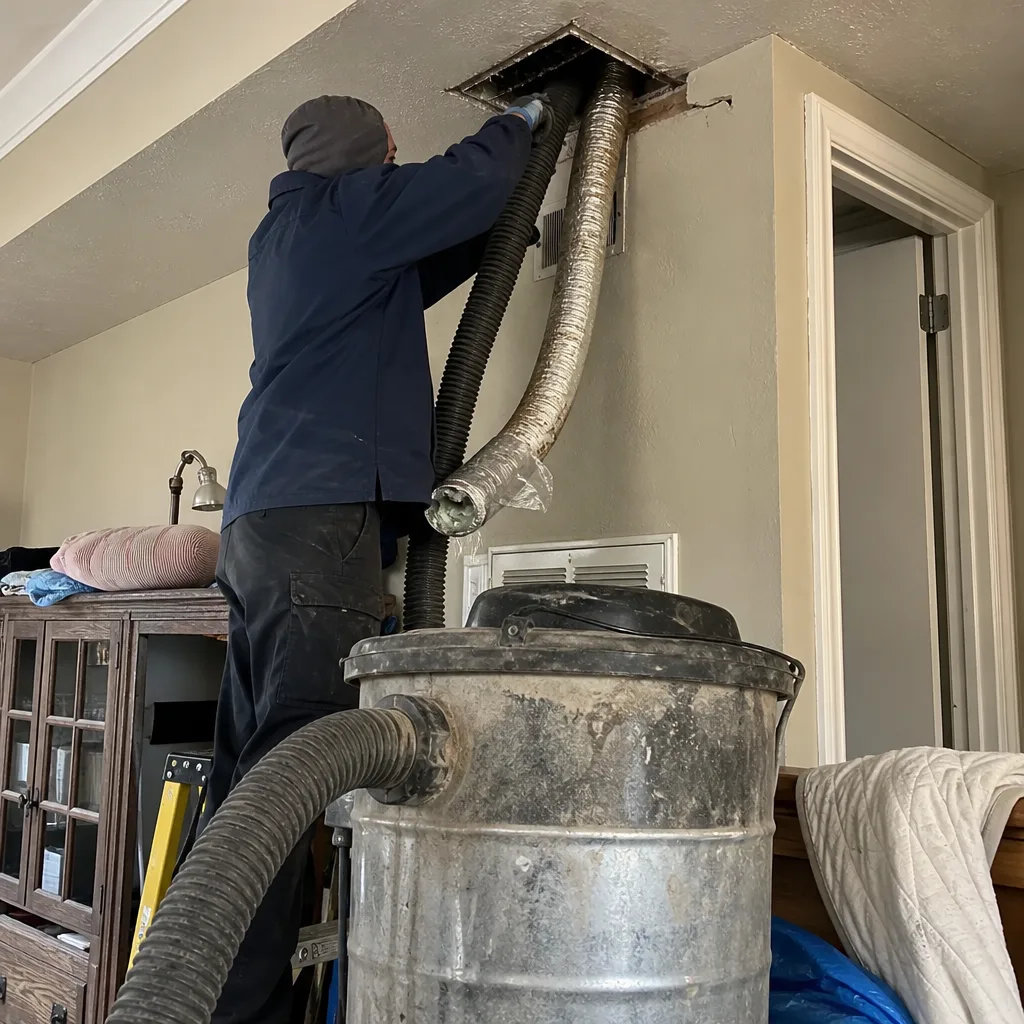 Before
 After
After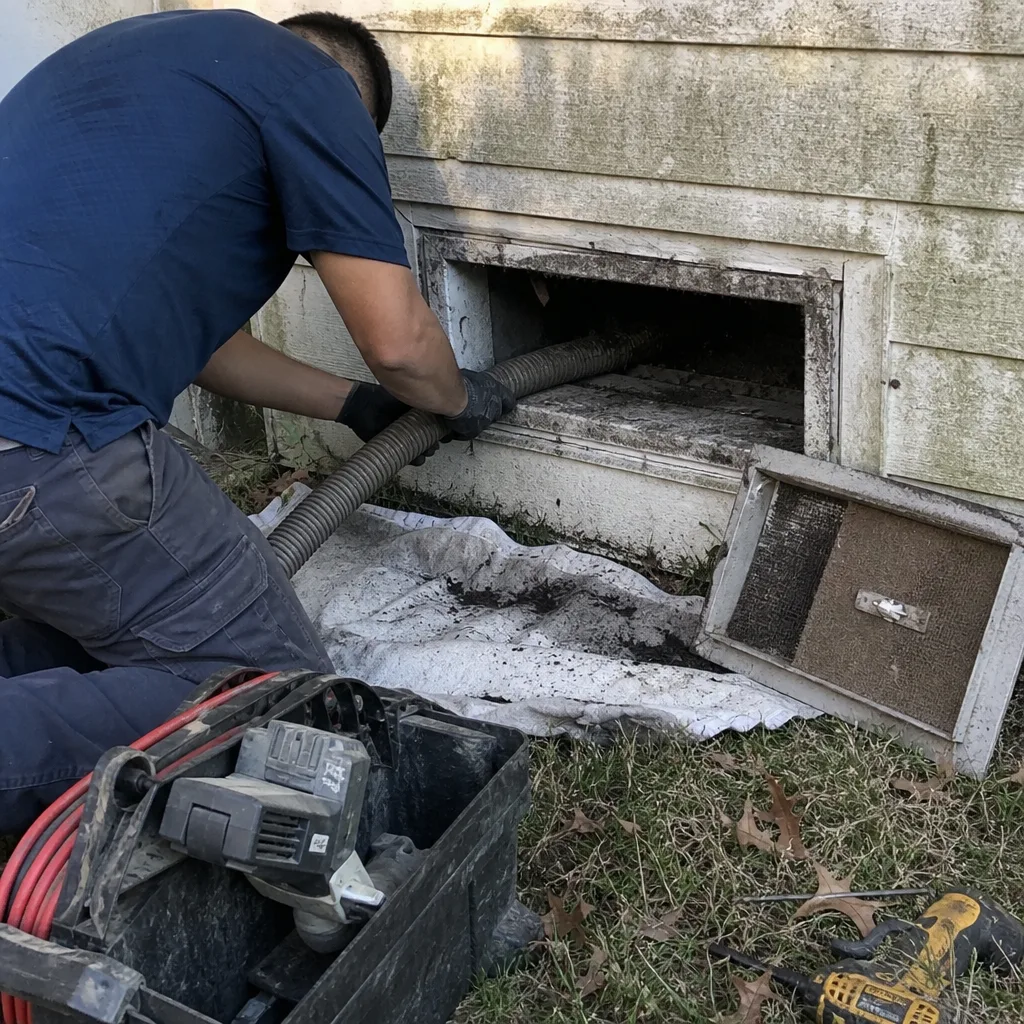 Before
 After
After