
Last updated October 15, 2026
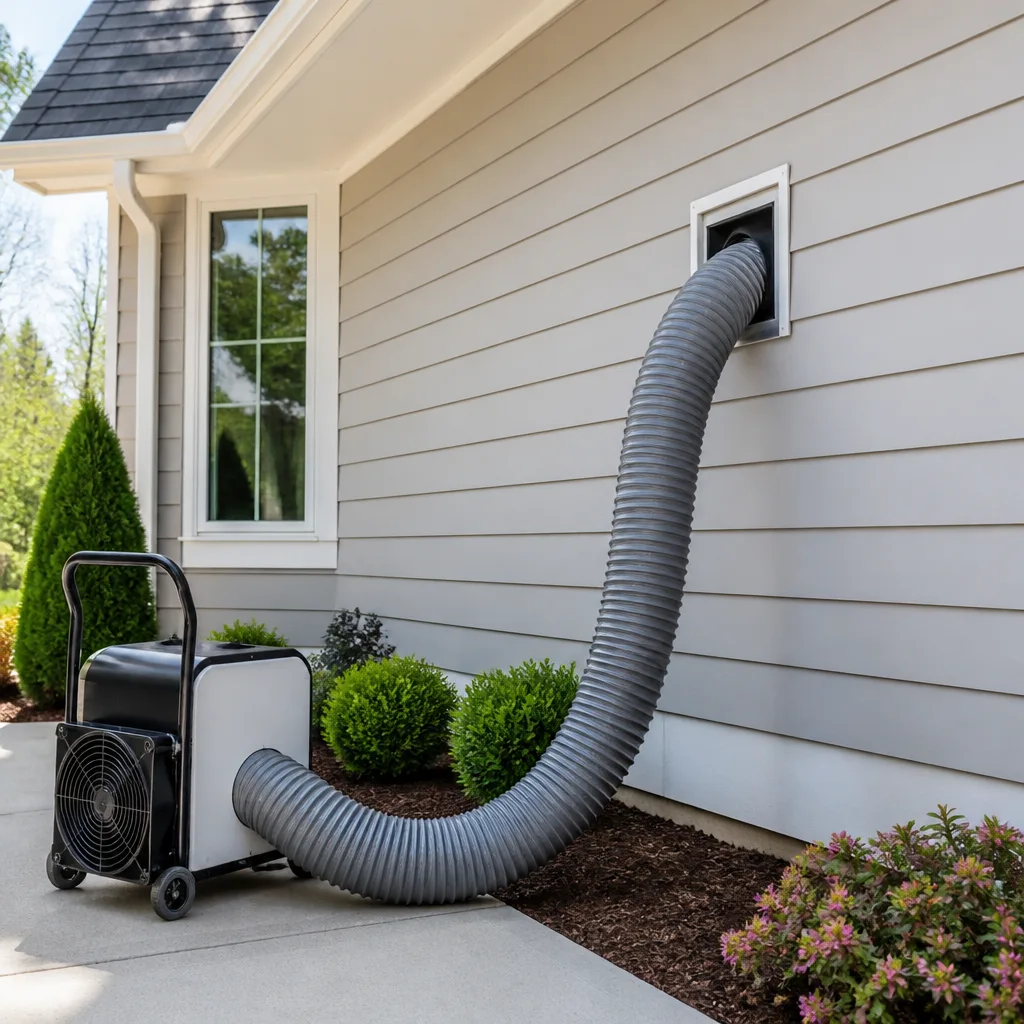 Whole-home duct cleaning
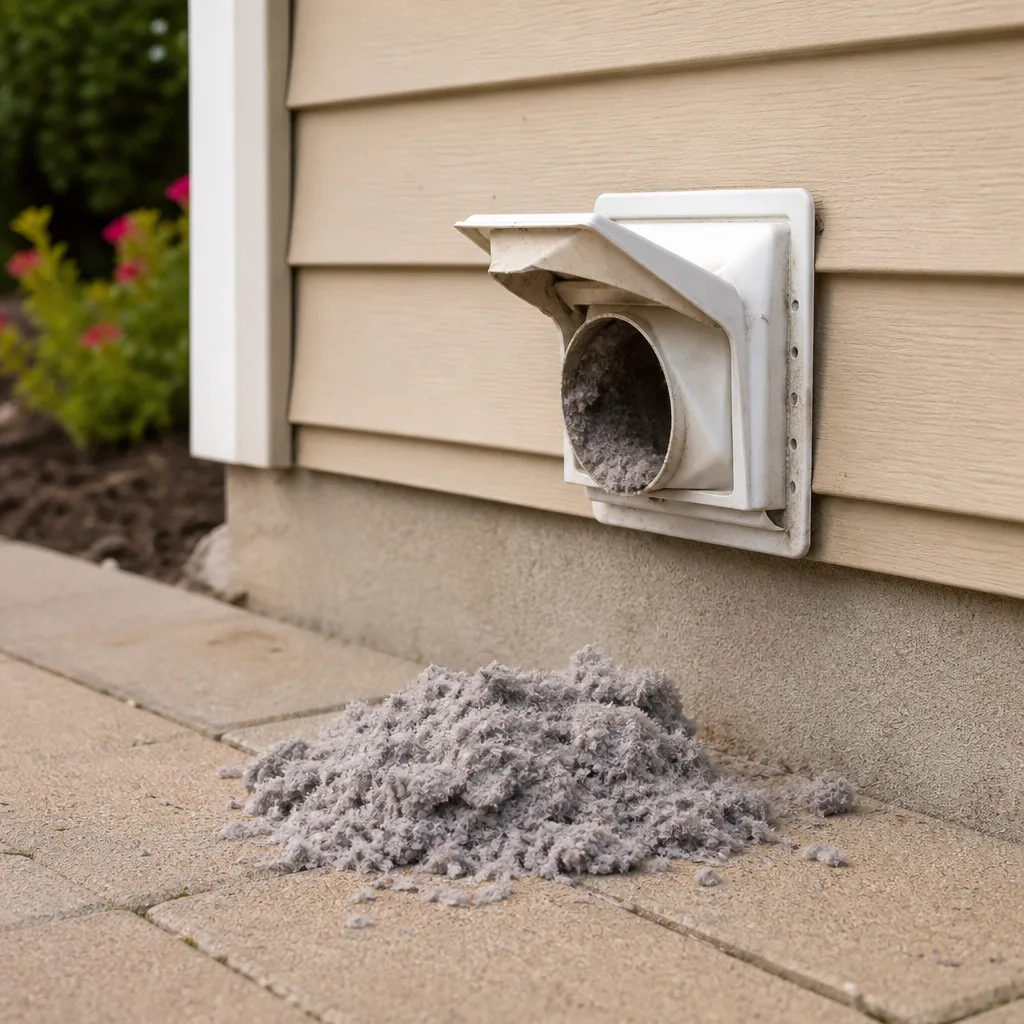 Dryer vent cleaning
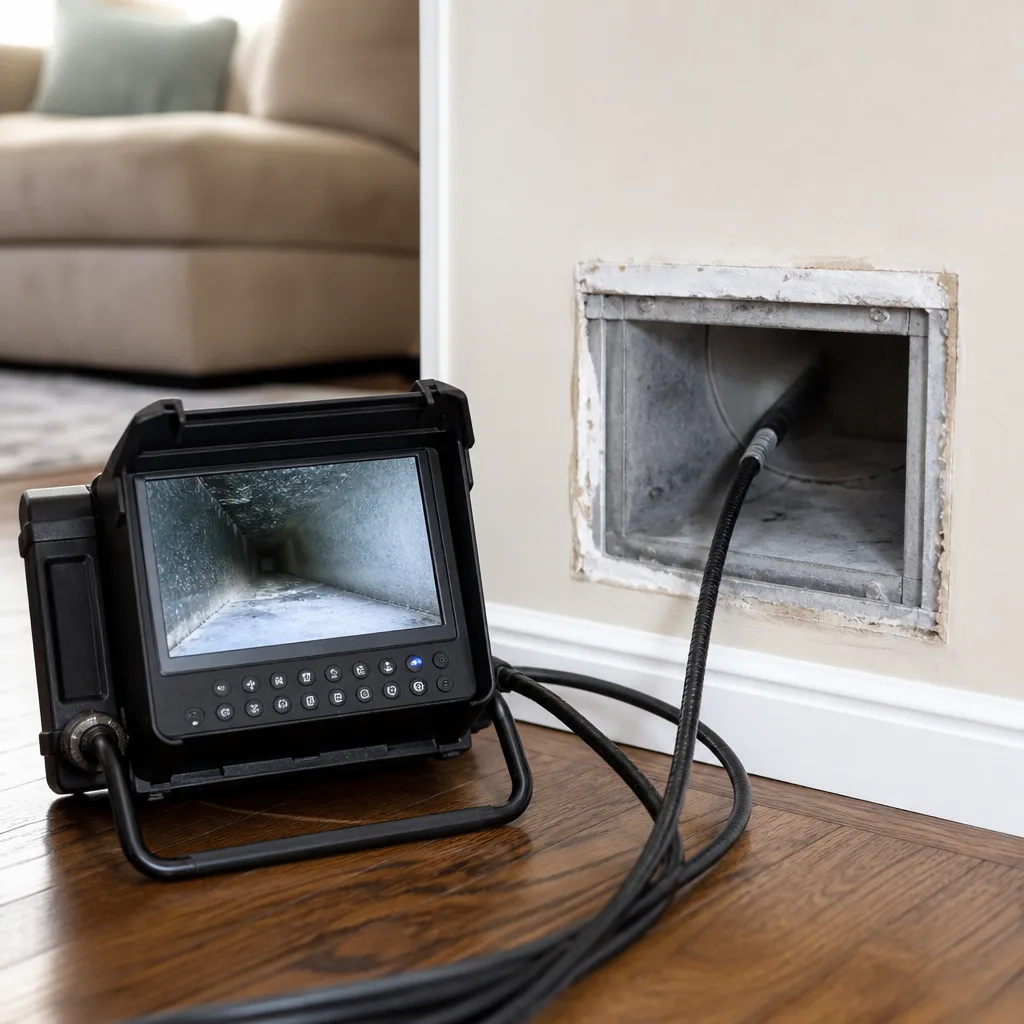 Camera inspection
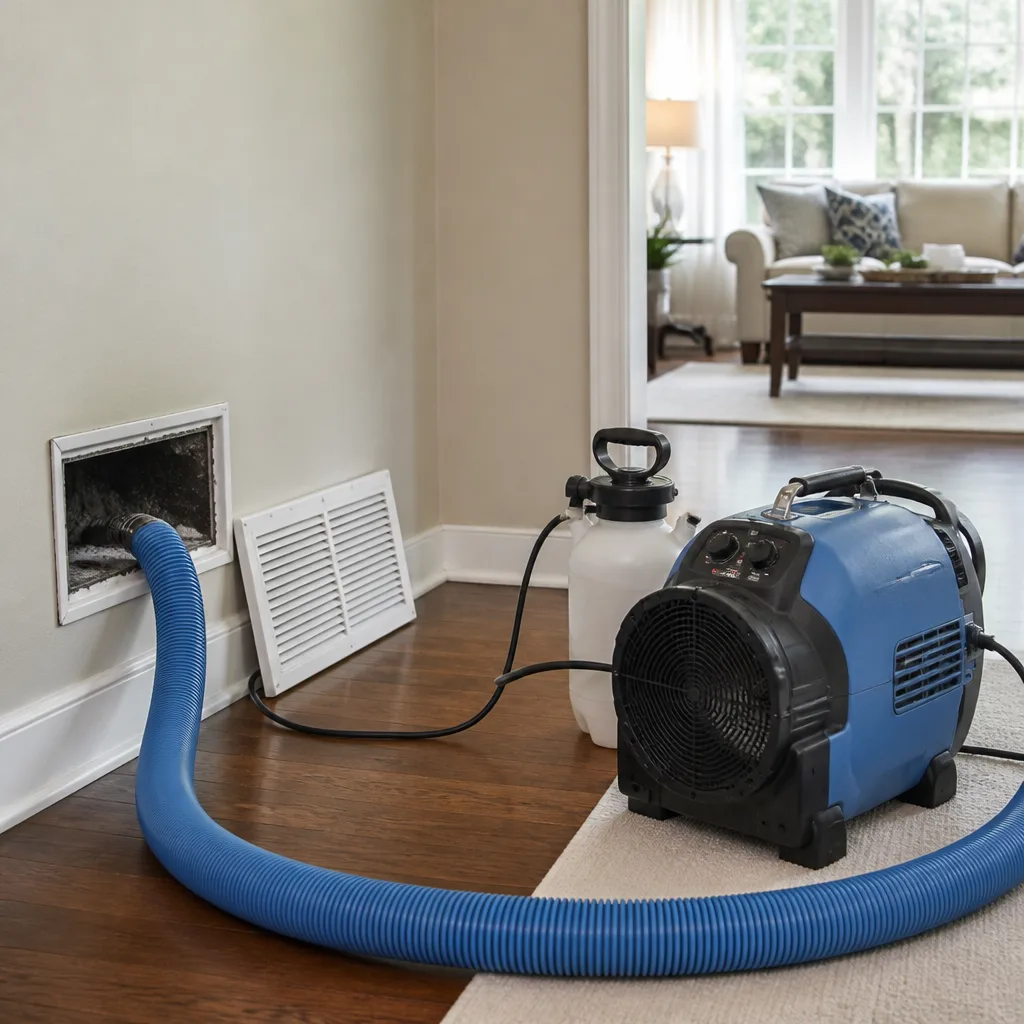 Sanitizing & deodorizing
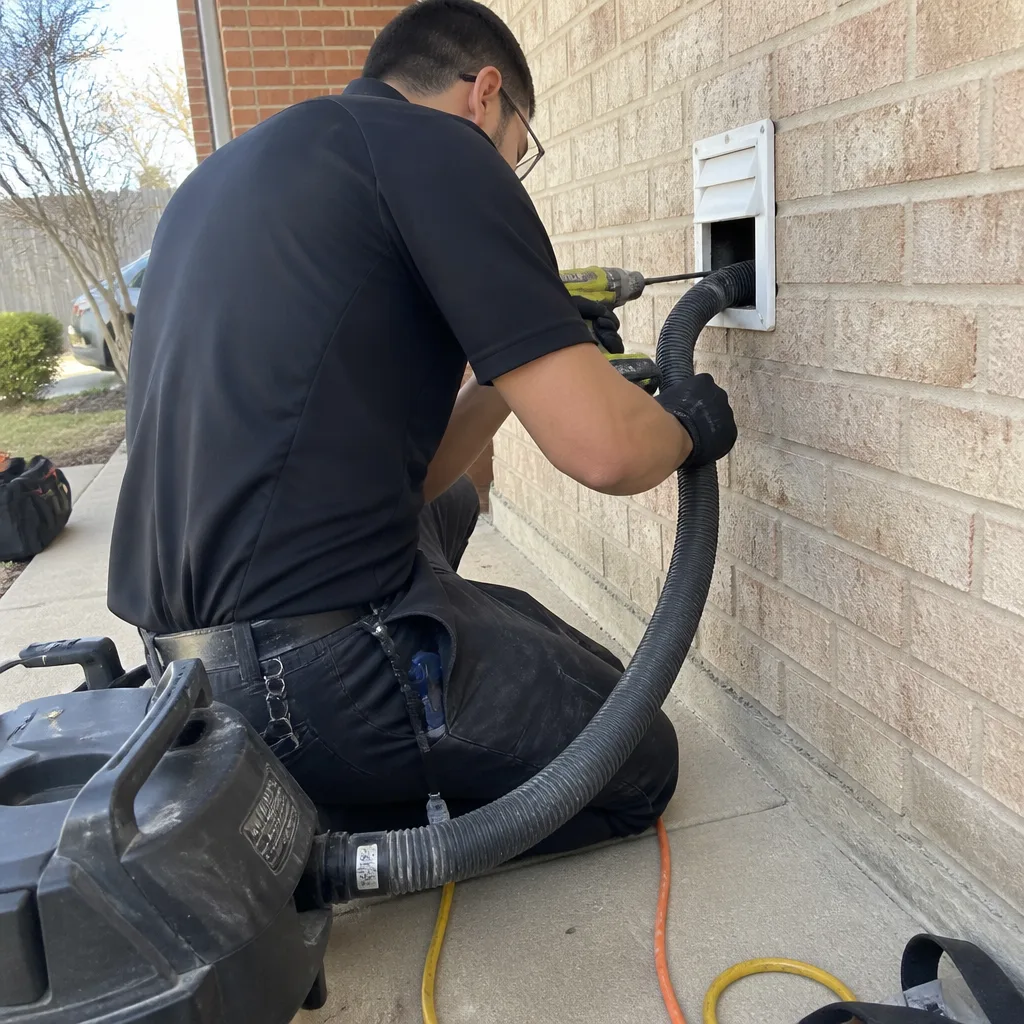
Whole-system duct and dryer vent check with before-and-after photos - you see exactly what came out of your vents
That "$99 whole-house special" is a bait ad - the real number appears once they are in your hallway, or the "clean" is a shop-vac at the register. We photograph the inside of your ducts before and after instead.
DIY vs Professional Air Duct Cleaning: The Fort Worth Homeowner’s Decision Guide
Here’s a truth most duct cleaning guides won’t tell you: the same $60 dryer vent brush kit that works beautifully on a short, straight dryer exhaust does not scale up to your HVAC system. Actually, pointing a shop vac into a floor register often makes things worse. It loosens dust at the opening, then provides nowhere near enough suction to capture it, so the debris gets pushed backward into the trunk line and settles closer to your air handler. This guide explains exactly where the DIY line is, what’s safe to tackle yourself in a Fort Worth home, and when the physics of the job require Air Duct Cleaning services with professional equipment. You’ll leave knowing the real costs, the real risks, and how to verify any cleaning was actually done.
Quick Answer
DIY air duct cleaning is appropriate for exactly two tasks: register-level vacuuming with a standard household vacuum and replacing your air filter. Everything beyond that, from trunk-line cleaning to coil cleaning, requires negative-pressure extraction at 2,000 to 4,000 CFM, which is equipment that simply doesn’t exist in consumer form. Professional cleaning in Fort Worth typically runs $300 to $500 for a standard single-system home, and it includes before-and-after photo documentation that DIY work cannot provide. For more details, see our How to Hire a Air Duct Cleaning Contractor in Fort Worth: A Step-by-Step Guide.
Styles & brands we work with
Table of Contents
- The Physics Problem: Why a Shop Vac Can’t Clean Ducts
- What DIY Can Actually Do Well
- What DIY Cannot Do (And Why That Matters in Fort Worth)
- The Honest Cost Breakdown: DIY Supplies vs Professional Service
- The ‘Disturb and Redistribute’ Failure Mode
- How to Verify a Professional Job Was Actually Done
- Fort Worth-Specific Factors That Affect Your Ducts
- Common Mistakes to Avoid
- When to Call a Professional
- Frequently Asked Questions
The Physics Problem: Why a Shop Vac Can’t Clean Ducts
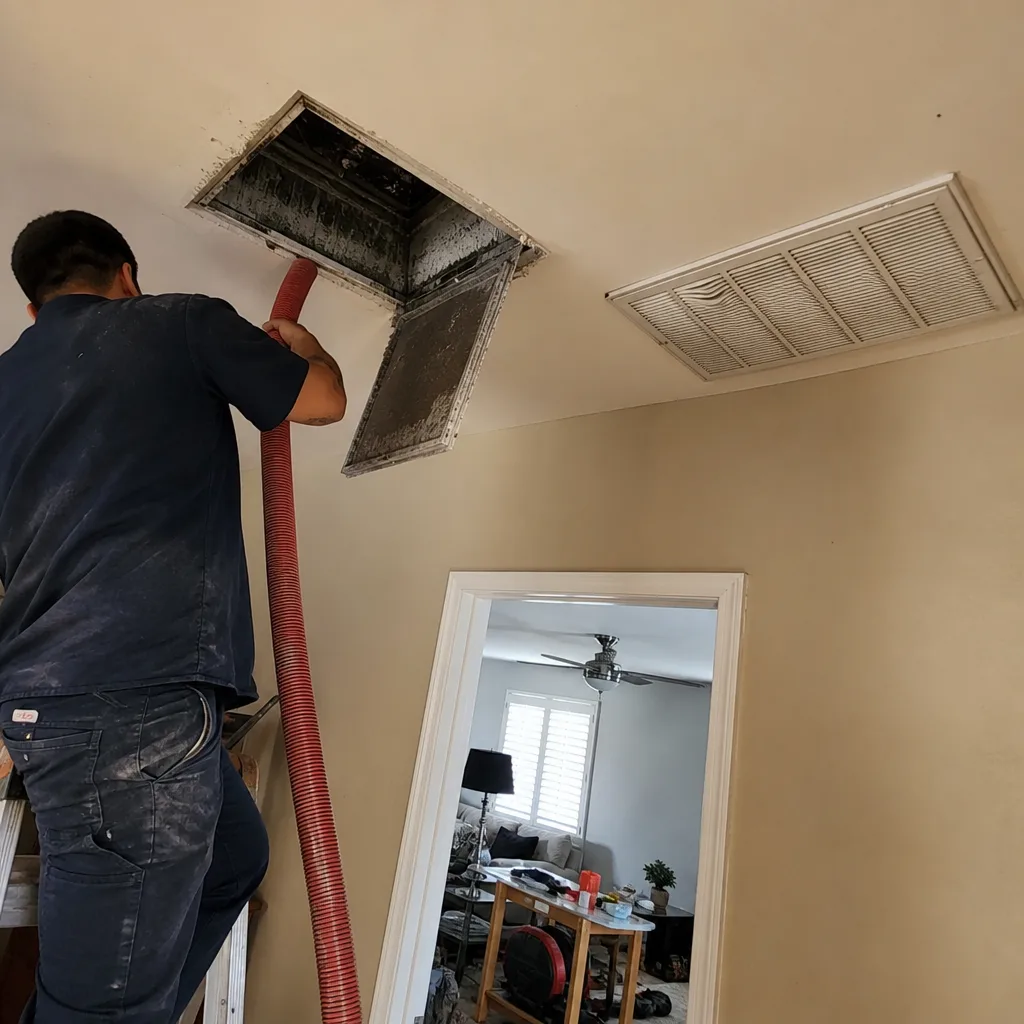
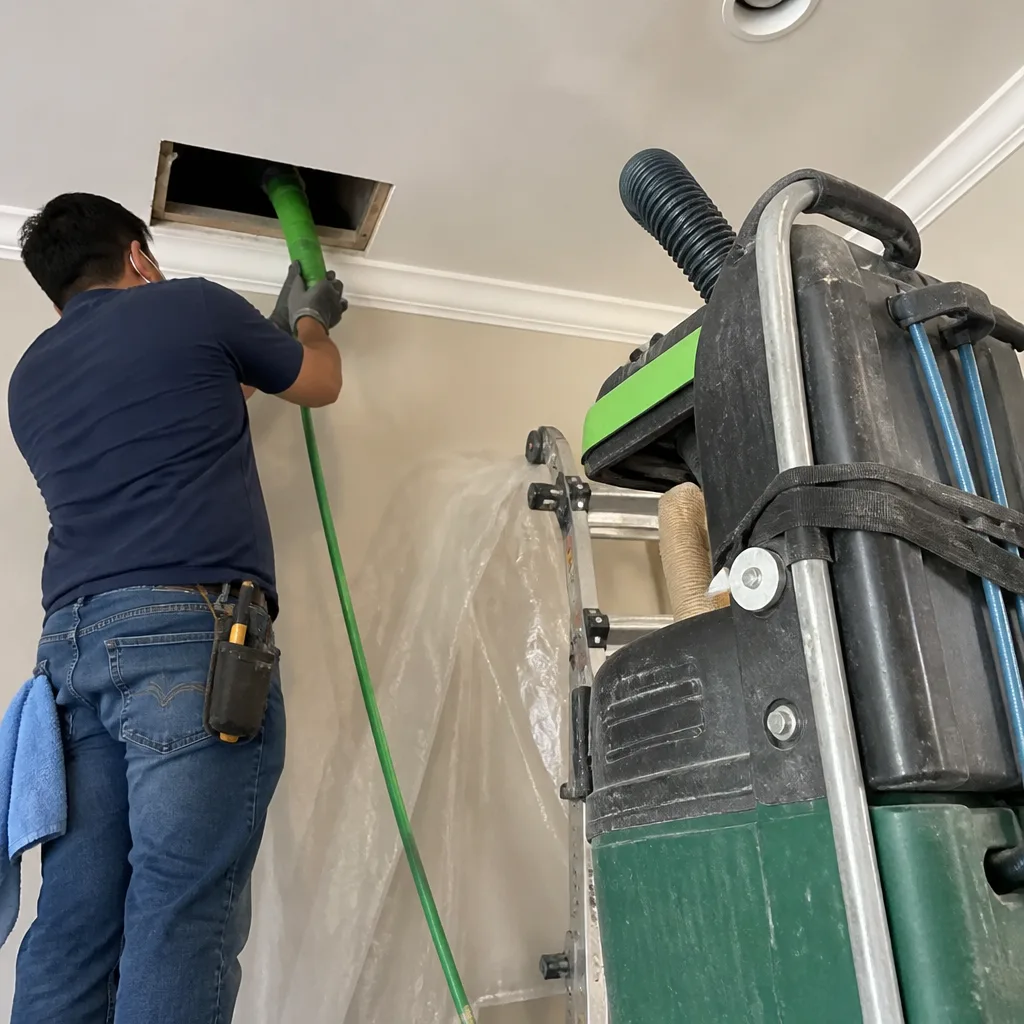
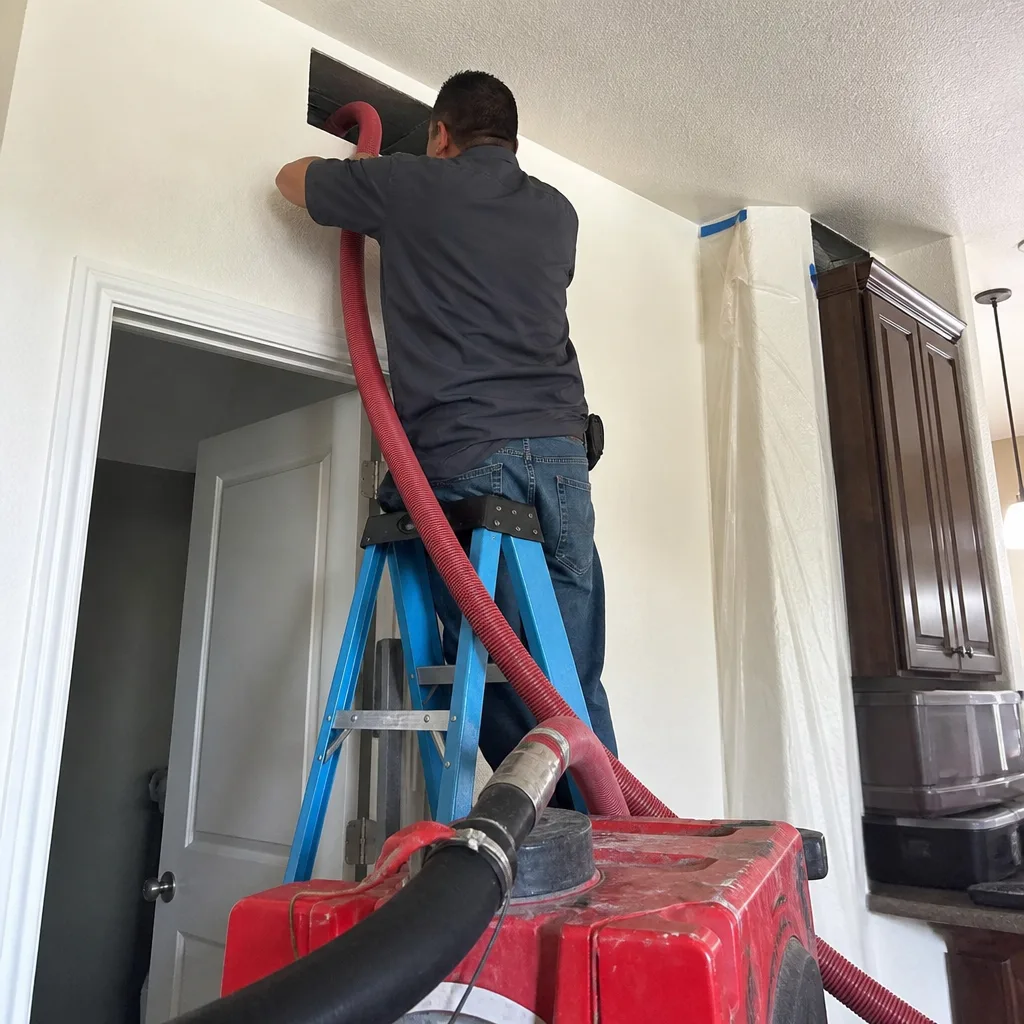
Effective duct cleaning works on a principle called negative-pressure source removal. The technician connects a powerful vacuum unit directly to the main trunk line near the air handler, creating negative pressure inside the entire duct system. That vacuum pulls 2,000 to 4,000 cubic feet per minute of sustained airflow. Meanwhile, a second technician works register by register, using a rotary brush or air whip to agitate debris off the duct walls. The loosened material gets pulled toward the main vacuum, not blown into your living room.
This is a two-person, two-machine job by definition. You cannot agitate and extract simultaneously with one tool. You cannot create 3,000 CFM of negative pressure with a Rigid shop vac, which maxes out around 150 to 200 CFM in ideal conditions. That’s roughly 5 percent of the airflow needed to overcome the static pressure of a duct system and move debris through the trunk line.
We’ve seen the post-inspection results of homeowner attempts. A phone camera shoved into a register after a DIY attempt typically shows a clean first two feet of the branch line, then a debris pile just past the first bend. The homeowner essentially relocated the dust from a visible location to an invisible one, directly upstream of the air handler.
Professional-grade equipment matters here. Machines from manufacturers like Nikro, Abatement Technologies, and Rotobrush are built specifically for this application. They generate the sustained negative pressure needed to pull debris through 20, 30, or 40 feet of ductwork, around elbows, and past dampers. Consumer vacuums are built to pull debris through a 2-inch hose over 8 feet. The physics are not close.
What DIY Can Actually Do Well
None of this means you should do nothing between professional cleanings. There are three legitimate DIY tasks that genuinely help your system and your air quality in a Fort Worth home, which we cover below along with our Dryer Vent Cleaning Maintenance Checklist for Fort Worth Homeowners.
1. Register-level vacuuming. Remove each supply and return register cover, wash it in warm soapy water, and vacuum out the first 6 to 12 inches of accessible duct. Use a brush attachment, not bare hose. This is a monthly task during heavy AC season if you have pets, and quarterly otherwise. It keeps the visible dust from re-entering your living space every time the blower kicks on.
2. Filter replacement and upgrades. This is the single highest-impact thing any homeowner can do. Most Fort Worth homes run 1-inch fiberglass filters that do almost nothing for actual air quality. Stepping up to a pleated MERV 8 or MERV 11 filter catches dramatically more particulate. If your system can accommodate it, consider an Aprilaire media filter cabinet, which takes a 4-inch or 5-inch filter and achieves significantly better filtration without the airflow restriction of a thick 1-inch alternative.
3. Visual inspection with your phone. Turn on your phone’s camera flash, point it into each register, and take a photo. Look for visible dust accumulation, debris, or, worse, signs of moisture or mold. In a Fort Worth attic, this matters. Summer attic temperatures routinely hit 140 degrees, and any condensation inside a duct can become a mold risk quickly. If you see anything that looks fuzzy, green, or black, stop and call a professional. Don’t poke at it.
These three tasks take about 30 minutes total and cost nothing beyond your time and a new filter. They don’t replace professional cleaning, but they extend the interval between cleanings and keep your system breathing easier than doing nothing at all.
What DIY Cannot Do (And Why That Matters in Fort Worth)
The trunk line is the main artery of your HVAC system. It runs from the air handler outward, branching into smaller supply lines that feed each room. Cleaning it requires access at the air handler or at strategic points along its length. You cannot reach it from a register with any consumer tool, and you cannot see what’s inside without a camera. This is where the DIY conversation ends.
Here’s what sits beyond the DIY line:
- The evaporator coil. This sits above or beside the air handler and condenses moisture during cooling season. In Fort Worth, where the air conditioner runs from May through October, this coil is wet for months at a time. It collects dust that passes through the filter, and the resulting film reduces efficiency and creates a breeding ground for mold. Consumer cleaning products cannot reach it. Even if they could, the risk of bending coil fins or damaging the drain pan outweighs the savings.
- The blower motor and housing. Dust that reaches the blower gets baked onto the blades by the motor’s heat. Cleaning it requires removing the blower assembly or accessing the return side. This is not a register-level job.
- The return-side ductwork. Return ducts pull air from your living spaces back to the air handler. In most Fort Worth homes, these are poorly sealed and draw in attic air. That means they accumulate both household dust and attic dust, including insulation fibers. Cleaning the return side is critical, and it’s inaccessible without professional equipment.
- Dryer vent runs longer than 15 feet. A short, straight dryer vent run through an exterior wall is a perfectly legitimate DIY project. The moment the vent turns a corner, runs through a crawlspace, or exits through the roof, you need a professional rotary brush system and the discipline to reassemble the vent correctly. A poorly reassembled dryer vent in a Fort Worth attic is a fire hazard. Our Dryer Vent Cleaning in Fort Worth service exists specifically because these longer runs need real equipment.
The Honest Cost Breakdown: DIY Supplies vs Professional Service
Let’s put real numbers on the DIY decision. Here’s what a serious DIY attempt actually costs, versus hiring a professional in Fort Worth.
| Item | DIY Cost | Professional Cost |
|---|---|---|
| Supplies (brush kit, extension poles, shop vac rental, basic tools) | $40 – $80 | Included |
| Labor (your time at a $20/hr value) | 4 – 6 hours = $80 – $120 | 3 – 5 hours, done by technicians |
| Equipment (consumer vacuum vs. commercial extraction) | ~5% of required CFM | 2,000 – 4,000 CFM, commercial-grade |
| Before/after documentation | Phone photos only | Professional camera inspection, before and after |
| Result guarantee | None | 365-day Done Right Promise |
| Total realistic cost | $120 – $200 plus risk of worsening things | $300 – $500 for a typical single-system Fort Worth home |
The math shifts toward DIY only in one scenario: a 1,200-square-foot home with a clean, simple duct layout, a homeowner who genuinely enjoys this kind of work, and no underlying IAQ concerns like allergies, pets, or recent renovation dust. Even then, what you accomplish is register-level cleaning, not a source removal. You have not cleaned the system. You have cleaned the visible ends of it.
For a standard Fort Worth home in the 1,800 to 2,500-square-foot range with a single HVAC system, Air Duct Cleaning in Fort Worth from a professional runs $300 to $500. That includes the equipment, the labor, the documentation, and a guarantee. The DIY version costs $120 to $200 and delivers about 10 percent of the value. If you value your own time at zero, the math still doesn’t favor DIY, because you’re paying for supplies and accomplishing a fraction of the job.
The ‘Disturb and Redistribute’ Failure Mode
In our experience, the worst outcome of DIY duct cleaning is not that it does nothing. It’s that it does something harmful: it disturbs settled debris and redistributes it deeper into the system.
Here’s the sequence we’ve observed in post-DIY inspections around Fort Worth. A homeowner rents or buys a consumer vacuum with a long hose, attaches a brush, and runs it into each register. The brush knocks dust loose from the first few feet of duct wall. The vacuum captures maybe 30 percent of it. The remaining 70 percent gets pushed backward by the airflow and settles just past the reach of the hose. Over the next week, that loosened debris works its way through the trunk line as the system runs. Some of it lands on the evaporator coil. Some of it gets pulled into the blower. Some of it re-enters the living space as airborne particulate.
The homeowner’s air is now measurably worse than before they started. This isn’t speculation; it’s a recognized failure mode in the industry, and it’s exactly why the EPA’s guidance on duct cleaning points toward professional source removal rather than register-level work by homeowners.
The takeaway: if you are going to DIY, stay firmly at the register level. Vacuum what you can reach, clean the register covers, and change the filter. Do not chase debris beyond what your vacuum can actually capture. The moment you start pushing dust you can’t pull, you’ve crossed the line from helpful maintenance to harmful intervention.
How to Verify a Professional Job Was Actually Done
This is where the trust issue lives. The duct cleaning industry has a well-earned reputation for bait-and-switch pricing and work that’s never actually performed. You can’t see inside your ducts, so how do you know anything happened? Here’s the verification process any Fort Worth homeowner should expect, and exactly what to ask for.
1. Request a pre-cleaning camera walkthrough. Before any work starts, the technician should run a camera into the main trunk line and several branch lines, showing you the starting condition. You should see dust accumulation, debris, or staining on your phone or a handheld monitor. If they won’t do this, the job hasn’t started right.
2. Watch the process, not just the outcome. You should see two people working: one at the air handler running the vacuum unit, one at the registers running the brush. You should hear the machinery. A one-person operation with a shop vac is not source removal, and you should stop the job and ask questions.
3. Demand a post-cleaning camera walkthrough of the same locations. This is the single most important step. The technician should show you the trunk line after cleaning, at the same points they showed you before. Clean duct walls look metallic, not fuzzy. The joints should be visible. There should be no dust film, no debris piles at the corners, no visible fungal growth. If the before and after look similar, the job wasn’t done.
4. Look at the vacuum waste, not just the wand. A real cleaning extracts a visible volume of debris. The vacuum collection bag should contain dust, hair, construction debris if your home is newer, and the accumulated particulate of everyday living. An empty collection bag and a spotless truck are a red flag.
This is what Cardinal Air Duct Fort Worth home teams provide on every single job as part of the Relay Standard. Before-and-after photos aren’t an extra. They’re the verification layer that protects you from paying for work you can’t see. If a contractor won’t show you the inside of your ducts before and after, in our view, you haven’t been shown the work at all.
Fort Worth-Specific Factors That Affect Your Ducts
Your ducts don’t live in a brochure. They live in a Fort Worth attic or crawlspace, and the local climate is an active participant in their condition.
Clay-heavy soil and foundation movement. Fort Worth sits on expansive clay soils that shift dramatically with moisture changes. That movement translates through the home’s frame and into the duct system. Hairline gaps at duct joints open up over time, pulling attic air into the return side. What looks like a dust problem is often a leakage problem, and addressing it requires sealing the ducts, not just cleaning them. Any professional cleaning in Fort Worth should note the condition of the duct joints and report whether sealing work is needed.
Attic heat and condensation risk. Summer attic temperatures in Fort Worth regularly exceed 140 degrees. If conditioned air leaks into that attic space, the temperature differential creates condensation. Condensation on duct surfaces attracts dust, which becomes a pasted-on film that’s difficult to remove without rotary agitation. It also creates the moisture future mold needs. Homes in older neighborhoods like Ridglea, Wedgwood, and Arlington Heights have decades-old ductwork that is especially vulnerable.
Seasonal allergen load. Fort Worth’s spring pollen season runs from February through April with oak, cedar, and grass pollens largely present. Fall brings ragweed. All of it enters the home through doors, windows, and especially through duct leakage on the return side. Once inside the system, it recirculates continuously. This is why we recommend HVAC and HVAC Cleaning in Fort Worth scheduling in late spring, before the AC runs continuously, rather than in peak summer when the system is already working hardest.
Construction dust in newer suburbs. Fort Worth’s northern and western growth corridors have seen constant construction. Homes in neighborhoods near Alliance, Saginaw, and the Chisholm Trail corridor accumulate construction dust, drywall particulate, and insulation fibers during the build process. If you bought a newly built home and haven’t had the ducts cleaned, there’s a strong likelihood that construction debris from the build phase is still inside the system.
Whole-home size and duct runs. Fort Worth’s housing stock ranges dramatically: 900-square-foot post-war cottages off Camp Bowie, 3,500-square-foot two-story homes in Keller, single-story ranches in Haltom City. Duct run length and complexity varies with it. A two-story home’s trunk line may run 50 feet with multiple branches; a small single-story home’s system is dramatically simpler and cheaper to clean. This is why we never quote a per-vent price. The job depends on the actual system, not a menu of line items.
Common Mistakes to Avoid
- Using a leaf blower pointed into a register. This is the most destructive DIY attempt we hear about. It pressurizes the duct and pushes debris into every branch line at once, including into the air handler. If you’ve done this, stop and call for a professional cleaning to reverse the damage.
- Renting a carpet-cleaning-style machine and calling it duct cleaning. These machines lack the airflow and the reach to clean trunk lines. They agitate the first few feet of duct and leave the rest untouched. You’ve spent half the cost of a professional job to accomplish less than register vacuuming.
- Assuming a cheap coupon special is equivalent to a professional job. Fort Worth sees low-ball duct cleaning ads that quote a per-vent price, then expand the scope once technicians are on-site. Ask for a written whole-system price before the truck shows up. If the price is structured per-vent, expect it to grow.
- Skipping the post-cleaning camera walkthrough. A contractor who won’t show you the inside of your ducts after cleaning hasn’t earned the invoice. The verification is the service.
- Replacing a filter without checking the filter slot sealing. A filter that doesn’t seal at the edges bypasses air around the filter media. You’ll still get dust in the system no matter how often you replace it. Check the fit when you change the filter.
- Assuming new construction means clean ducts. As noted above, new builds in Fort Worth frequently contain construction debris inside the duct system from the very first day. Age is not the reason to clean; condition is.
- Cleaning ducts without addressing the moisture source. If you have visible mold or moisture staining, cleaning alone won’t solve it. Some Fort Worth homes need air sealing, insulation, or drainage corrections before or alongside duct work.
When to Call a Professional
Call a professional when you see visible dust around your registers even after vacuuming them, when you notice dust accumulating on furniture within days of cleaning, when your energy bills climb without explanation, when you smell mustiness that only appears when the AC runs, or when a home renovation has introduced drywall dust into the system. Also call if you’ve never had your ducts cleaned and your home is older than a decade. Fort Worth’s climate is not kind to ductwork, and a decade of attic heat plus clay-soil shifting leaves a mark. Cardinal Air Duct Fort Worth offers free estimates in Fort Worth. Call (817) 730-6759 and a live person answers, even at 11 p.m. on a Saturday.
Frequently Asked Questions
Standard air duct cleaning in Fort Worth for a typical 1,800 to 2,500-square-foot single-system home costs $300 to $500 as a flat whole-system price. Smaller homes on simpler systems can fall below that range, and large two-story homes with complex layouts can exceed it. You should always receive a written price before work begins, and that price should not change once the technician arrives. Call (817) 730-6759 for a free estimate specific to your home.
Cheap quotes are typically structured per-vent, with an initial low per-vent price that rises once the technician counts the actual vents, adds trunk line access fees, or invents additional charges on-site. The result is a final bill higher than the advertised price, or worse, a job that’s done so quickly and cheaply that nothing meaningful was accomplished. We price every job as one flat number for the whole system, in writing, before anything starts. If the quote sounds too low to be true, it is.
You know by requiring a pre-cleaning camera walkthrough and a post-cleaning camera walkthrough of the same duct locations, both shown to you before the crew leaves. Before the job, you should see accumulated dust and debris. After, you should see clean metal duct walls with joints visible. If the contractor won’t provide these images, or they look similar, you have not received source-removal cleaning. We document every job with photos as a standard part of the Relay Standard.
Most Fort Worth homes benefit from professional duct cleaning every 3 to 5 years. Homes with pets, allergy sufferers, recent renovations, or a history of smoking should clean every 2 to 3 years. Brand-new homes should be inspected immediately, because construction debris is common. If you’ve just moved into a home and don’t know its duct history, consider starting with a cleaning to establish a baseline. Additionally, seasonal maintenance like HVAC Cleaning in Fort Worth can extend the interval.
You can clean the first few inches of each register and the visible register covers, but you cannot clean the trunk line, the return side, the evaporator coil, or the blower with consumer equipment. A shop vac produces roughly 5 percent of the airflow needed for source removal. Worse, partial attempts can loosen debris and push it deeper into the system, making your air quality worse than before. If you want to do it yourself, stay at the register level and leave the system to professionals. We use professional-grade equipment from manufacturers like Nikro, Abatement Technologies, and Honeywell filtration products.
Yes, when the system has accumulated pollen, pet dander, and household dust that recirculate every time the blower runs. Fort Worth’s spring pollen season is especially intense, and once pollen enters the duct system, it repeats through the house for weeks. Professional source removal eliminates that reservoir. Pair it with a media filter upgrade, such as an Aprilaire cabinet, for the best ongoing air quality result. Call (817) 730-6759 to discuss your home’s specific situation.
The Bottom Line
The DIY vs. professional decision comes down to one line: if you’re working at the register level with a household vacuum, you’re maintaining. If you’re trying to clean the trunk line, the return side, or the coil with consumer equipment, you’re either wasting your time or making things worse. For a typical Fort Worth home, professional cleaning costs $300 to $500, takes a half day, and gives you documented proof of the work. DIY costs $120 to $200 and gives you a conversation piece. The choice is not really a debate. It’s a physics problem with a definitive answer.
Written by Omar Haddad, Owner at Cardinal Air Duct Fort Worth, serving Fort Worth since 2005.
See the difference
 Before
 After
After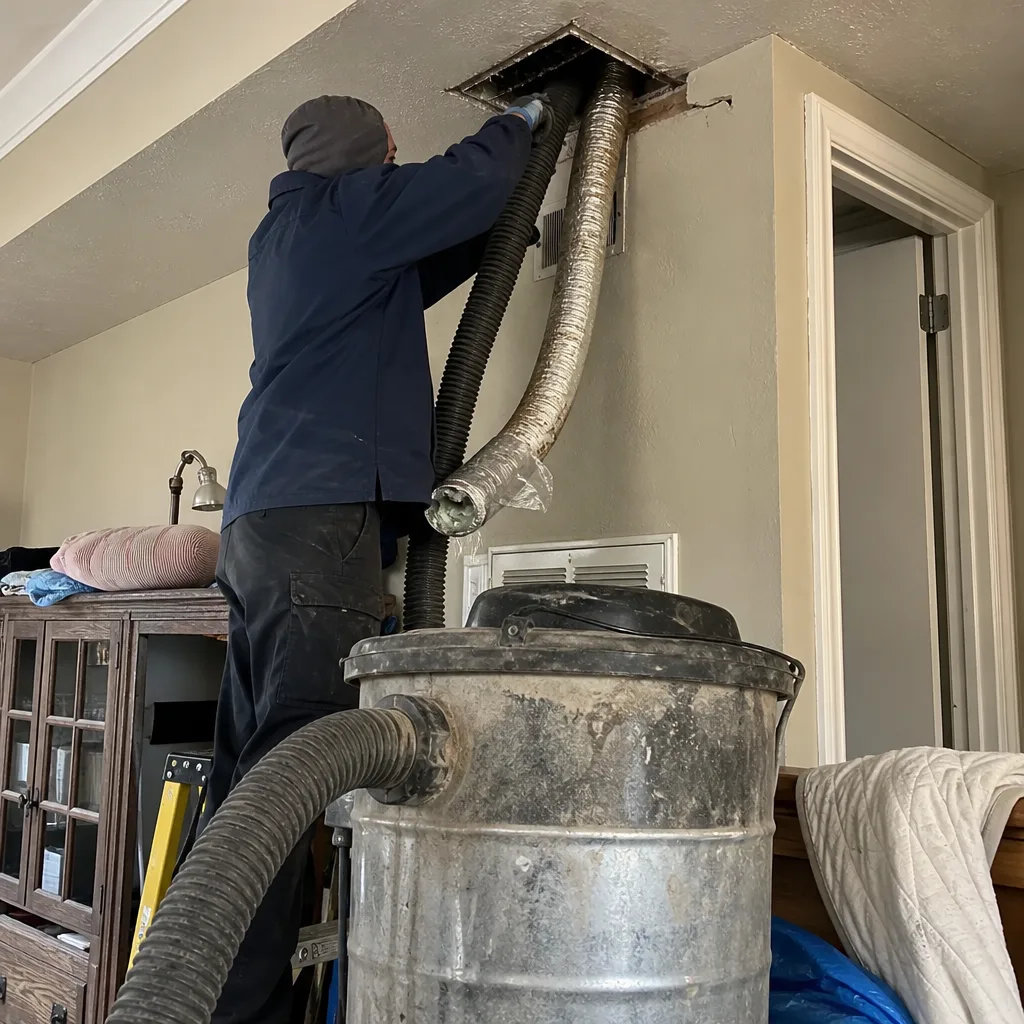 Before
 After
After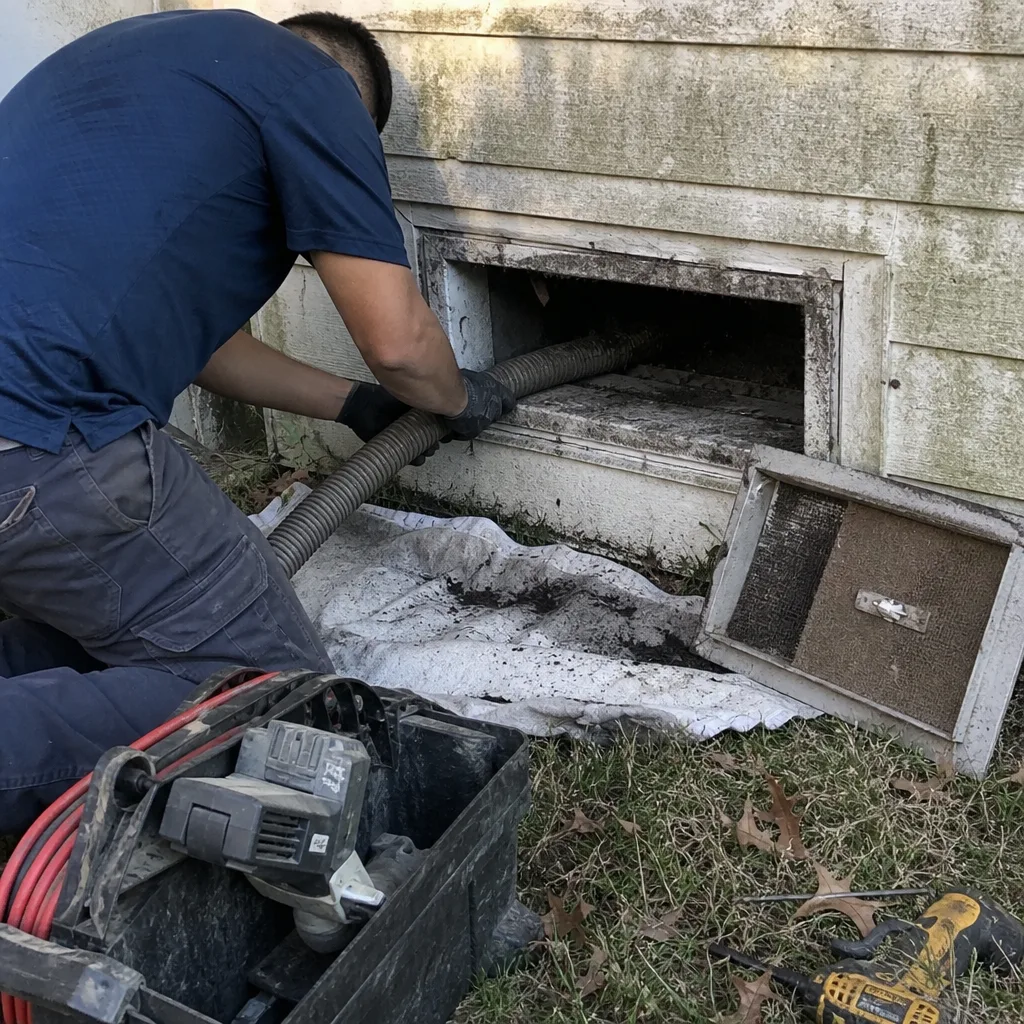 Before
 After
After