
Last updated October 15, 2026
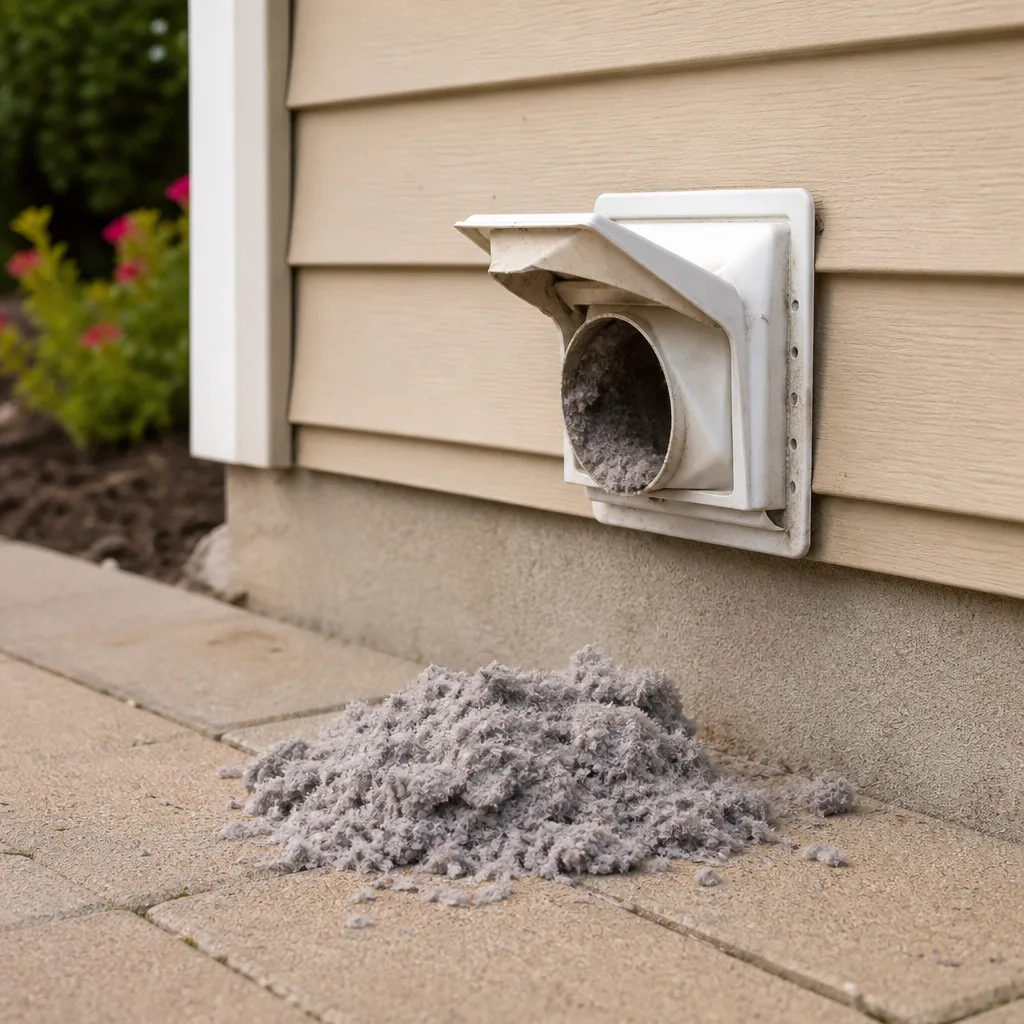 Dryer vent cleaning
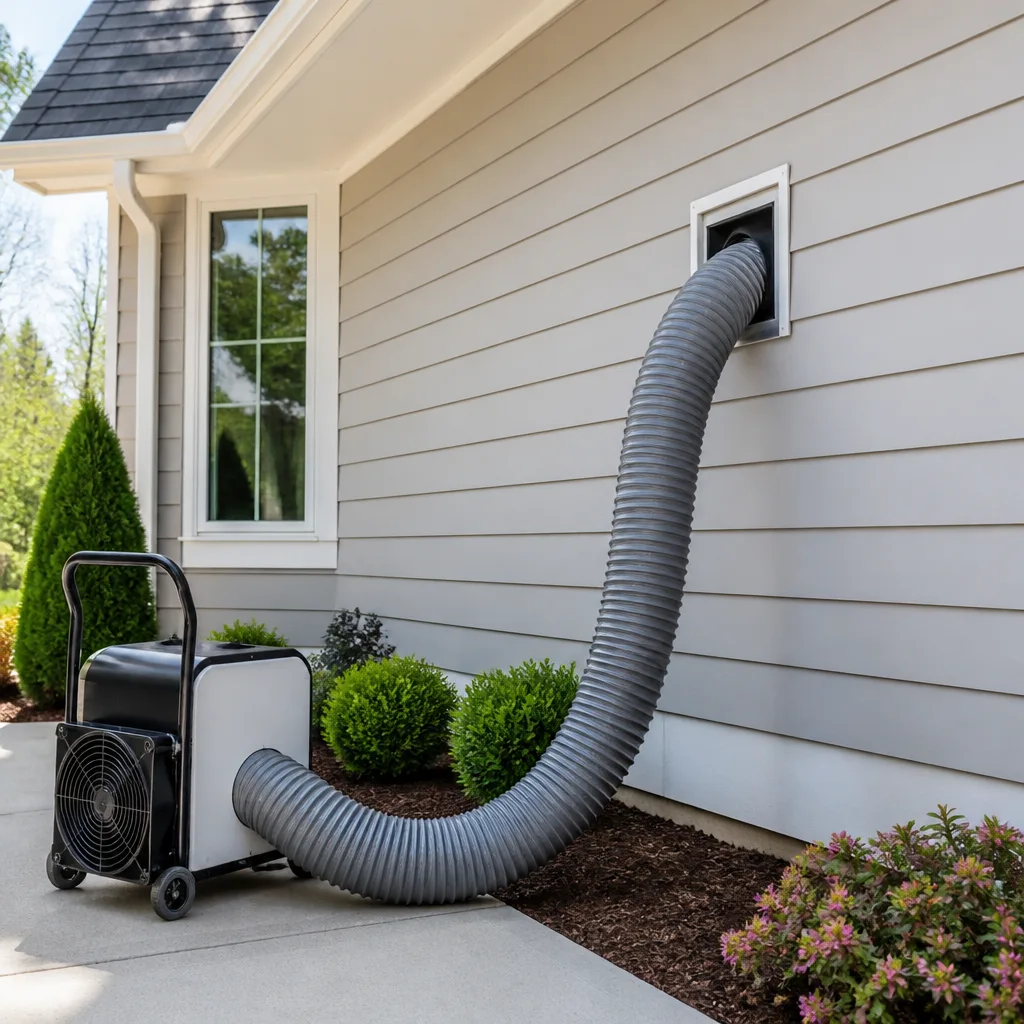 Whole-home duct cleaning
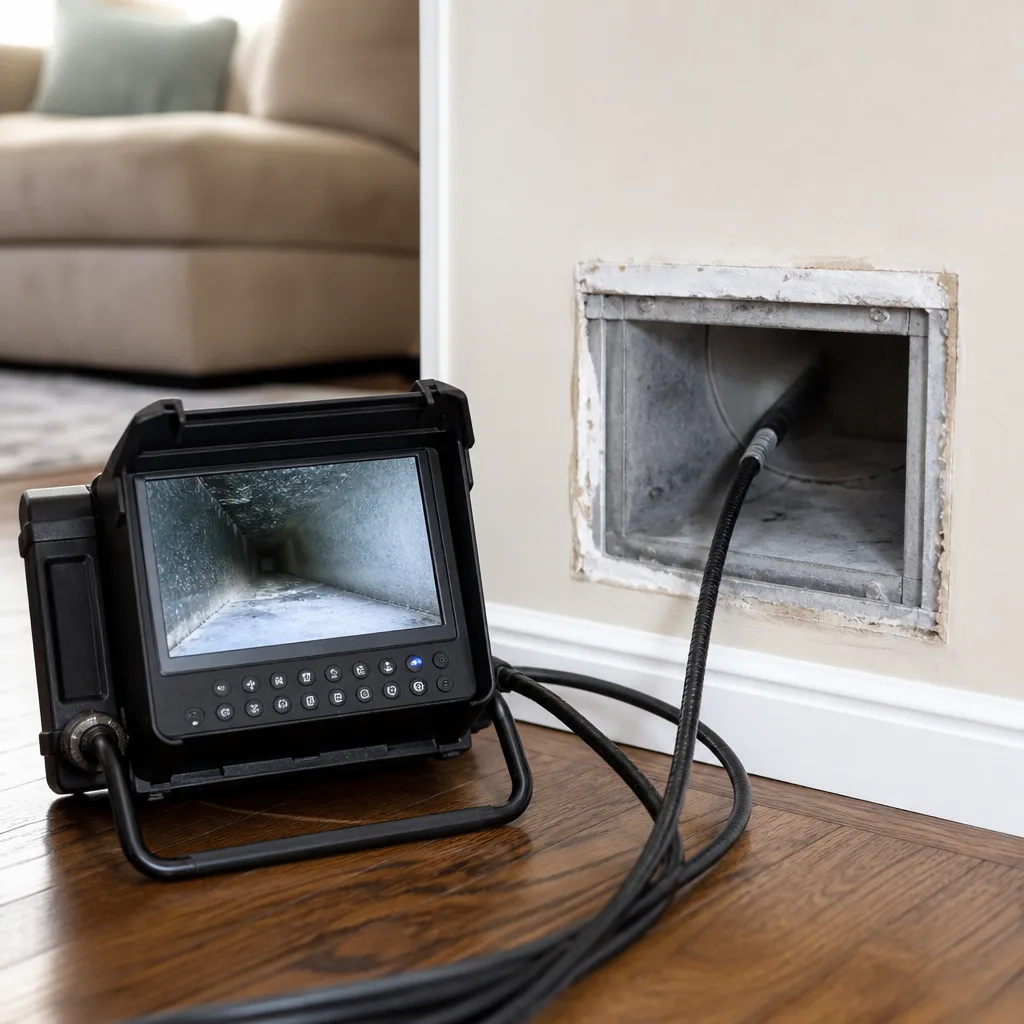 Camera inspection
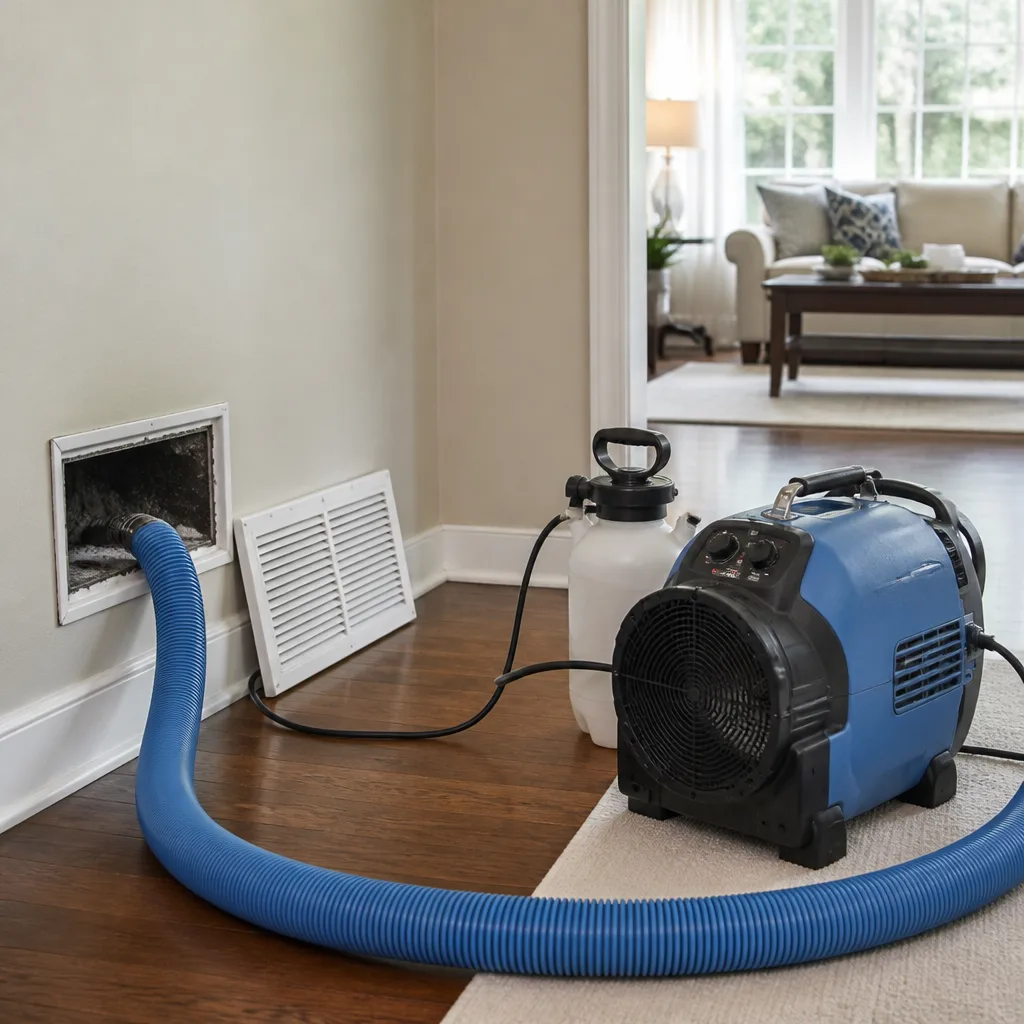 Sanitizing & deodorizing
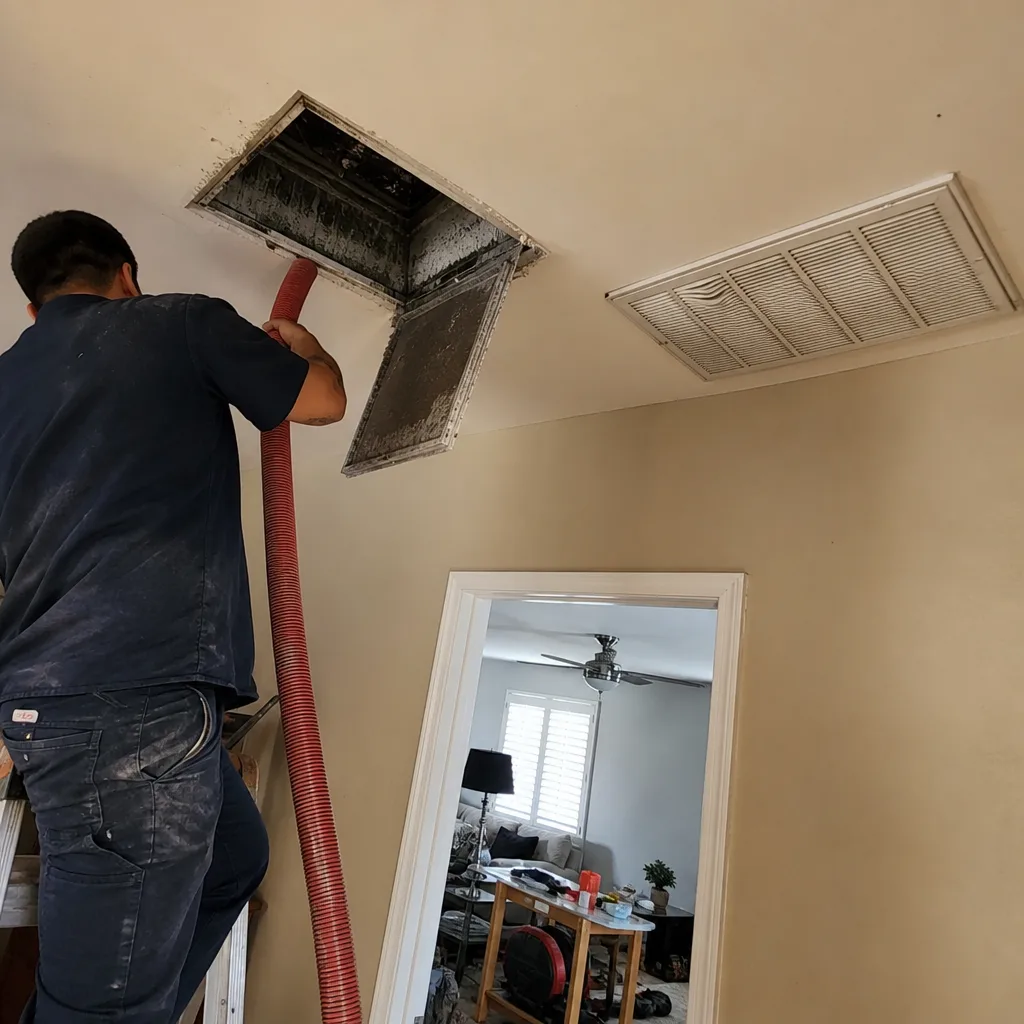
Whole-system duct and dryer vent check with before-and-after photos - you see exactly what came out of your vents
That "$99 whole-house special" is a bait ad - the real number appears once they are in your hallway, or the "clean" is a shop-vac at the register. We photograph the inside of your ducts before and after instead.
Dryer Vent Cleaning Maintenance Checklist for Fort Worth Homeowners
The NFPA reports that clothes dryers cause roughly 14,000 home fires every year, and one detail gets lost in that number: about a third of those fires trace back to vent runs longer than 25 feet. That describes a large share of Fort Worth’s housing stock, especially the single-story ranch homes built between the 1970s and 1990s where the laundry room sits deep inside the floor plan, far from an exterior wall. This guide is not a recycled safety pamphlet. It is a fire-risk audit built around the actual failure points we find in Fort Worth homes, from slab-on-grade construction quirks to the way our summer humidity changes how lint behaves inside a vent.
Styles & brands we work with
Quick Answer
A complete Dryer Vent Cleaning services maintenance routine for Fort Worth homeowners means checking the exterior vent cap and lint trap monthly, cleaning the full vent run with professional rotary brush equipment at least once a year, and measuring your vent’s total equivalent length to confirm it does not exceed the 35-foot IRC code limit. Homes with long horizontal vent runs through garage walls, which are common in Fort Worth’s slab-built ranch houses, need cleaning every 6 to 12 months depending on household size and how often the dryer runs.
Table of Contents
- Why Fort Worth Homes Fail Differently
- The Monthly Checklist: Three Things You Can Do Yourself
- How to Measure Equivalent Length: The Step Most People Skip
- Fort Worth Install Patterns: Why Slab Homes Have Code Violations Baked In
- Seasonal Lint Loads: Why Fort Worth Summers Are the Highest-Risk Season
- What a Professional Cleaning Actually Involves
- Red-Flag Contractor Behaviors
- How Often Should You Really Clean Your Dryer Vent?
- Common Mistakes to Avoid
- When to Call a Professional
- Frequently Asked Questions
- The Bottom Line
Why Fort Worth Homes Fail Differently
Dryer vent failure is not a uniform problem. The way a vent fails in a two-story colonial in New England is different from how it fails in a Fort Worth ranch on a concrete slab. Here, the dominant housing type from the 1970s through the 1990s put the laundry room in a hallway closet or a pass-through utility area near the kitchen, which means the vent pipe has to travel a long horizontal distance to reach the nearest exterior wall. That run often passes through unconditioned garage space, where the pipe is exposed to temperature swings that cause condensation inside the vent. That condensation mixes with lint and creates a paste-like buildup that hardens over time and narrows the pipe diameter far faster than dry lint accumulation would.
We have pulled apart vents in neighborhoods like Wedgwood, Ridglea Hills, and Summer Creek where the interior of a 4-inch pipe had been reduced to a 2-inch opening by this compacted lint-cement mixture. The homeowner’s lint trap was clean. The exhaust cap looked fine from the outside. The problem was entirely inside the wall and garage run. This is why a Fort Worth-specific maintenance checklist has to treat the vent as a system with measurable characteristics, not just a tube that needs a quick brush once in a while. The Cardinal Air Duct Fort Worth home page covers the full scope of what a complete vent inspection includes, but this guide focuses specifically on the checklist you can work through on your own.
The Monthly Checklist: Three Things You Can Do Yourself
You do not need any special tools for a monthly dryer vent check. These three tasks take less than ten minutes combined and they will catch most problems before they become fire hazards or expensive appliance failures. Do them the first weekend of every month, or tie them to another regular task you already remember, like changing your HVAC filter or testing your smoke alarms.
- Check the exterior vent cap. Go outside and look at the vent termination. The flap should open freely when the dryer runs and close completely when it stops. If the flap sticks open, or if you see lint accumulating around the opening, that is your first warning sign. In Fort Worth, spiders and mud daubers love building nests inside vent caps, especially during spring and early summer. A clogged or obstructed cap forces the dryer to work harder and allows humid outside air to enter the vent run.
- Inspect the lint trap housing. Pull out the lint screen and look past it into the slot where the screen sits. Use a flashlight. If you see a layer of lint built up on the walls of that housing, that lint is also accumulating deeper in the vent line. Vacuum the housing with a narrow attachment. Do not reach your fingers into the housing while the dryer is plugged in, even if it is off.
- Time a dry cycle. Take note of how long a standard load of towels takes to dry. If that time starts creeping up beyond 45 to 50 minutes, the vent is telling you something. A dryer in good condition with a clear vent should dry a full load of towels in 35 to 45 minutes. When it takes an hour or more, the airflow restriction has already reached the point where the dryer is consuming extra energy and running hotter than designed.
These three checks will not clean the vent. They tell you when the vent needs professional attention, and they give you a baseline so you know what normal looks like for your specific dryer and vent configuration. If any of these three signs appears, the next step is a professional cleaning. Our Dryer Vent Cleaning in Fort Worth service includes a full airflow measurement before and after the cleaning, so you know the job actually solved the problem.
How to Measure Equivalent Length: The Step Most People Skip
Every dryer vent has a maximum length under the International Residential Code, which Fort Worth and surrounding Tarrant County municipalities follow. That maximum is 35 feet for a 4-inch diameter vent pipe. But here is what most homeowners and even some contractors do not account for: the 35-foot limit is an equivalent length, not a physical length. Every elbow in the vent run adds resistance that the code converts into additional linear feet.
Under the IRC method, a 90-degree elbow adds 5 feet of equivalent length. A 45-degree elbow adds 2.5 feet. So a physically short vent run can easily exceed the 35-foot equivalent limit if it has too many turns. Here is how to calculate your vent’s equivalent length:
- Measure the physical length of the vent pipe from the dryer connection to the exterior cap. Use a tape measure for exposed sections and estimate the distance through walls and ceilings based on the room layout.
- Count every 90-degree elbow in the run and multiply that count by 5. Add the result to your physical length.
- Count every 45-degree elbow and multiply by 2.5. Add that to your total.
- Add the termination fitting. The exterior cap and any transition fitting at the dryer add additional resistance. A standard wall cap adds roughly 5 feet of equivalent length depending on the model. If you have a roof cap or a cap with a screen, add more.
- Compare your total to 35 feet. If your calculated equivalent length exceeds 35 feet, your vent system does not meet current code and is operating under restricted airflow even when it is perfectly clean.
A vent that exceeds 35 equivalent feet is not automatically dangerous, but it means the margin for error is very thin. Any lint accumulation at all pushes the system into the danger zone. In our experience across Fort Worth, vents that measure between 40 and 60 equivalent feet are the ones most likely to have serious blockages, because the dryer simply lacks the static pressure to push lint all the way out. The lint stops about two-thirds of the way down the run and builds up from there. That is why we run a post-cleaning airflow measurement at the exterior cap on every job. A clean vent that still moves less than the manufacturer-specified airflow is a vent that needs redesign, not just cleaning.
Fort Worth Install Patterns: Why Slab Homes Have Code Violations Baked In
Fort Worth’s building boom from the early 1970s through the early 1990s produced tens of thousands of single-story homes on concrete slab foundations. Slab construction means the dryer vent cannot drop down into a basement or crawl space the way it can in other parts of the country. The vent has to travel horizontally or upward, and the path it takes is constrained by the location of interior walls, beams, and the placement of the laundry room relative to the exterior.
In many of these slab homes, the easiest way to route a vent from an interior laundry room to the nearest exterior wall involved multiple elbows. A vent that runs up from the dryer connection, turns 90 degrees into a wall cavity, turns again to follow a ceiling joist, then turns a third time to exit through the soffit or side wall, has already used up 15 feet of equivalent length before you count a single foot of pipe. When we inspect homes in neighborhoods like Ridgmar, Eastchase, and Handley, we regularly find vents with equivalent lengths of 50 to 70 feet that were installed this way as original construction.
These installs were not necessarily code violations when they were built, because enforcement and awareness of dryer vent requirements were looser decades ago. But they do not meet current IRC standards, and they create an ongoing maintenance burden that the original builders never anticipated. The fix is not always simple. In some cases, a booster fan installed in the vent run is the right solution. In others, rerouting the vent to a shorter path is feasible. And in the worst cases, the vent needs to be relocated entirely. The first step is always the same: a professional assessment that measures the existing equivalent length and airflow before making a recommendation. Our Air Duct Cleaning in Fort Worth technicians see these slab-home vent configurations every week and can tell you whether yours is safe or needs correction.
Seasonal Lint Loads: Why Fort Worth Summers Are the Highest-Risk Season
Most homeowners think of dryer vent fires as a winter problem, or at least a year-round constant. The reality in Fort Worth is that summer is the highest-risk season, and the reason is humidity.
Fort Worth summers bring months of high relative humidity, often above 60 percent for days at a time. That moisture-laden air gets drawn into the dryer vent from the exterior cap whenever the dryer is not running, especially if the vent cap flap does not seal tightly. The damp outside air carries into the vent run and interacts with the lint already deposited on the pipe walls. Dry lint is fluffy and relatively easy to dislodge. Moisture-laden lint compacts into a dense, felt-like layer that adheres to the pipe and resists the normal airflow that would otherwise push it out.
Then the dryer runs, heating the vent. The moisture in the lint paste cooks off, and what remains is a hardened crust that has roughly the consistency of particle board. This cycle repeats all summer long: damp air enters, lint absorbs moisture, heat bakes the layer solid. By August, a vent that was acceptable in April can be carrying a crust that reduces the pipe’s effective diameter by half or more.
The seasonal pattern we see in Fort Worth is predictable. Lint loads spike every summer, and the first dry cold front of October is when many homeowners finally notice their dryer taking two cycles to dry a single load, because the baked-on crust from the summer has not been removed and now the vent is struggling to pass enough air. If you have not had your dryer vent cleaned in 12 months or more, the best time to do it in Fort Worth is late summer or early fall, before the heating season adds additional workload to the dryer. The HVAC Cleaning in Fort Worth side of our business sees the same seasonal pattern in air ducts, which tells us the mechanism is real and consistent.
What a Professional Cleaning Actually Involves
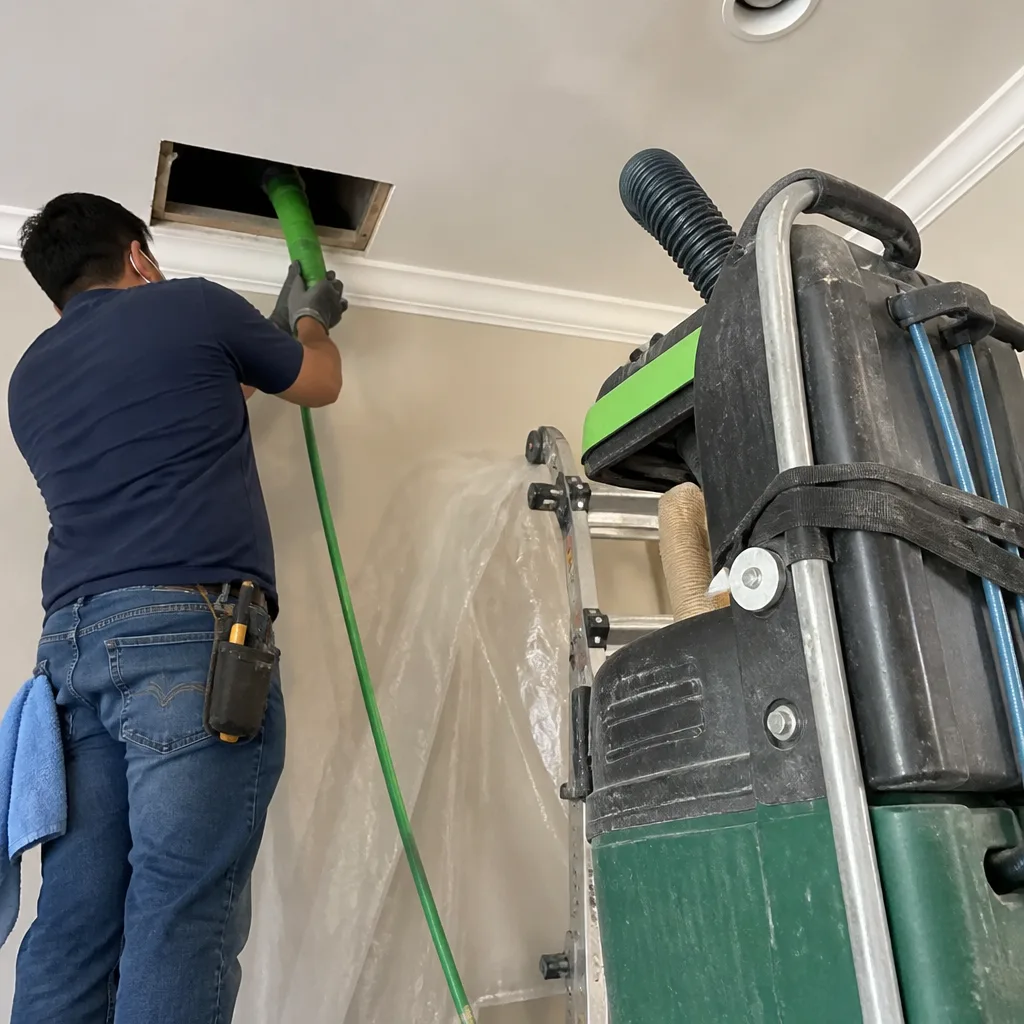
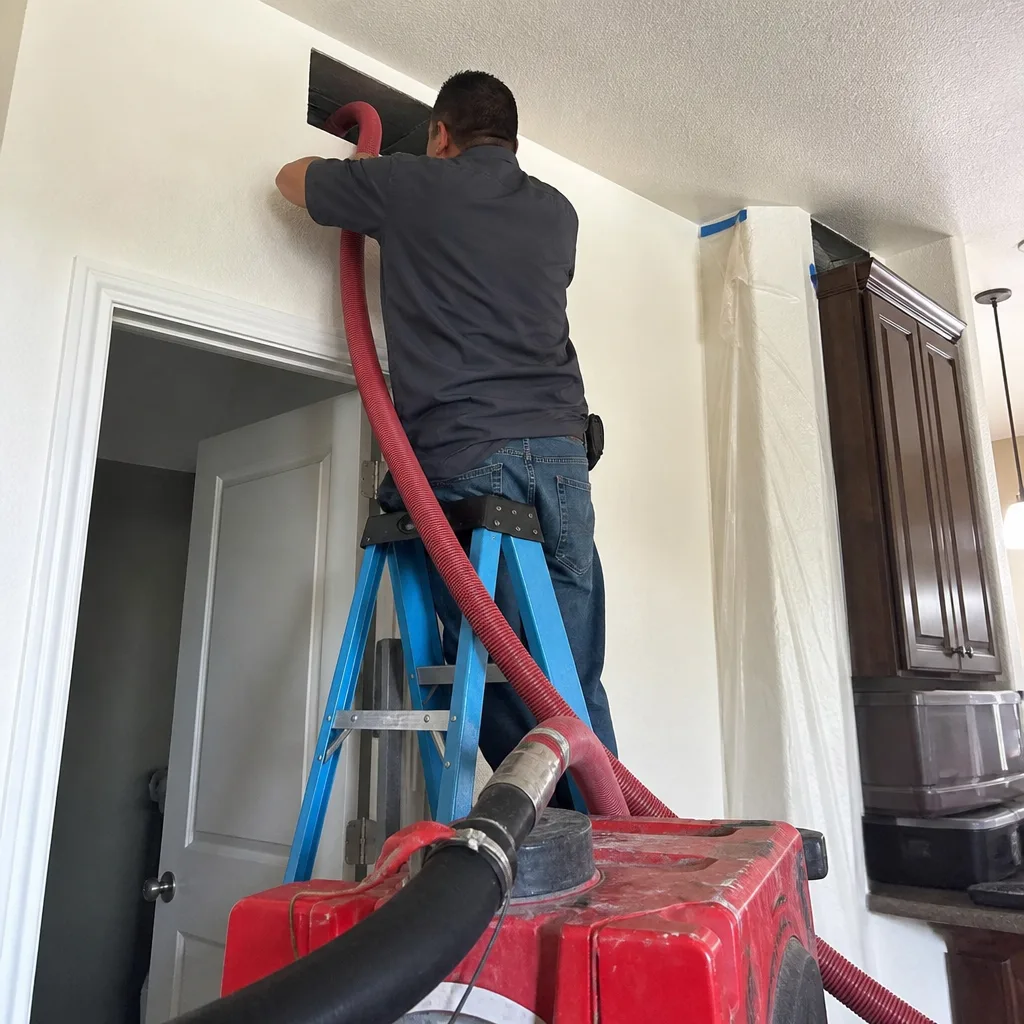
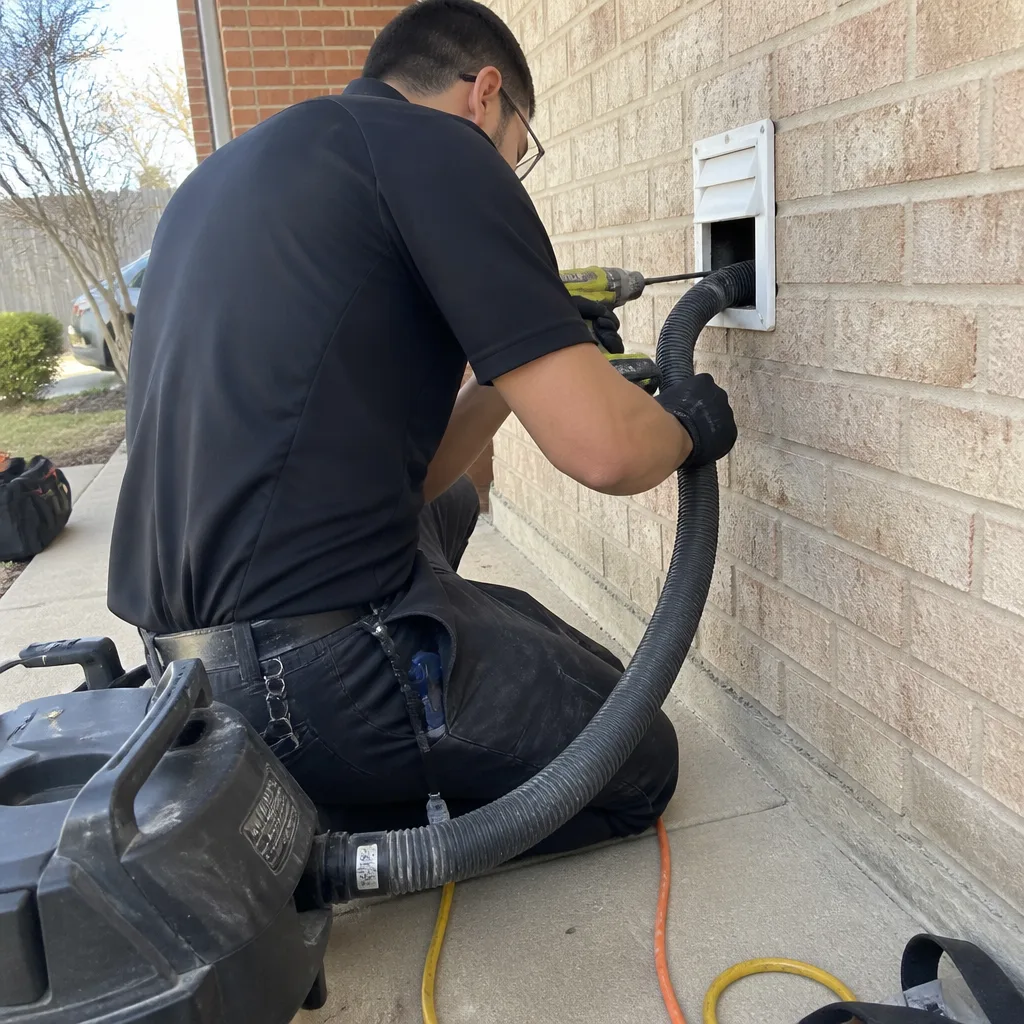
A proper dryer vent cleaning is not a leaf blower pointed at the wall opening. The professional standard involves rotary brush agitation paired with high-powered vacuum extraction, and there is a reason the two have to work together. The brush is what breaks the hardened lint crust free from the pipe walls. A Rotobrush rotary brush system spins a brush head through the entire vent run, mechanically dislodging the compacted material that a vacuum alone cannot move. The vacuum, ideally a Nikro HEPA-rated unit, creates negative-pressure extraction, which means the loosened debris is pulled out through the vacuum hose rather than being blown out into the living space or garage.
Here is the step-by-step sequence that a proper Fort Worth dryer vent cleaning should follow:
- Disconnect the dryer from the vent and pull it away from the wall. The transition duct behind the dryer is inspected and replaced if it is damaged or made of the old foil-style material that no longer meets code.
- Measure baseline airflow at the vent before cleaning. A digital manometer or anemometer at the exterior cap records the starting airflow, which tells the technician how restricted the vent is before any work begins.
- Run the rotary brush through the full length of the vent from both directions where possible. The brush head breaks up the lint crust on the pipe walls.
- Extract the debris with a HEPA vacuum connected to the vent run, ensuring that material is captured rather than blown into the room.
- Measure post-cleaning airflow at the same exterior cap. The difference between the before and after numbers tells you whether the cleaning actually restored the vent to proper function. A vent that is still moving too little air after cleaning has a design problem that needs to be addressed.
- Inspect the exterior cap and replace it if the flap is damaged, the screen is torn, or the fitting does not seal.
The post-cleaning airflow measurement is the single most important quality checkpoint in this sequence. Without it, neither you nor the technician knows whether the job actually worked. At Cardinal Air Duct Fort Worth, every dryer vent cleaning includes this before-and-after measurement, and the numbers are written on your invoice. No guessing. No “it should be better now.” Just data.
Red-Flag Contractor Behaviors
The air duct and dryer vent cleaning industry has a reputation problem, and Fort Worth is not exempt. Low-ball pricing, upsell pressure, and unverifiable work are common enough that the Texas Attorney General’s office has received complaints about duct cleaning operations. Our How to Hire a Air Duct Cleaning Contractor in Fort Worth: A Step-by-Step Guide covers this in depth; here are the specific red flags to watch for when you are choosing a dryer vent cleaning company in Fort Worth:
- No post-cleaning airflow measurement. This is the single biggest tell. Any company that does not run a manometer or anemometer test at the exterior cap after cleaning has not verified the work is done. They cleaned something, but they cannot tell you whether it fixed the problem. Demand the measurement.
- A price quoted per vent or per opening that shifts once the technician arrives. The bait-and-switch model in duct and vent cleaning is well documented: a low quote to get the van to your house, then a much higher invoice once the tech walks the property. A reputable company quotes a flat price for the whole system, in writing, before work starts. Every Cardinal booking includes a written price handed to you before a single duct is touched, and that price does not change at the door.
- Technicians who cannot name their equipment. Ask what brand of rotary brush system they use and what type of vacuum extraction they run. If the answer is vague, or if the equipment is a shop-vac in the back of a pickup, you are not getting professional-grade cleaning. We run Rotobrush brush systems and Nikro HEPA vacuums on every job, and our technicians can tell you exactly what each piece does and why it matters.
- Companies without a documented satisfaction period. Ask what happens if the problem is not solved. If the answer is silence or weasel words, move on. Our 365-Day Done Right Promise means if the work is not right within a full year, we return and correct it at no charge. That is the longest satisfaction window in the trade, and it is printed on every invoice.
- Anyone who wants you to sign a long-term maintenance contract before doing the first cleaning. A legitimate cleaning company earns your repeat business by doing the job correctly. Contracts sold before the work is done are a sales tactic, not a service promise.
How Often Should You Really Clean Your Dryer Vent?
The standard industry recommendation is once per year, and for most Fort Worth homes that is a reasonable baseline. But the right answer depends on three variables specific to your household, as we detail in our Seasonal Air Duct Cleaning Care for Fort Worth: Year-Round Homeowner’s Guide:
- Household size. A family of four or more doing 8 to 12 loads of laundry per week puts far more lint through the vent than a couple doing 3 loads. More loads means faster accumulation. Large households should plan for cleaning every 6 to 9 months.
- Vent equivalent length. If your vent measures over 35 equivalent feet, you are already operating outside the designed airflow range. Those vents need cleaning every 6 months regardless of household size, because there is no margin for any accumulation at all.
- Pet ownership. Homes with dogs, cats, or both add pet hair and dander to the laundry load. That material enters the lint stream and makes the accumulation denser, especially when combined with Fort Worth’s summer humidity.
A good rule of thumb for Fort Worth: if you cannot remember the last time your dryer vent was cleaned, it is overdue. The cost of a professional cleaning runs roughly $120 to $250 for most single-family homes in Fort Worth depending on vent length and accessibility. Compare that to the potential alternative: a dryer fire, smoke damage, or a destroyed appliance. The math is simple. Call (817) 730-6759 for a free estimate and exact pricing for your home’s vent configuration.
Common Mistakes to Avoid
- Cleaning only the lint trap and assuming the vent is fine. The lint trap catches maybe 30 to 40 percent of the lint your dryer produces. The rest goes through the vent. A clean trap tells you nothing about the condition of the 30 feet of pipe behind the wall.
- Using a leaf blower or shop-vac to “blow out” the vent from inside. This pushes debris toward the exterior cap and can compact it into a plug at the termination, making the blockage worse. Blowers do not have the extraction power to pull compacted lint from a 30-foot run, and they do not measure anything.
- Ignoring the equivalent length calculation. A vent that is 20 physical feet with five elbows is 45 equivalent feet, which exceeds the IRC limit. If you only measure physical distance, you will miss the real restriction.
- Putting off cleaning during Fort Worth’s summer months. The humid season is precisely when lint compaction accelerates. Waiting until fall means living with a progressively more restricted vent during the highest-risk period of the year.
- Replacing the dryer when a clogged vent is the actual problem. Modern dryers have moisture sensors that extend cycle times when airflow is restricted, and many homeowners misread those long cycles as appliance failure. Before you spend $800 on a new dryer, spend $150 on a vent cleaning and post-cleaning airflow test.
- Hiring a company that cannot show you before-and-after photos of your own vent. Every Cardinal Air Duct Fort Worth booking includes before-and-after photo documentation as part of The Relay Standard. You see the interior of the vent before the cleaning starts and after it is complete, on your phone, before you pay the invoice.
- Skipping the exterior cap inspection. A dented, rusted, or improperly sealing exterior cap pulls humid Fort Worth air into the vent when the dryer is off, accelerating the compaction problem. Replacing a failed cap costs little and prevents a lot.
When to Call a Professional
Call a professional if your monthly checklist turns up any of these findings: the exterior vent flap does not close, you see visible lint accumulation around the exterior cap, your equivalent length calculation exceeds 35 feet, or your dryer needs more than 50 minutes to dry a standard load. Also call us if you have never had the vent cleaned in the three or more years you have owned the home, especially if the home is a Fort Worth slab-on-grade ranch with the laundry room in an interior location. A professional cleaning with before-and-after airflow measurement resolves the uncertainty and tells you whether your vent needs design correction beyond routine maintenance. Cardinal Air Duct Fort Worth offers free estimates in Fort Worth. Call (817) 730-6759 to schedule a vent assessment and get a written price before any work begins.
Frequently Asked Questions
Most dryer vent cleanings in Fort Worth run between $120 and $250 for a single-family home, depending on the length and accessibility of the vent run. Homes with long equivalent lengths or difficult exterior access may run higher. Cardinal Air Duct Fort Worth gives you a written price before any work starts, and that price does not change at the door. Call (817) 730-6759 for an exact quote. Estimates are free.
A clogged dryer vent shows up as longer drying times, a burning smell during operation, excessive heat on the exterior of the dryer, or visible lint around the exterior vent cap. If a full load of towels takes more than 45 to 50 minutes to dry, or if the dryer feels unusually hot on the top or sides, the vent is restricted and needs attention.
You can clean the lint trap and the first few feet of the transition duct behind the dryer yourself, but a full vent cleaning requires a rotary brush system that reaches the entire run and a HEPA vacuum that extracts the loosened debris properly. Consumer-grade brush kits sold at hardware stores reach 10 to 15 feet and cannot handle the 30 to 50 foot runs common in Fort Worth slab homes. Professional-grade equipment from brands like Rotobrush and Nikro is built for exactly this job.
In the duct and vent cleaning industry, low quotes are often a foot in the door. The technician arrives, declares the job more complex than expected, and the price climbs. A legitimate company quotes one flat price for the whole vent system, in writing, before work begins, and the price does not shift when the tech walks the property. At Cardinal Air Duct Fort Worth, the written price is part of every booking under The Relay Standard. If a quote looks too cheap to be true, it probably is not a real quote.
A proper cleaning includes a post-cleaning airflow measurement at the exterior cap using a manometer or anemometer. That number tells you whether the vent is moving air at the level the dryer manufacturer requires. If the company cannot show you the measurement, or if they do not provide before-and-after photos of your vent’s interior, the work has not been verified. Cardinal Air Duct Fort Worth includes both in every dryer vent cleaning in Fort Worth, and the numbers are printed on your invoice.
Fort Worth follows the International Residential Code for dryer vent installation, which limits 4-inch vent runs to 35 equivalent feet and requires smooth metal duct rather than foil or vinyl in concealed spaces. Homes built in the 1970s through the 1990s often predate strict enforcement and may have code-violating elbow counts or foil duct hidden in walls. A professional assessment will tell you whether your existing vent meets current code or needs correction. Call (817) 730-6759 to schedule an assessment.
The Bottom Line
Dryer vent maintenance in Fort Worth is a fire-risk audit, not a cleaning chore. Check the exterior cap, lint trap housing, and drying time monthly. Calculate your vent’s equivalent length once and file the number away, because it tells you whether your system has any margin for error at all. Schedule a professional rotary brush cleaning every 6 to 12 months depending on household size and vent configuration, with summer being the season that demands the most attention. Demand a post-cleaning airflow measurement and before-and-after photos so you know the work was real. The entire job costs a fraction of what a dryer fire costs, and the numbers we pull out of Fort Worth vents every week tell us the risk is not theoretical. For more guides & resources on keeping your home safe, visit our blog. It is sitting in the walls of homes all over this city, waiting for the right combination of heat, lint, and restricted airflow.
Written by Omar Haddad, Owner at Cardinal Air Duct Fort Worth, serving Fort Worth since 2005.
See the difference
 Before
 After
After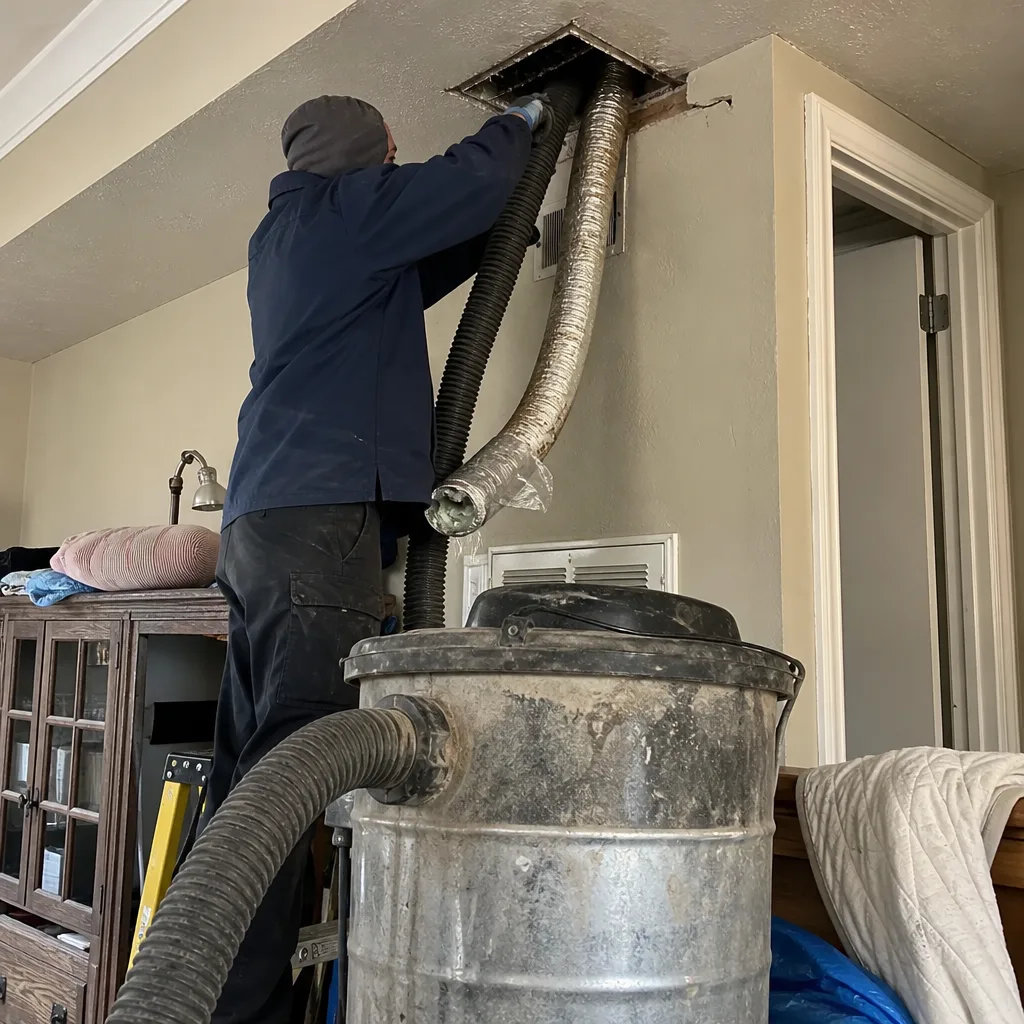 Before
 After
After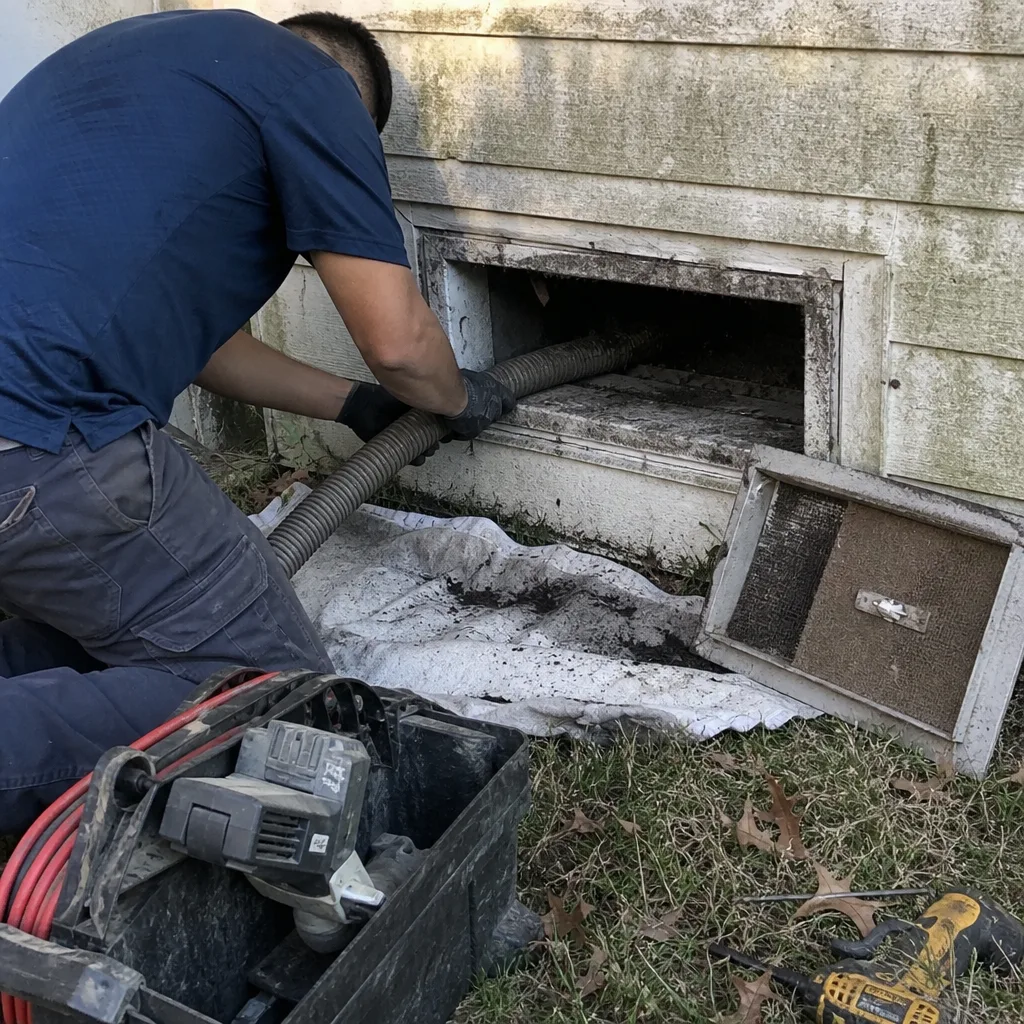 Before
 After
After