
Last updated October 15, 2026
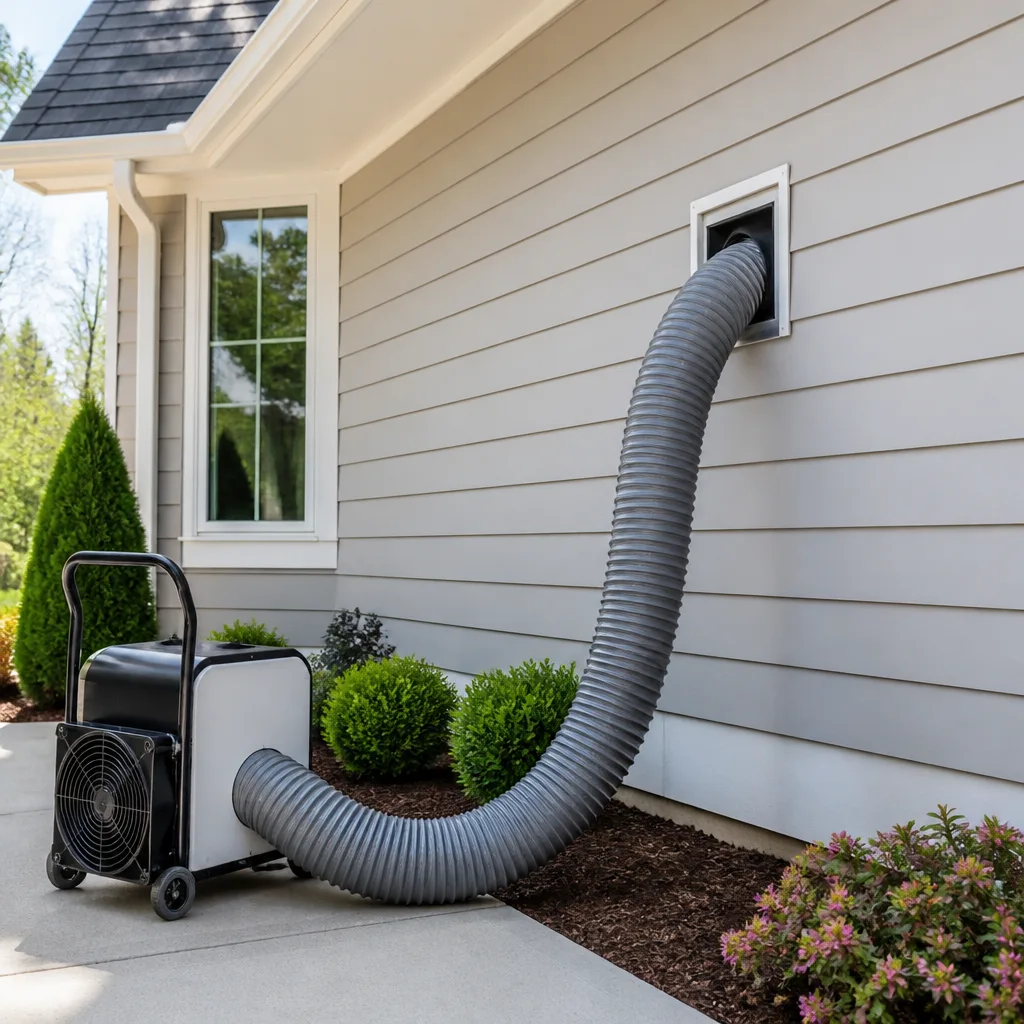 Whole-home duct cleaning
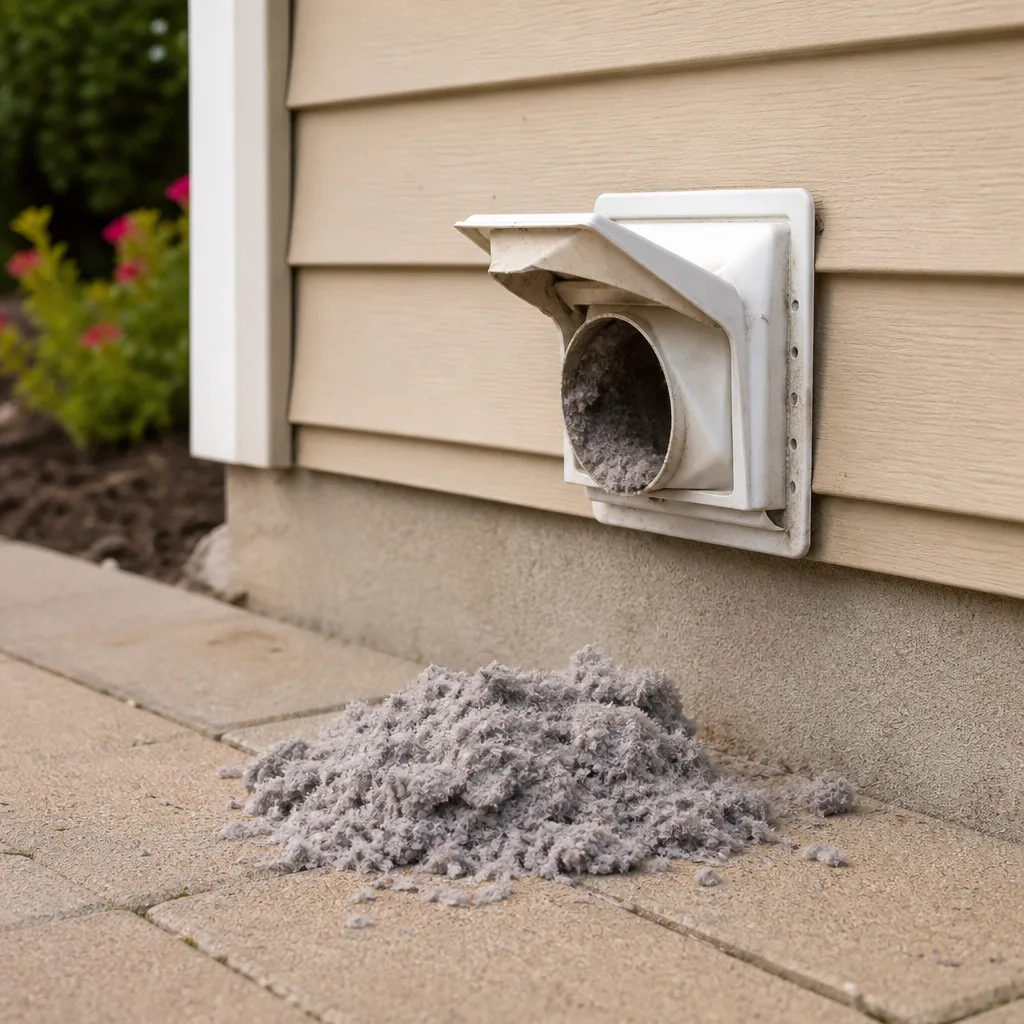 Dryer vent cleaning
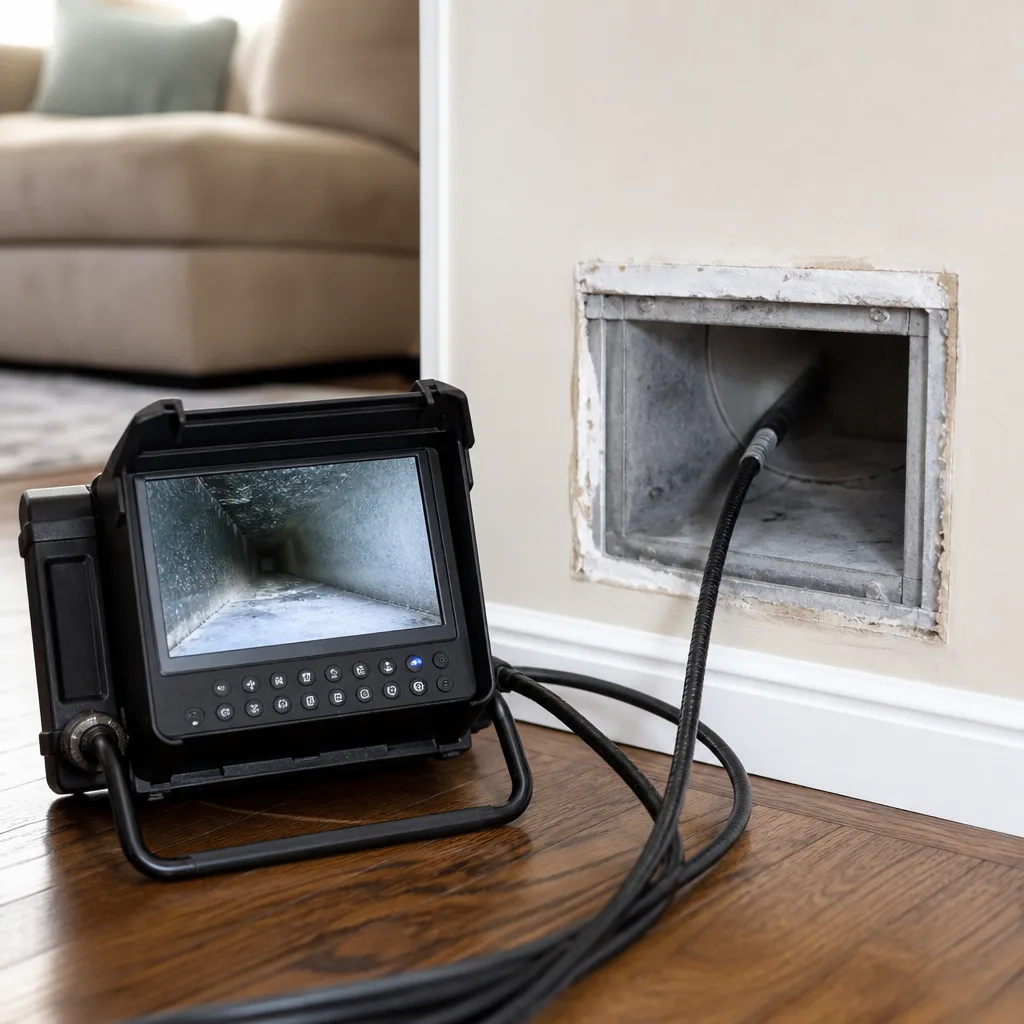 Camera inspection
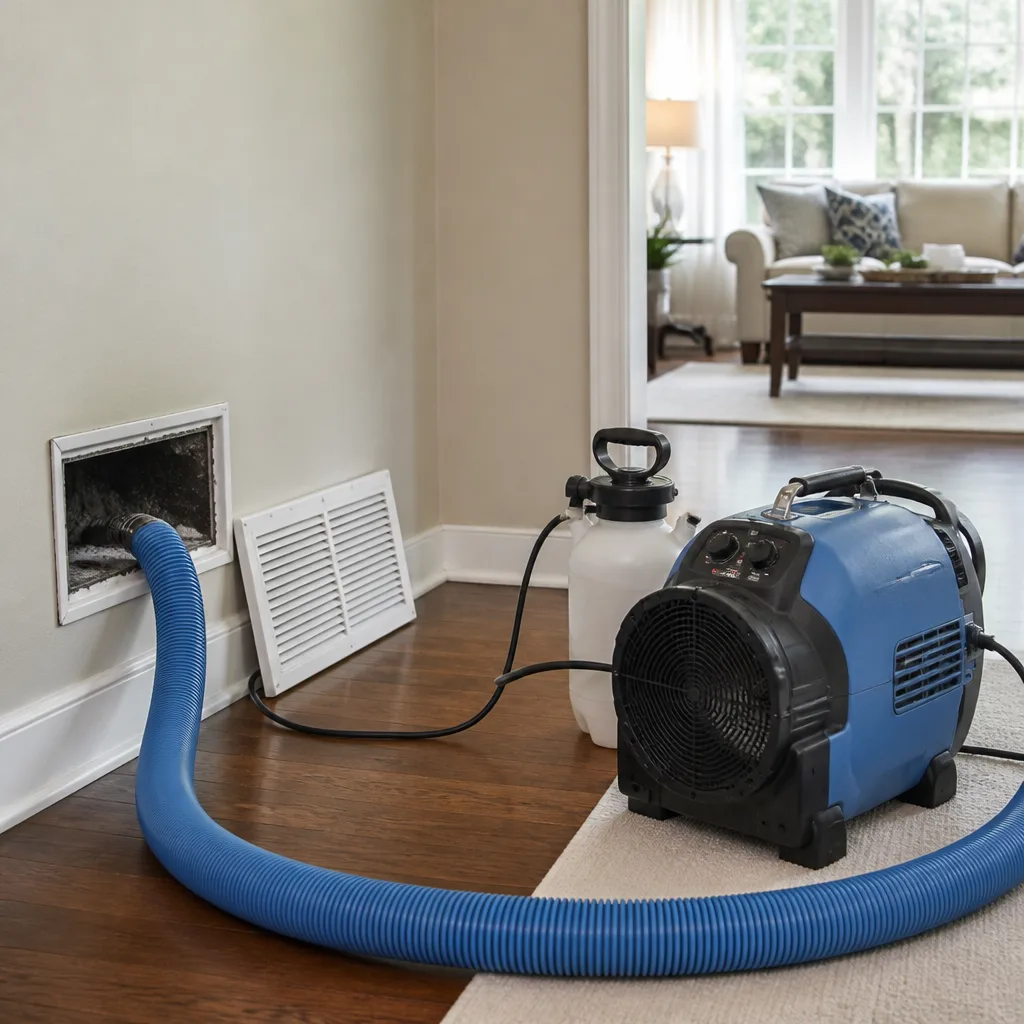 Sanitizing & deodorizing
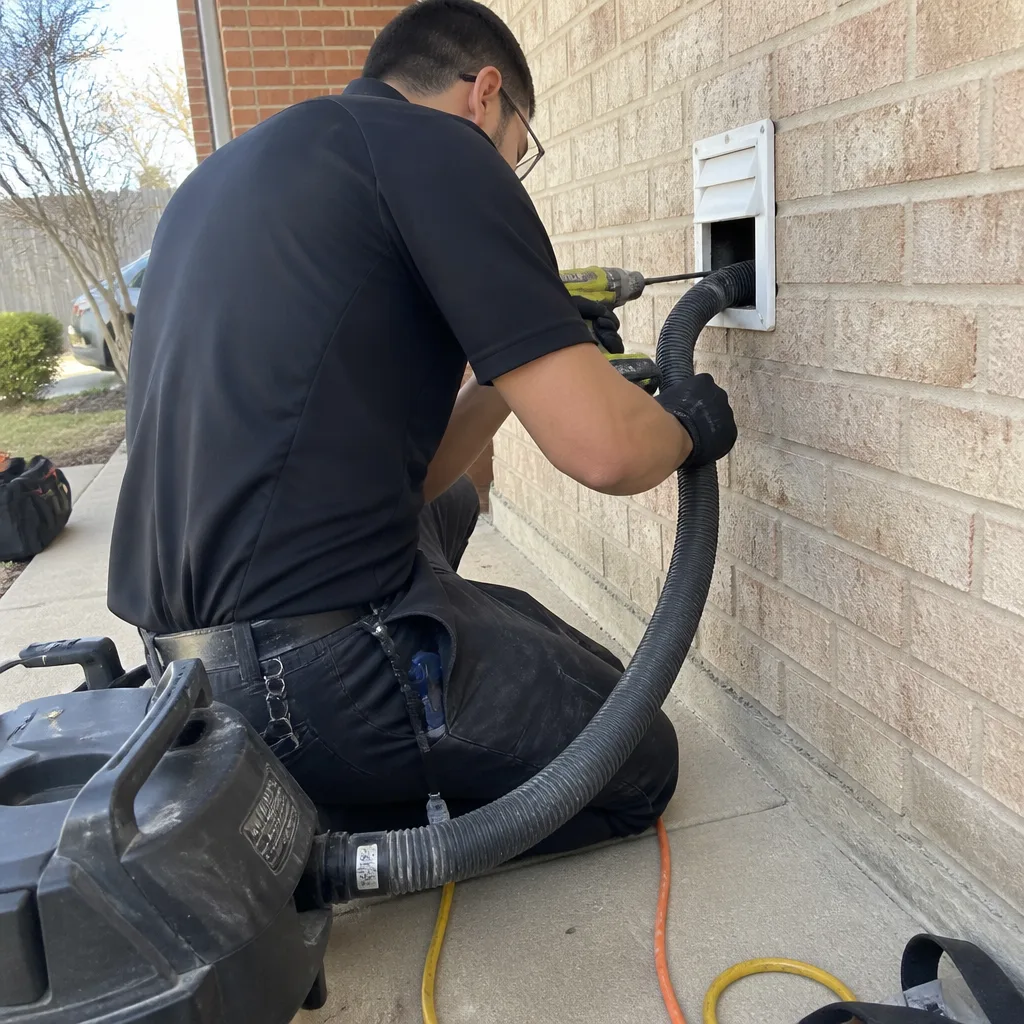
Whole-system duct and dryer vent check with before-and-after photos - you see exactly what came out of your vents
That "$99 whole-house special" is a bait ad - the real number appears once they are in your hallway, or the "clean" is a shop-vac at the register. We photograph the inside of your ducts before and after instead.
Air Duct Cleaning Permits, Codes & Inspections in TX: What You Need to Know
Texas does not license air duct cleaning as a standalone trade. That single fact explains most of the confusion homeowners face. Tomorrow morning, someone with a truck-mounted vacuum and a business card could legally clean your ducts while possessing zero verified training, zero insurance, and zero accountability to any state board. But the moment that same person finds mold inside your system and disturbs it, they’ve crossed a line that requires a Texas Department of State Health Services Mold Remediation Contractor license. Most don’t have one. This guide-along with our The Complete Guide to Air Duct Cleaning in Fort Worth-walks you through the regulatory gray zone in plain language, with Fort Worth-specific context on permits, code enforcement, and how to protect yourself from the moment you book until the day you sell your home.
Quick Answer
Texas has no state permit or license requirement for routine air duct cleaning itself, but any mold remediation performed during a cleaning triggers mandatory certification under Texas DSHS Mold Assessment and Remediation Rules (25 Texas Administrative Code Chapter 295). Duct modifications like sealing or replacing flex duct sections require a Tarrant County mechanical permit and a licensed HVAC contractor. Cleaning alone requires neither.
Styles & brands we work with
Table of Contents
- The Texas Licensing Reality: Why Nobody Governs Routine Duct Cleaning
- The Mold Trigger: When DSHS Steps In and What They Require
- When You Need a Tarrant County Mechanical Permit
- Antimicrobial Encapsulants vs. Illegal Biocide Application
- What Fort Worth Inspectors Actually Check (and What They Never See)
- The Documentation Paper Trail That Protects Homeowners
- How to Verify a Contractor’s Mold Remediation License
The Texas Licensing Reality: Why Nobody Governs Routine Duct Cleaning
Here’s the uncomfortable truth: if someone shows up at your Fort Worth home with a vacuum, a brush, and a website that says “licensed and insured,” the word “licensed” means almost nothing for the duct cleaning itself. Texas requires no state license for air duct cleaning companies. No board exams. No mandated training hours. No verified apprenticeship. A person could watch a few YouTube videos on Saturday and start cleaning ducts on Monday.
The “insured” part, however, is real and verifiable. General liability insurance is a private contract between the company and their carrier, not a state credential. Any legitimate Fort Worth duct cleaning company should be willing to show you a certificate of insurance with your name listed as an additional insured. If they hesitate, that’s your cue to end the conversation. We can say this from experience offering our Air Duct Cleaning services: the best operators in this trade would welcome tougher state oversight, because the absence of it allows low-effort competitors to poison the local market’s reputation with bait-and-switch pricing and shoddy work.
What does exist at the state level is a patchwork of adjacent rules that only kick in under specific conditions. The Texas Department of Licensing and Regulation (TDLR) oversees HVAC contractors and technicians, but those credentials apply to mechanical work: installing, repairing, or modifying HVAC systems. Cleaning the inside of an existing duct does not fall under TDLR’s jurisdiction. Neither does operating a negative-pressure extraction unit, which is the professional method where loosened debris goes straight into a HEPA-rated vacuum rather than back into your living room.
So what should a Fort Worth homeowner do? Treat duct cleaning credentials as unverified until proven otherwise. Ask for proof of insurance, check their Better Business Bureau file, read reviews on multiple platforms, and ask whether the technicians are background-checked and employed directly rather than subcontracted. At Cardinal Air Duct Fort Worth, every technician is background-checked, arrives in uniform, and gives customers the tech’s name before the door opens. That’s not a state requirement. It’s just a standard we hold because we’re independently owned, part of the Relay Home Co. family founded in 2005, and operate under The Relay Visibility Guarantee. If a company can’t give you basic transparency before the cleaning starts, assume you’ll get even less once the work is underway.
The Mold Trigger: When DSHS Steps In and What They Require
Everything changes the moment mold enters the picture. Under 25 Texas Administrative Code Chapter 295, the Texas Department of State Health Services regulates mold assessment and mold remediation as distinct licensed activities. If a duct cleaning technician finds mold growth inside your ductwork and proceeds to scrape, vacuum, or otherwise disturb it, they are now performing mold remediation in the eyes of Texas law. Untrained and unlicensed, they are breaking it.
The trigger is disturb, not discover. A technician can point out what looks like mold without a DSHS license. The problem starts when they touch it. Blasting it with compressed air, scrubbing it with brushes, or running a standard vacuum over it all count as remediation activities. And here’s what most Fort Worth homeowners don’t know: a Mold Remediation Contractor license from DSHS requires training, an exam, insurance, and ongoing continuing education. It’s not a certificate of attendance. It’s a real credential with real standards behind it.
Penalties for unlicensed mold remediation in Texas can reach $5,000 per violation per day under Texas Occupations Code Chapter 1958. The person performing the work can be fined directly. The company can face administrative penalties. And critically for you, the homeowner, any insurance claim tied to mold damage may be denied if the remediation was performed by an unlicensed contractor. Insurers have become increasingly strict about this.
Here’s what a licensed mold remediation contractor actually does, in order:
- Conducts or commissions a mold assessment to determine the scope of contamination. Assessment and remediation must be performed by separate licensed parties to avoid conflicts of interest under DSHS rules.
- Contain the affected area using physical barriers and negative air pressure. In professional duct cleaning, containment units like those from Abatement Technologies serve exactly this purpose: keeping disturbed debris and spores from escaping into the rest of your home.
- Remove or clean contaminated materials using approved methods and HEPA-filtered equipment. Nikro HEPA vacuums are the industry standard for capturing particles down to 0.3 microns.
- Perform a final clearance inspection, often including air sampling, to verify the remediation succeeded.
If a duct cleaning company tells you they can “just spray some chemical in there and kill the mold,” walk away. That approach is not only ineffective, it’s likely illegal. Chemical application inside ducts is tightly controlled, which leads to the next section.
When You Need a Tarrant County Mechanical Permit
Routine cleaning requires no permit anywhere in Tarrant County. You can have your ducts professionally cleaned, your dryer vent brushed out, and your HVAC blower wheel vacuumed without filing a single piece of paperwork. The line you cannot cross without a permit involves modifications to the duct system itself.
Sealing duct seams with mastic from the inside? Some counties consider this maintenance. Replacing a section of torn flex duct? That’s a repair. But here’s where it gets tricky: Tarrant County generally requires a mechanical permit when the work involves installing, altering, or replacing ductwork beyond minor maintenance. If a technician discovers a crushed section of duct during your cleaning and proposes to cut it out and replace it, that job now requires a licensed HVAC contractor pulling a permit through Tarrant County’s permit office.
Why does this matter for a cleaning customer? Because a duct cleaning company without any HVAC credentials cannot legally perform that repair. They can show it to you, photograph it, and recommend a fix. They cannot lawfully do the fix themselves. In our experience in Fort Worth, we’ve seen unlicensed operators whip out foil tape and slap a “repair” over a major duct breach. Foil tape has legitimate uses, but a 6-inch gap in a return duct is not one of them. That kind of work fails, wastes the cooling you paid for, and can pull attic dust or carbon monoxide into your airstream.
So before booking, ask one direct question: “If you find duct damage during cleaning, who handles the repair?” A reputable company will tell you they either have licensed HVAC personnel on staff or they document the damage and provide photos you can use with a qualified contractor. At Cardinal Air Duct Fort Worth, we use professional-grade Rotobrush brush systems for cleaning and Nikro HEPA vacuums for extraction, but we do not perform permitted duct modifications on a cleaning ticket. We document, we report, and we advise. That’s what a specialized cleaning company should do.
If you’re in the middle of a home sale in Fort Worth, this distinction matters even more. Buyers’ inspectors often flag duct damage, and lenders sometimes require proof of licensed repair with a permit before approving a loan. A hand-written receipt from an unlicensed handy-person will not satisfy that requirement. The permit is the proof.
Antimicrobial Encapsulants vs. Illegal Biocide Application
Here’s a quiet corner of the duct cleaning trade where bad actors make money: chemical application. And the rules are nowhere near as simple as a vendor would like you to think.
There’s a real, legitimate use for EPA-registered antimicrobial encapsulants applied after cleaning. These products coat the interior surface of a duct and are designed to prevent future microbial growth. They’re commonly called “fogging” or “sanitizing” services when sold to homeowners. Products must be registered with the EPA for that specific use, and the technician applying them must follow the label directions exactly. That includes application methods, dwell times, and safety warnings.
The illegal version is biocide application, meaning products intended to kill mold rather than prevent it. Under the federal Fungicide and Rodenticide Act (FIFRA), applying a biocide inside an operating duct system without an EPA registration covering that use is a violation. It’s also potentially dangerous: surfaces treated with non-approved chemicals can off-gas volatile compounds into your home’s airstream for months. If your technician is wearing a respirator while applying a chemical to your ducts, that respirator is a warning sign, not a reassurance. If the technician can’t safely breathe the air during application, why would you want that air blowing through your bedrooms afterward?
Some operators push aggressive mold-killing sprays because it’s cheaper and faster than proper DSHS-licensed remediation. For a kitchen counter, a bleach spray is reasonable. For a 40-foot duct run carrying air to your children’s bedrooms, it is not. Bleach within an HVAC system doesn’t even fully address the problem because mold grows into the porous surfaces of fiberglass duct lining and dust coatings. Spraying the surface kills what’s on top but leaves the roots and spores beneath.
Our position at Cardinal Air Duct Fort Worth is straightforward: cleaning removes dust, dander, and debris. Encapsulants have a narrow, approved role after a thorough cleaning. If we find what looks like mold, we stop and recommend a DSHS-licensed assessment. We will not spray your ducts with harsh chemicals and call it mold remediation. That’s a line that protects you and keeps us squarely within Texas law.
What Fort Worth Inspectors Actually Check (and What They Never See)
If you’re buying or selling a home in Fort Worth, it’s worth understanding what the city’s inspection process actually covers when it comes to HVAC and ductwork. Most of what you’ve heard is probably wrong.
The City of Fort Worth does not perform a duct-by-duct inspection during a residential property sale. There is no city inspector who opens every register, lowers a camera into the supply trunk, and verifies that your ducts are clean. What the city does inspect on new construction and major remodels includes the installation of the HVAC system itself: proper clearances, equipment sizing against the load calculation, venting, combustion air, and drainage. Duct installation gets looked at during construction. Duct cleanliness never does.
For an existing home sale, a private home inspector you hire will typically inspect the HVAC system visually. They’ll check the filter, look for obvious signs of water damage near the air handler, test the temperature differential, and note whether the system appears to function. They may remove a couple of registers. They will not scope your entire duct system with a camera, and they will not pass or fail a home based on dust accumulation inside ducts. A thorough, camera-backed inspection is exactly what a quality duct cleaning includes, by the way. We document before-and-after photos of the actual duct interior, which matters for the next point.
Here’s a scenario we see regularly in Fort Worth neighborhoods like the Near Southside, Arlington Heights, and Benbrook: a home goes under contract, the buyer’s inspector flags what looks like mold in a bathroom exhaust fan or notes that the HVAC “needs cleaning,” and suddenly everyone is calling duct cleaning companies at once. The seller wants a cheap clean-out. The buyer wants proof of actual remediation. The listing agent just wants the deal to close. Into that pressure cooker steps an unlicensed cleaner with a low quote and a fear-based pitch.
The resolution is where the regulatory lines we’ve covered become decisive. If it’s dust and debris, a professional cleaning with photo documentation solves the problem. If it’s mold, the seller needs a DSHS-licensed mold assessment before anyone disturbs anything. Cutting corners to close a sale may put the seller on the hook for more money later, when the buyer discovers the problem was covered up rather than addressed. A few hundred dollars saved on the wrong service becomes a five-figure post-closing dispute.
The Documentation Paper Trail That Protects Homeowners
Insurance is boring until it saves you from a $12,000 problem. Then it becomes riveting. Here’s how to build a documentation trail that protects you if a duct cleaning goes sideways or if you later discover mold that a contractor disturbed.
What to collect before the cleaning:
- Certificate of insurance from the company, with you listed as an additional insured. This takes one phone call and proves the company holds active liability coverage.
- A written price quote sent by email or text before the technicians arrive. Not a verbal estimate. A written price. At Cardinal Air Duct Fort Worth, every job includes a written price before any work starts. This is standard practice under The Relay Visibility Guarantee, and it should be standard everywhere. If a company refuses to commit to a price in writing before arrival, hang up.
- The technician’s name and basic background confirmation. Who is about to enter your home? If the company won’t tell you, that’s your answer.
What to collect during the cleaning:
- Before-and-after photos of the duct interior. Professional equipment like our Rotobrush systems and Nikro HEPA vacuums produce measurable debris removal, but the photos are your proof. Every Cardinal job includes before-and-after photo documentation as part of The Relay Standard booking experience.
- Notes on any damage discovered: location of the duct, what the technician saw, and digital photos timestamped to the job.
- Any written work order or service ticket describing what was done. If you’re told a repair is needed, get it in writing.
What to do if you later discover mold:
- Do not touch it. Do not spray it. Do not have another company vacuum it. Disturbing the mold changes your legal and insurance position.
- Call a DSHS-licensed mold assessment consultant. You need a written assessment from a licensed assessor, not a duct cleaning technician with an opinion.
- Contact your homeowners insurance. Share the assessment and explain that you believe prior work disturbed the mold. The documentation trail you built is your evidence.
- If the prior cleaning company failed to identify mold that a trained technician should have spotted, or if they disturbed it without a remediation license, you may have a claim against their liability policy. That’s what the certificate of insurance is for.
The paper trail is boring until it’s the only thing standing between you and a denied claim. Build it every time, even for a routine cleaning. It costs nothing and takes ten minutes.
How to Verify a Contractor’s Mold Remediation License
If anyone proposes mold-related work in your Fort Worth duct system, here’s the process to verify their license. It takes less than five minutes.
- Get the license number. Ask for it directly. A licensed Mold Remediation Contractor can produce their DSHS license number from memory, or from their phone in seconds.
- Search the DSHS database. The Texas DSHS Mold Assessment and Remediation License Search is available online at the DSHS licensing page. Enter the company name or the individual’s name. The record should show the license type (Contractor, Worker, Consultant, or Assessor), the current status, and the expiration date.
- Confirm the name matches. The license must belong to the person or company doing the work. A crew lead’s cousin having a license does not authorize a different business to perform remediation.
- Check the scope. Mold remediation workers can work under a licensed contractor, but they cannot contract independently. If you’re hiring a company directly, the company itself must hold a Mold Remediation Contractor license, not just employ a worker.
- Ask about insurance. DSHS requires remediation contractors to carry commercial liability insurance. Ask for the certificate and verify the policy is active.
For routine air duct cleaning with no mold present, no DSHS license is required because no remediation is occurring. If you’d like that routine cleaning performed by a company that operates like it’s licensed anyway, Cardinal Air Duct Fort Worth is a local option. We carry insurance, our technicians are background-checked and uniformed, and a live person answers our phone 24/7 at (817) 730-6759. We’ll tell you exactly what our service covers, what it costs in writing before work begins, and what we won’t do: which includes unlicensed mold remediation and sketchy chemical applications inside your ducts.
Common Mistakes to Avoid
- Believing “licensed and insured” without verification. Ask for the insurance certificate and the specific license number. General statements are not credentials. If you’re hearing this from a Fort Worth company, verify them through DSHS before any mold-related work.
- Letting a cleaning technician “handle” mold they find. The moment mold is disturbed, the legal landscape changes. Stop the job and call a DSHS-licensed assessor. A cleaning company cannot lawfully touch mold without a remediation license.
- Paying cash for a verbal quote. If the price isn’t in writing before work starts, the price you’ll hear after work starts is different. A written price is a red line. At Cardinal Air Duct Fort Worth, it’s included on every job, no exceptions.
- Accepting chemical fogging as mold remediation. An EPA-registered antimicrobial encapsulant applied post-cleaning has a narrow legitimate use. A “mold killer” sprayed into your ducts by a cleaner is not remediation and may be illegal.
- Treating foil tape as a duct repair. A torn flex duct or separated seam needs a permitted repair by a licensed HVAC contractor, not a strip of tape from a cleaning truck.
- Skipping documentation. No before-and-after photos, no service ticket, no insurance certificate. When you need proof, which is when something goes wrong, you’ll have none.
- Assuming a home inspector checks duct cleanliness. They don’t. If you want to know what’s inside your ducts, you need a camera inspection, which is part of a professional cleaning, not a real estate transaction.
See the difference
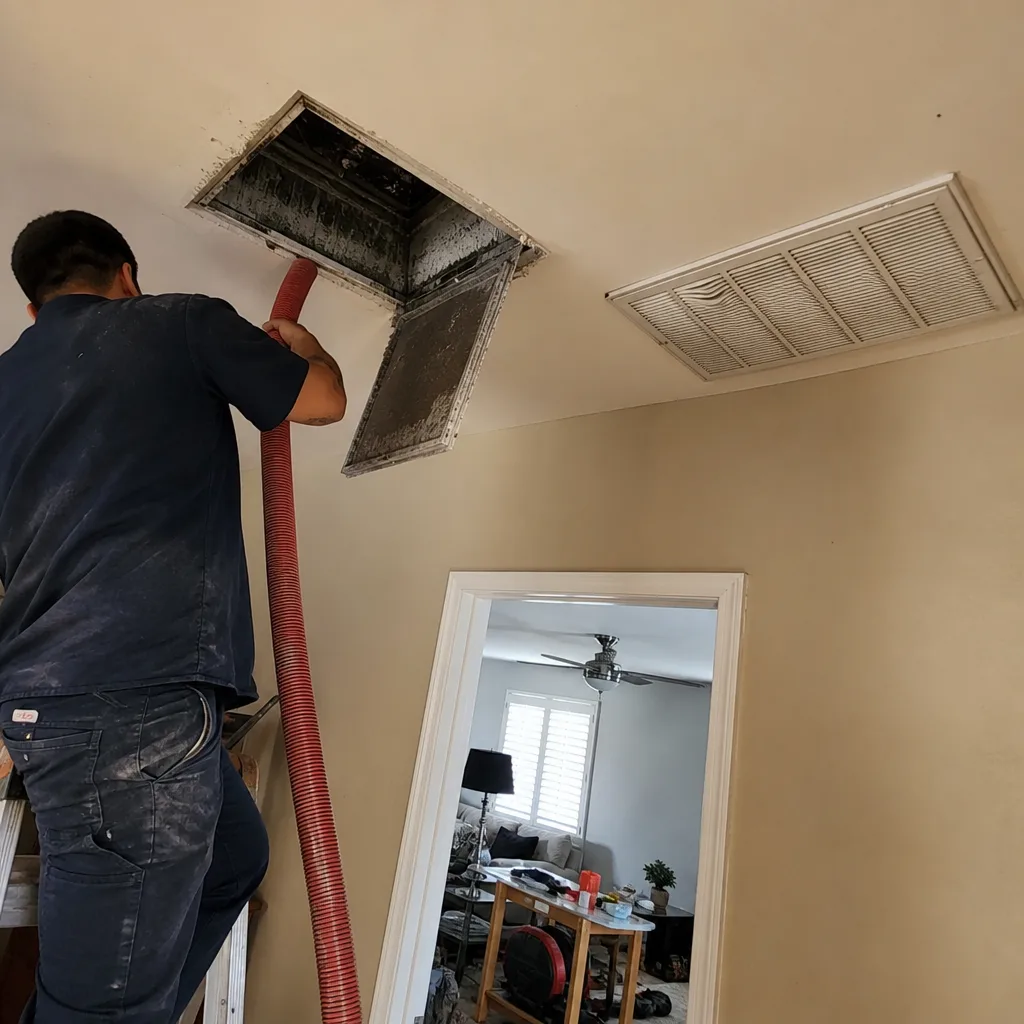 Before
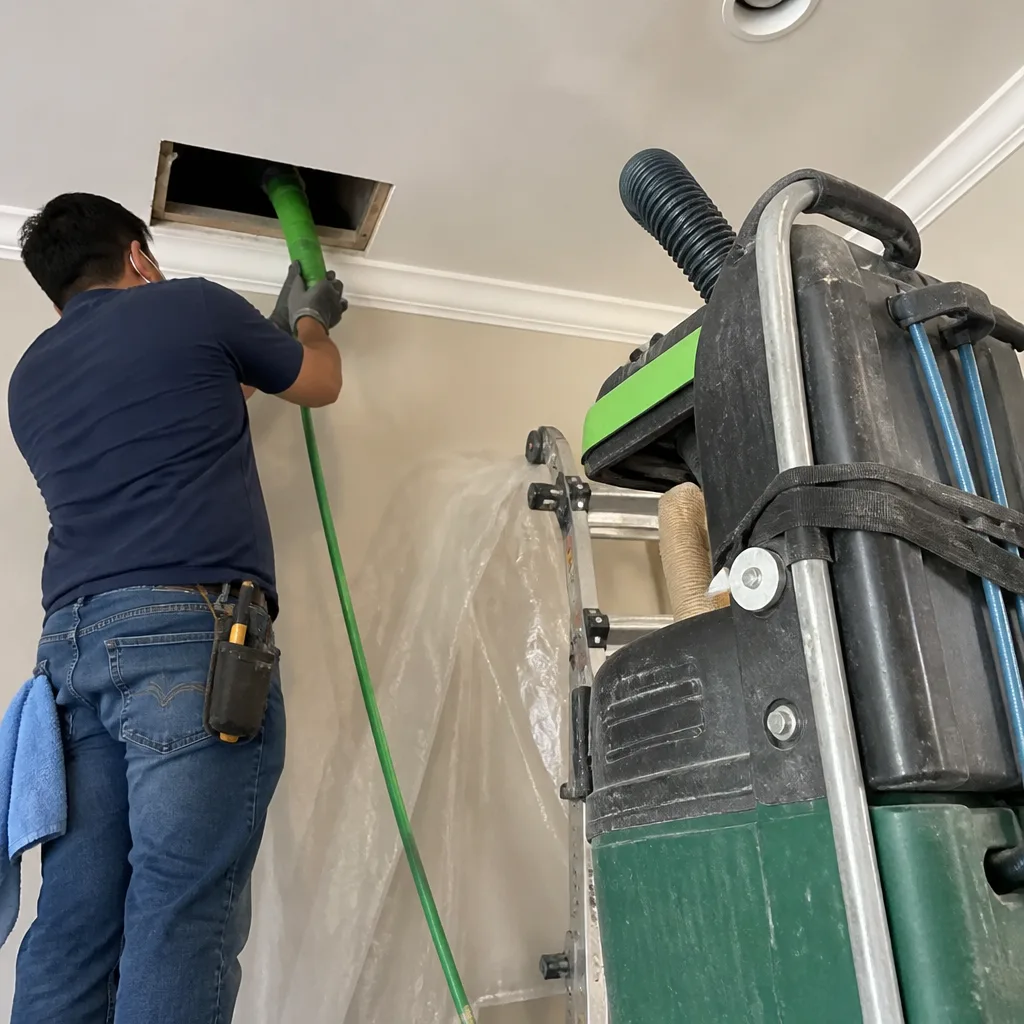 After
After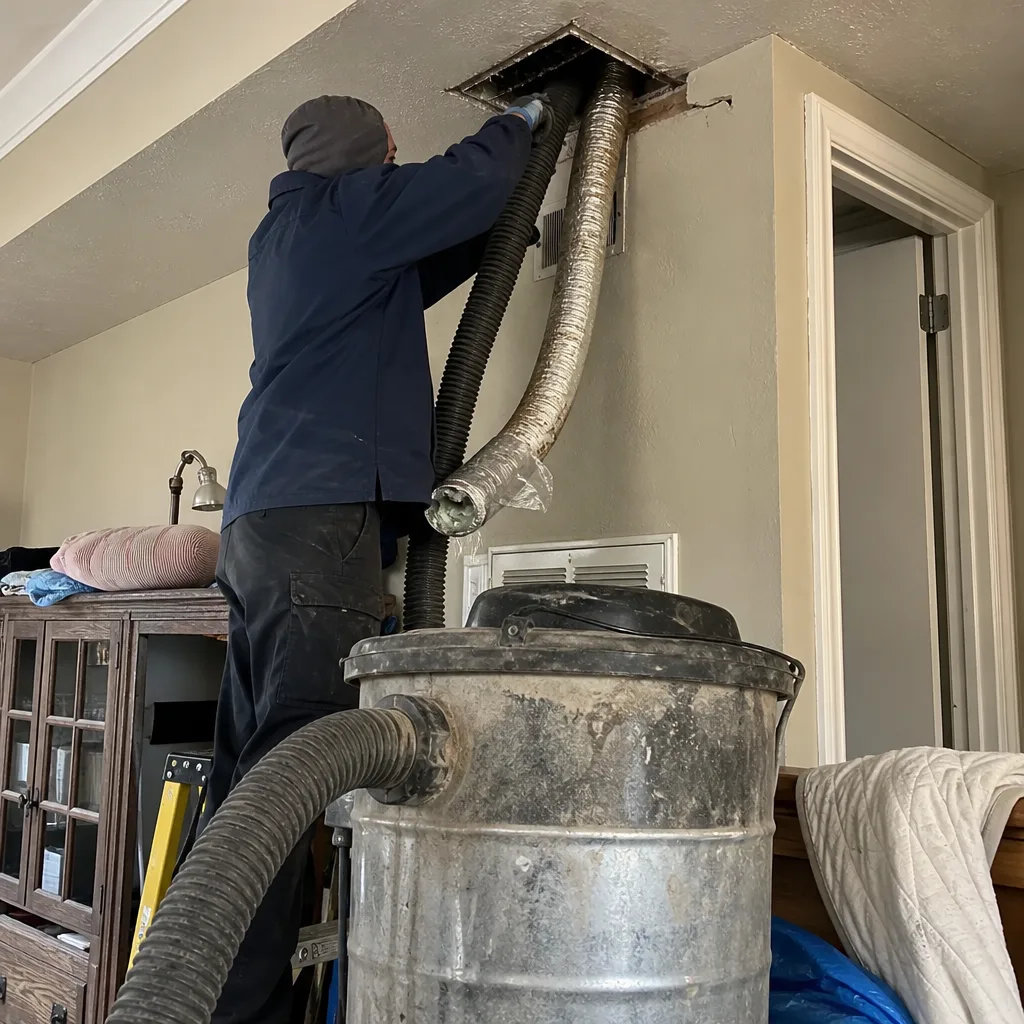 Before
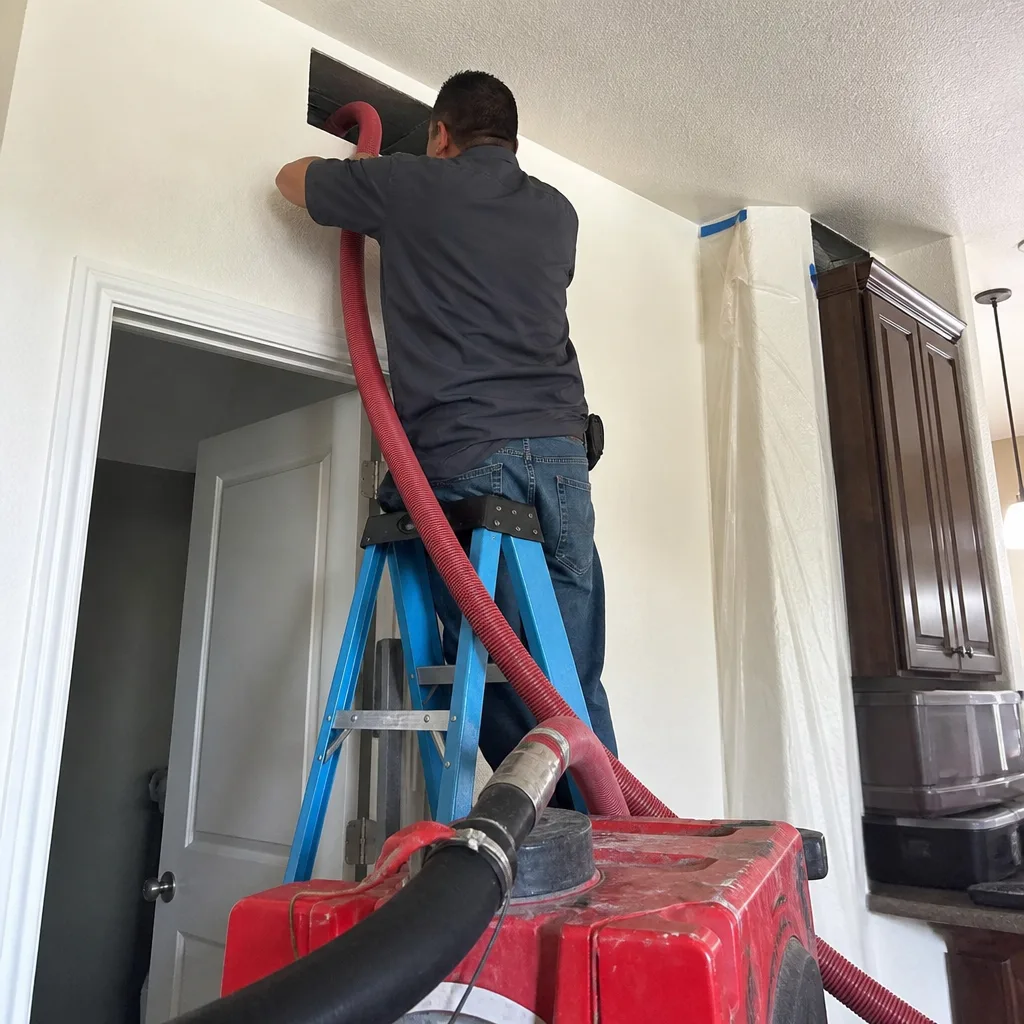 After
After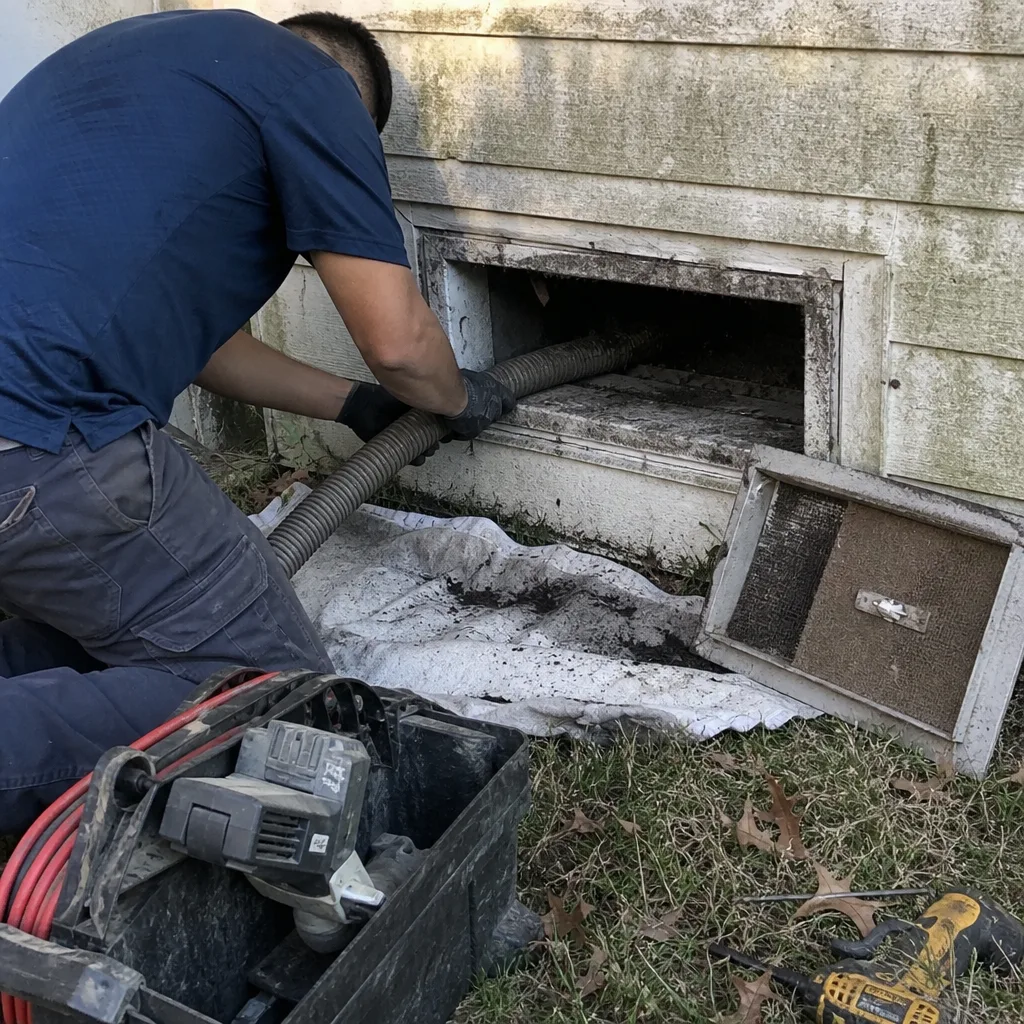 Before
 After
AfterWhen to Call a Professional
Call a duct cleaning professional when you can see dust visible at your registers, when your home gets dusty again within days of cleaning, when airflow from certain rooms feels weak, or when your home has undergone recent construction. For details on what to watch for, see our Air Duct Cleaning Warning Signs: A Fort Worth Homeowner’s Reference Guide. These are the routine cases where a professional cleaning with HEPA extraction restores airflow and improves indoor air quality. Call a DSHS-licensed mold assessor first if you see what looks like mold on or around your registers, if you smell a persistent musty odor, or if you’ve had a water leak near your air handler. And if you’ve had a recent duct cleaning that you suspect disturbed mold, call the assessor before calling anyone else. Cardinal Air Duct Fort Worth offers free estimates in Fort Worth: call (817) 730-6759 and a live person answers.
Frequently Asked Questions
No. Texas has no state license, certification, or permit requirement for routine air duct cleaning, which means anyone with equipment can legally offer the service. For this reason, verify a company’s insurance and standards yourself before booking.
No permit is required for cleaning only. A Tarrant County mechanical permit becomes necessary only if the work involves modifying, sealing, or replacing duct sections, which requires a licensed HVAC contractor. Call (817) 730-6759 if you’re unsure which category your job falls into.
If mold is found and disturbed, the technician is legally performing mold remediation and must hold a Texas DSHS Mold Remediation Contractor license. Unlicensed remediation can trigger fines up to $5,000 per violation per day and may void your insurance claim.
Only EPA-registered antimicrobial encapsulants applied according to label directions are allowed for post-cleaning use. Applying unregistered biocides inside operating ducts violates FIFRA and can introduce harmful chemicals into your home’s air.
No. A typical home inspection checks the HVAC system’s function, filter, and visible components, but does not scope the duct interior. A professional duct cleaning with camera documentation is the way to actually see inside your ducts.
Most whole-home air duct cleanings in Fort Worth run $450 to $750 for a typical 1,800 to 2,500 square foot home, depending on the number of systems and whether dryer vent cleaning is included. Beware quotes far below that range: they usually mean a technician has arrived to upsell you. Call (817) 730-6759 for an exact quote; estimates are free.
The Bottom Line
Air duct cleaning in Texas exists in a regulatory gap that most companies would rather you never examine. There is no state license for cleaning, no permit for the work itself, and no inspector verifying that what you paid for was actually done. The protections that do exist are specific: DSHS mold remediation licensing when mold is involved, Tarrant County mechanical permits when ducts are modified, and EPA registration standards for any chemical applied inside your system. The most important thing a homeowner can do is simple: get everything in writing, verify credentials, and insist on proof of the work. If a company operates with transparency before the job, your chance of a problem after it drops to nearly zero. Learn more about Cardinal Air Duct Fort Worth home, Air Duct Cleaning in Fort Worth, Dryer Vent Cleaning in Fort Worth, and HVAC Cleaning in Fort Worth.
Written by Omar Haddad, Owner at Cardinal Air Duct Fort Worth, serving Fort Worth since 2005. Explore more guides & resources from our team.